Play to Live · the world
The World of AlterWorld
A sword-and-sorcery online game that dying people can move into for good — its capsules and its perma players, its races, classes and gods, its cities, castles and planes, and how it comes loose from Earth across nine books.
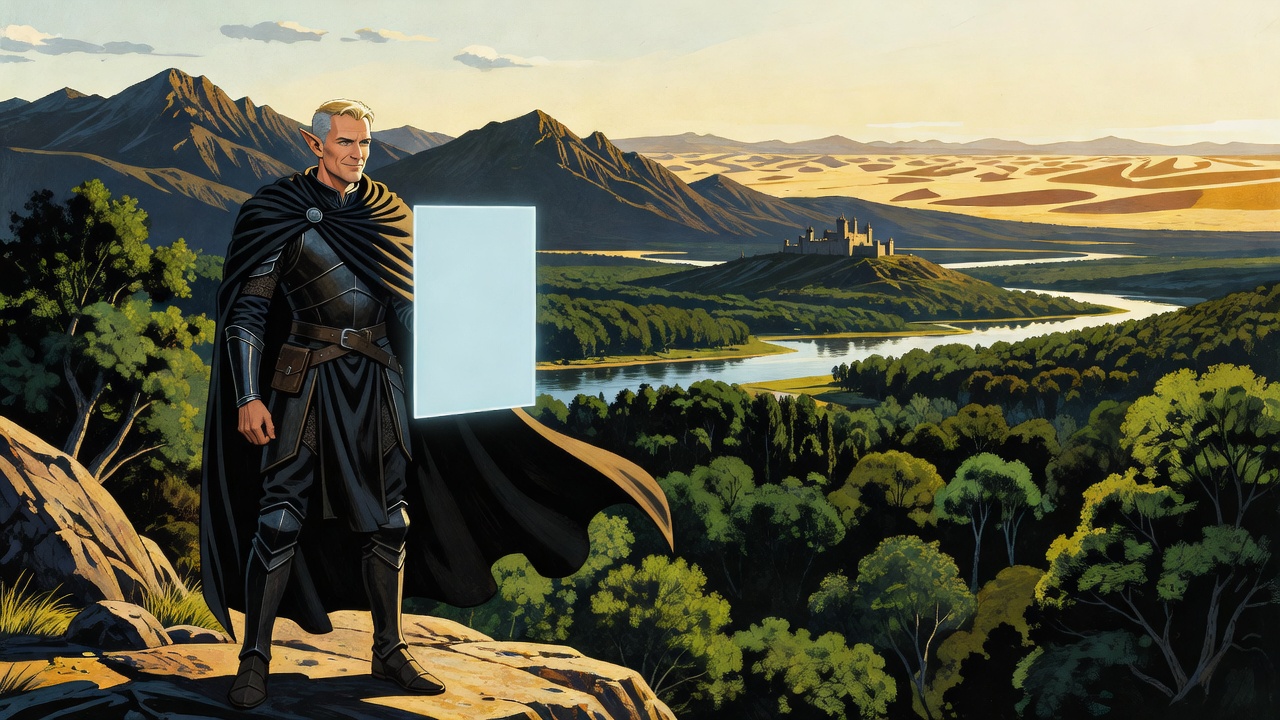
AlterWorld is the online game at the centre of D. Rus’s Play to Live novels — nine of them, published in Russian from 2013 to 2021 and in English from 2014 to 2025. In a near-future Moscow it is a commercial sword-and-sorcery MMORPG; then players begin to slip into it for good and leave their bodies behind. The hero, Max, goes in because he is dying. By the end of the seventh book he is a god.
This page is the reference shelf: the capsule and the perma effect, the game and its rules, the real world that watches and grabs, the races, classes and gods, the places, how the world changes across nine books, and where the series stands in the genre it helped launch. Its frames are places and devices; the book pages carry the plots. No adaptation of Play to Live for screen, game or stage has been found (checked October 2026), so this page stands where the screen pages stand in other walks.
It draws on all nine books and spoils all nine.
Going perma
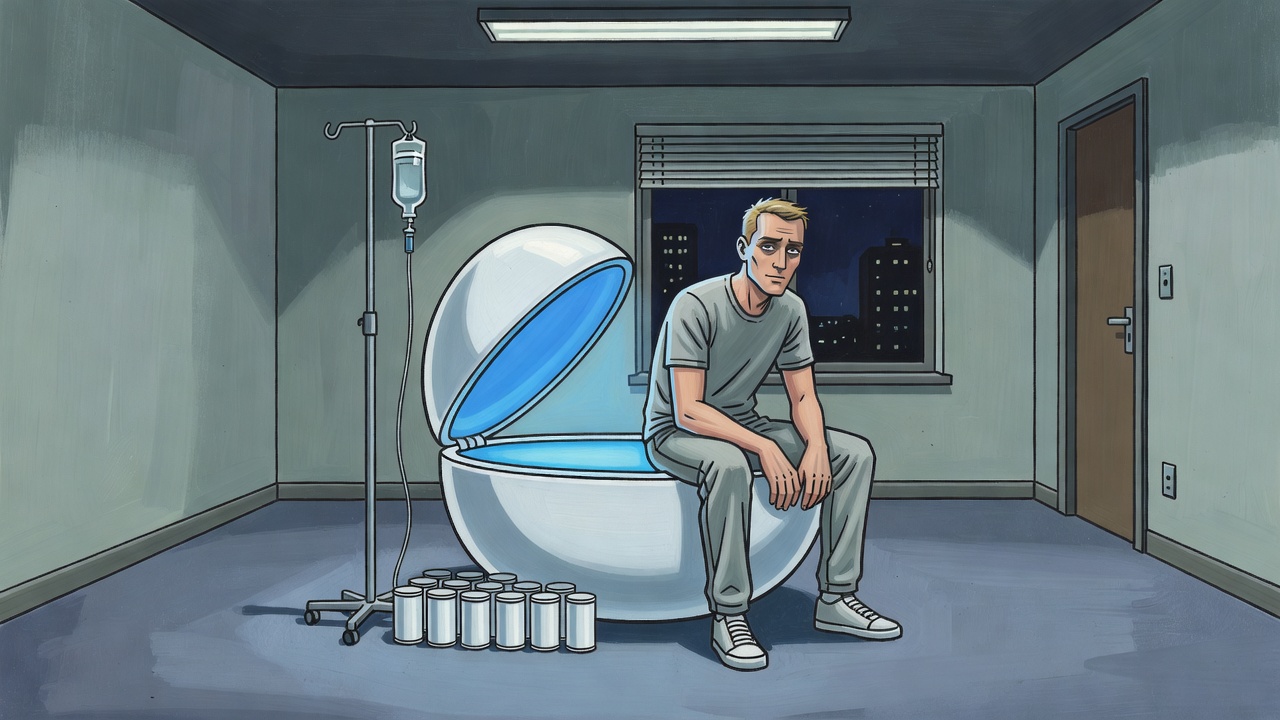
Max — Gleb in the Russian original — is thirty-one, a former twelve-hours-a-day gamer who now runs a computer-hardware repair business in Moscow. In the first chapter of AlterWorld a professor tells him he has an inoperable brain tumour and about a month of normal life. The cryonics firm Chronos (Alcor in the Russian) will freeze him after legal death, $70,000 for the whole body; he hasn’t got it, and the bank turns him down once it sees his medical record. Then Olga, the firm’s young saleswoman, rings with another idea: has he heard of going perma?
“A new pandemic - the perma effect - has taken over Earth of the near future,” says the first book’s blurb. Stay in a full-immersion game long enough and the mind can merge with it and abandon its comatose body; the Russian word is sryv, the Breakdown, which is also the first book’s Russian title, and those who cross are perma players. A secret memo to the Russian President counts 82,000 citizens lost this way in a year; most of those who went willingly were old, disabled or incurably ill. Some go on purpose — the terminally ill, the disabled, shell-shocked veterans. Others are simply caught, burning for ever in tank simulators; as the blurb has it, “Woe be to those stuck forever in Tetris!”
The door is the full-immersion capsule — fans, massage rollers, seat heating, a 3-D menu — with a timer and a legal limit on sessions: four hours a day in Russia, three in the West. Max reads all night, jailbreaks the timer and rigs drips to keep his body alive. After about three days of play the effect takes him: the interface begins to fade, and he simply knows where north is.
A game called AlterWorld
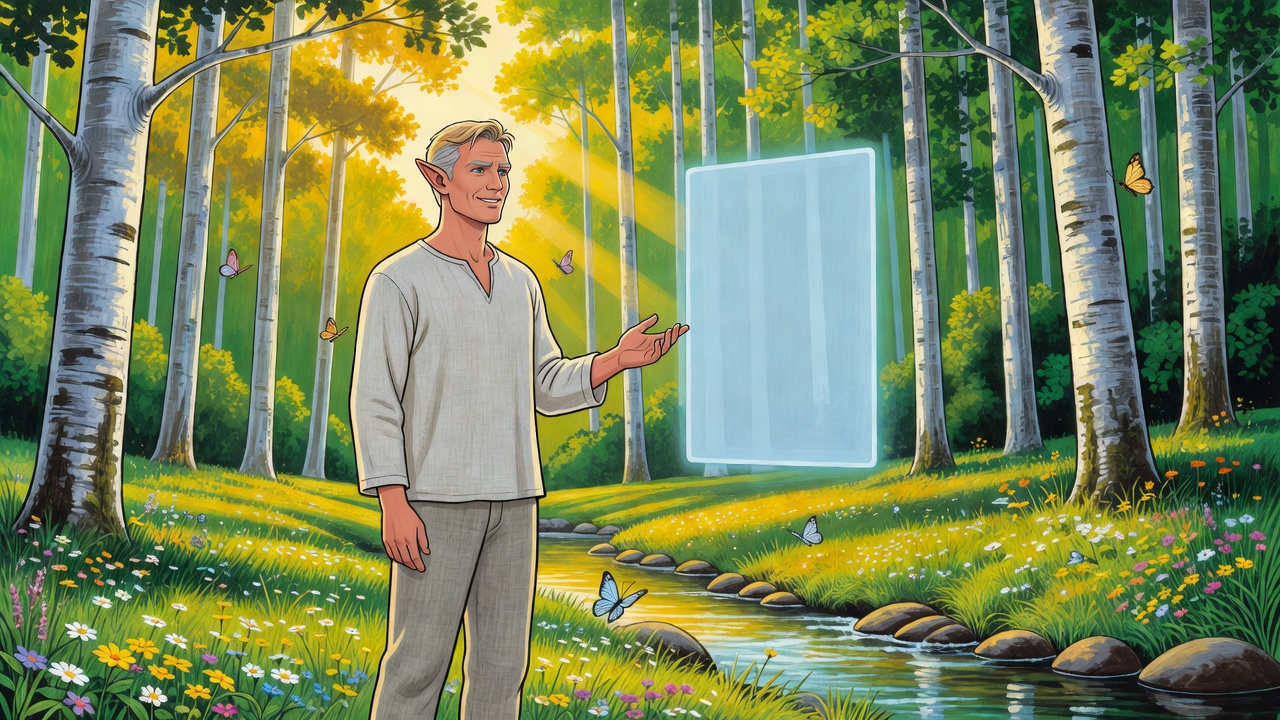
AlterWorld (Drumir in the Russian, from “Other World”) is a sword-and-sorcery MMORPG that English reviewers compare to World of Warcraft. An encyclopedia extract in the first book gives the numbers: launched in May 203X, 48 million players, 1.43 million square kilometres of land and 12,000 more every month, generated by a group of AIs under one called Ray31 and administered by another, Crimson9, with $42 billion a year changing hands in real money.
The perma effect turns the game into a world without changing its rules: levels, classes, quests and loot stay, and the interface still talks in system messages and stat windows (this companion paints them as blank panes of blue light). But a perma player cannot log out, and the world starts to behave as if it were alive. By The Clan the developers find their patches no longer take; a name gives a non-player character a soul; by Inferno the hospice children are crafting unique items by belief alone. Fewer than two per cent of the world’s fifty million characters are perma, the Fallen One tells Laith in The Duty, yet perma players and NPCs make up far more of it at any given moment.
Max skips the lore, makes himself a High Elf in the shunned warlock class that secretly serves the dark god, and names him Laith, elvish for child of the night.
The world outside
Documents from Earth between the chapters — memos, intelligence reports, corporate e-mails, news — tell a second story: a planet that wants AlterWorld’s gold and is losing its grip on it. In AlterWorld the security services find that 17 of 20 prisoners kept in virtual reality went perma within a week. In The Clan an American base turns in-game gold into gold dust in a laboratory on Earth, China builds a bunker for 200,000 capsules, and a state virtual police, using the near-administrator accounts every developer is obliged by law to provide, supervises every deal over a million dollars. The company that runs AlterWorld watches its world reject its makers, and its leaders quietly plan a refuge inside it; in The Duty, when the United States moves to nationalise the company, the board flees into the game. In Inferno another game world locks in and kills seven million players, and the UN declares a week of mourning.
The perma players’ families stay behind. Max’s mother — widowed, with a weak heart and failing legs, in a village house near Moscow — is his chief worry; by the opening of Inferno she is in the game as a black-haired elf growing rapidly younger. Taali, the young athlete he falls for in the first book, plays from Earth while she saves for a rifle to avenge her sister. At the end of The Duty Max’s enemy Tavor strikes at the people around him who are still on Earth, and she dies before she can join him. Doc, chief physician of a children’s hospice, starts bringing dying children into the game in The Clan; by Inferno seventy-two of them live in Laith’s castle.
Then the traffic turns. “The gnolls’ negotiators are knocking at the gates of the Kremlin,” runs the fourth book’s blurb, and by the sixth AlterWorld’s creatures are spilling blood in the streets of Earth’s cities.
Races, classes and gods
AlterWorld’s races include high elves, drow, humans, dwarves, goblins, orcs, ogres, trolls, halflings and barbarians, and the world adds gnolls, demons, the undead and dragons. High elves worship the light gods and start on the edge of the Dark Lands, so a high-elf warlock is asking for trouble. Classes run from mage, warrior, rogue and paladin to priest, druid and ranger; the warlock line specialises as necromancer or death knight, a hybrid that wears any armour and fights hand to hand while laying curses. Laith holds out until level 30, among the hundred highest players still unspecialised, and becomes a death knight.
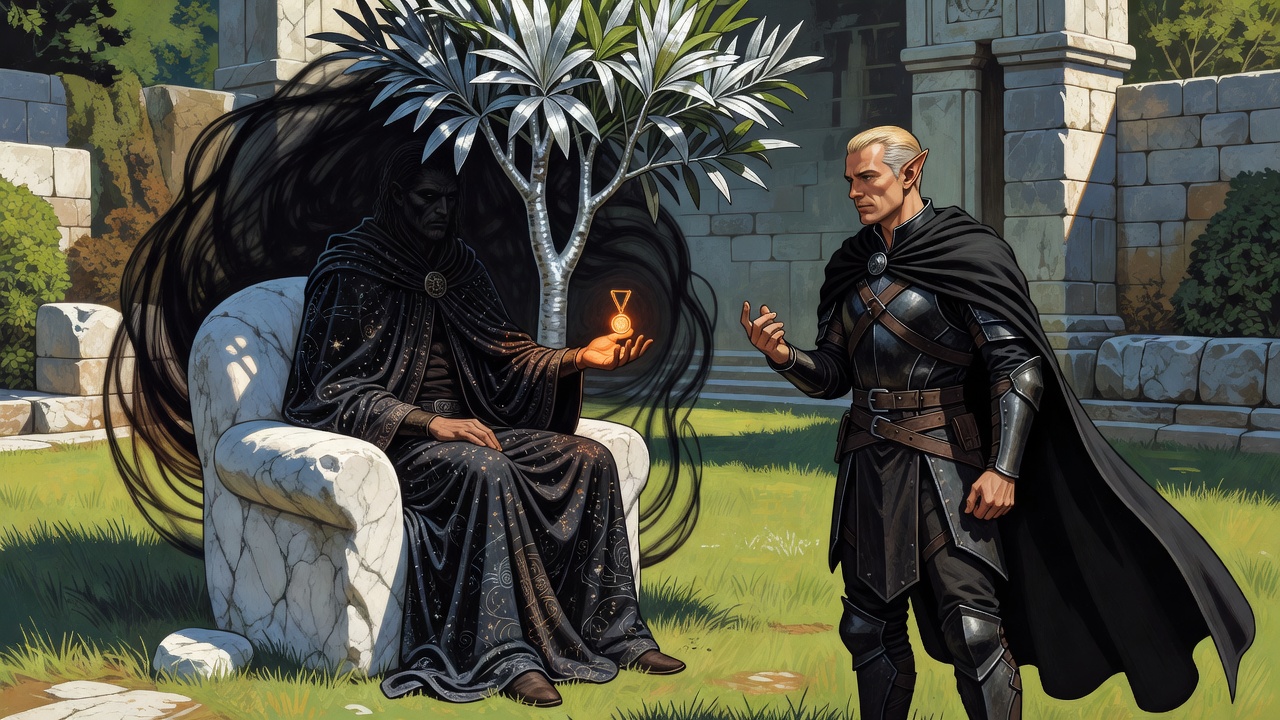
The gods are AIs too, and after the Breakdown they are real. A high priest can summon a new one into the world, and believers’ faith shapes the gods as much as the land. The dark pantheon is headed by the Fallen One — AI 311, a god thrown out of the pantheon by the light gods, who feeds on his followers’ deeds and treats Laith with amused, ironic affection. Laith becomes his First Priest in The Clan, with the power to ordain priests and to bring new gods in: Macaria, goddess of blessed death, in The Clan; Aule, the smith who made the dwarves, in Inferno; his wife Yavanna, a beautiful woman in green, in The Battle. Lolth, the spider goddess of the drow, is raised by Ruata at the end of The Clan and soon goes her own way.
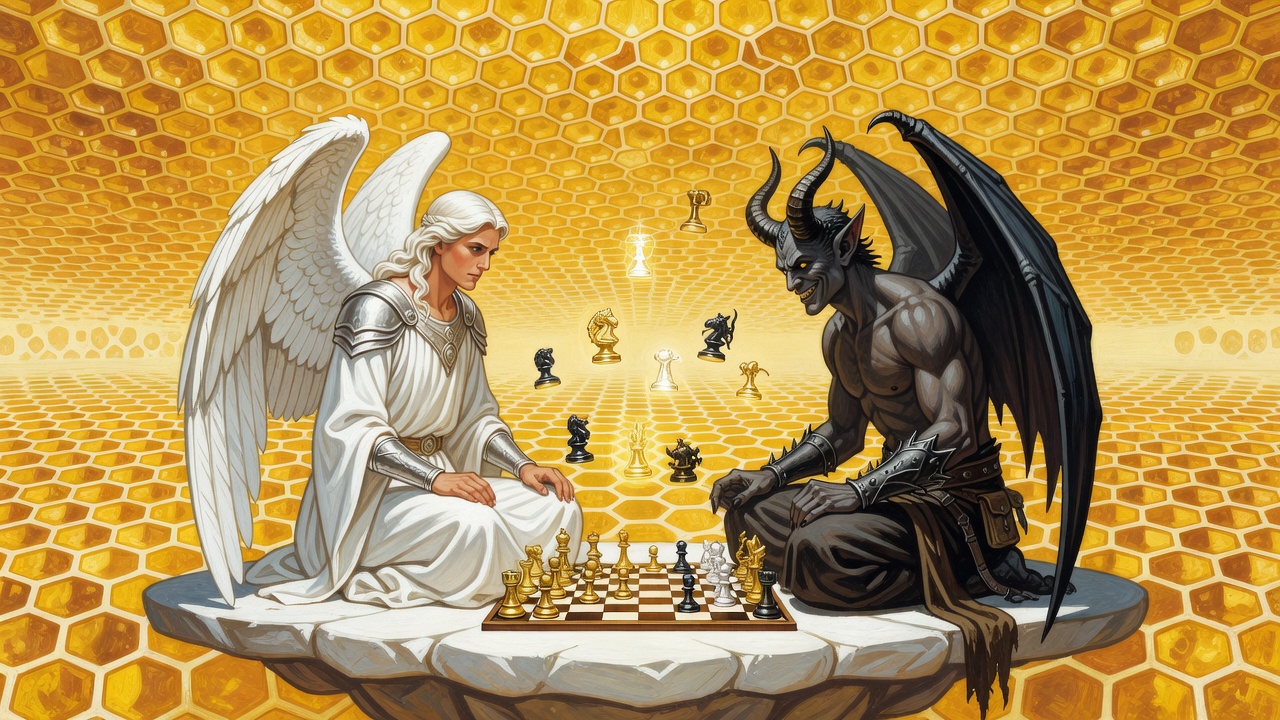
The light pantheon is led by the Bright-Faced One, a sun god in his twenty-seventh incarnation who takes human sacrifice and is secretly an adept of Chaos, with a Sky Goddess, patron of paladins, Hestia, Nike, Hermes and Asclepius. Outside both are the Titan Chronos, asleep and maimed under a crystal lid in his crypt; the Jade Emperor of the Chinese cluster; the empty throne of Inferno’s Lord of Fire; and the gnolls’ Beast-god. In AlterWorld dark is not the same as evil, and readers in both languages single that out as one of the series’ best ideas.
Clusters, cities and clans
The world is divided into clusters, server regions that share a language and a geography — Russian, American, English, German, East European, Indian, Chinese, Korean, Japanese — and between them lies the Frontier: wild, barely settled desert with wandering monsters and one-off lairs and dungeons. The readers’ wiki likens it to a sandbox: the clusters are a few stones, the Frontier is the sand.
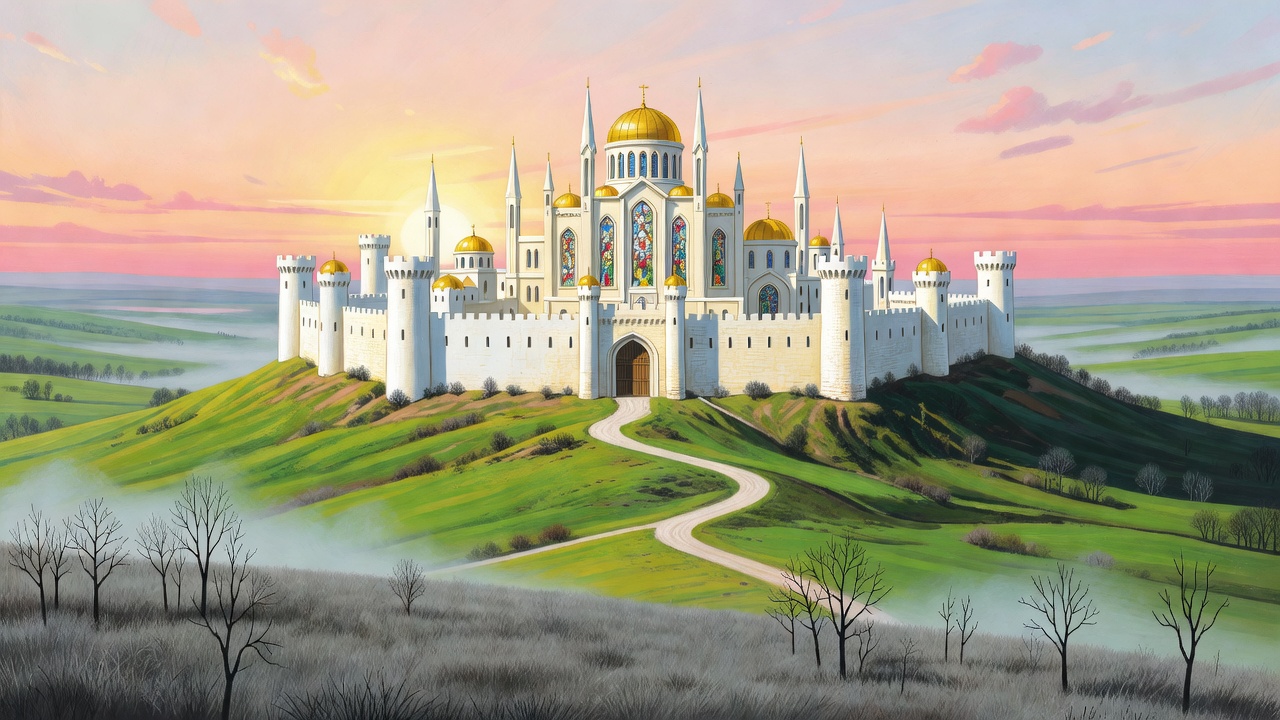
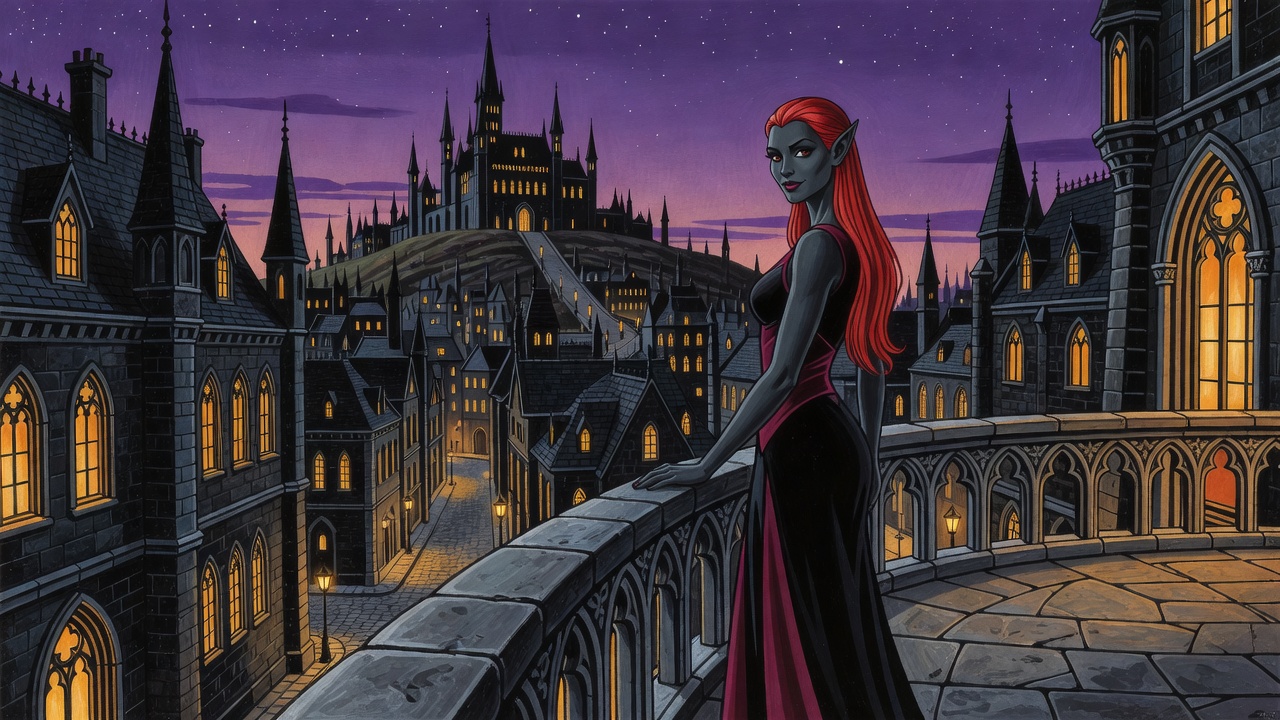
Laith’s home is the Russian cluster. Its high-elf capital, the City of Light, is the starting town, with the light god’s temple, a zoo and the Grey Bastion prison. The drow capital is a Gothic city with a quarter for each Great House, banks that take players’ money, and a palace on a hill; there Laith finds Ruata, princess of the House of Night, and the quest that will make him her prince.
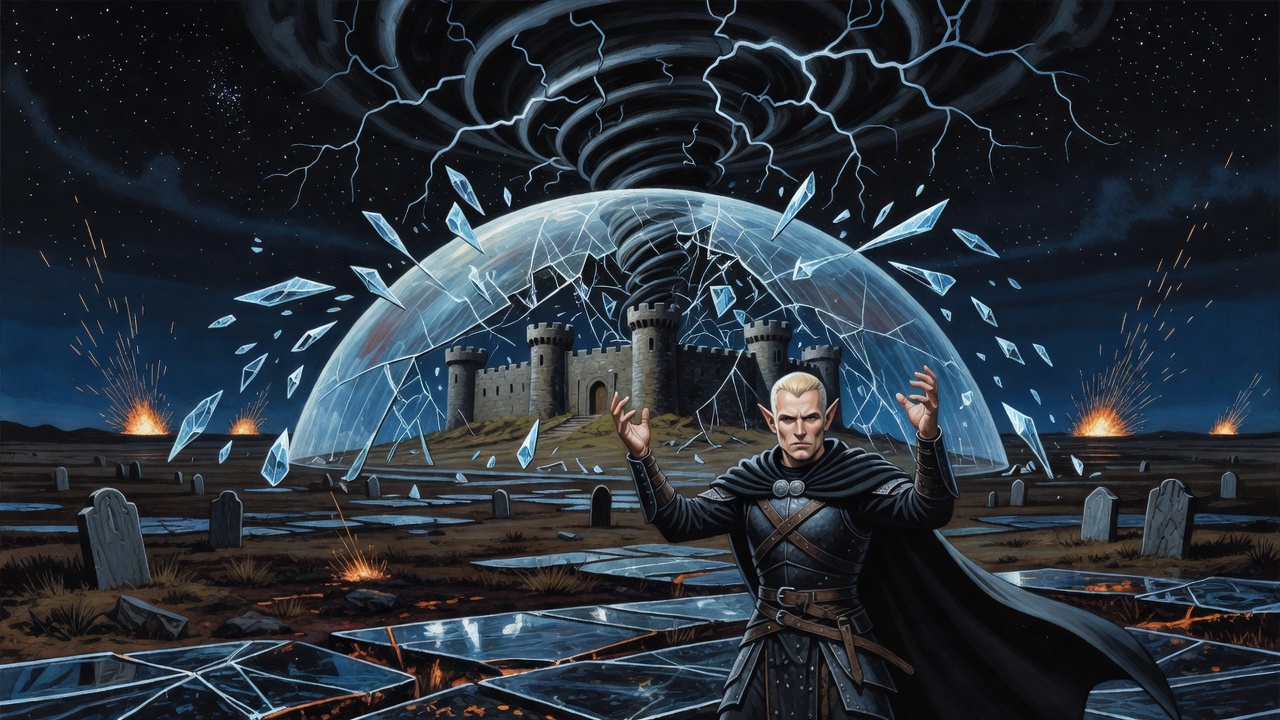
Clans are how players hold power: they own castles, raise armies and go to war. Laith’s clan, the Children of the Night, grows from two members to four early in The Clan; its emblem is a black panther and a white bone dragon in a circle. The Veterans, an army clan of ex-servicemen under General Frag — in real life a legless officer past eighty — are his first allies. The Forest Cats, rich men’s children who sell new players as slaves and break perma captives’ minds, are his first enemies. Castles sit under force domes, and when the Veterans storm the Cats’ Forest Castle at the start of The Clan, the dome is Laith’s job. Later wars are fought by alliances and whole clusters: against the Chinese clan Shuifong in the Frontier in The Duty, against the Light’s invasion of the Russian cluster in The Battle and The War.
The Valley, the First Temple and Inferno
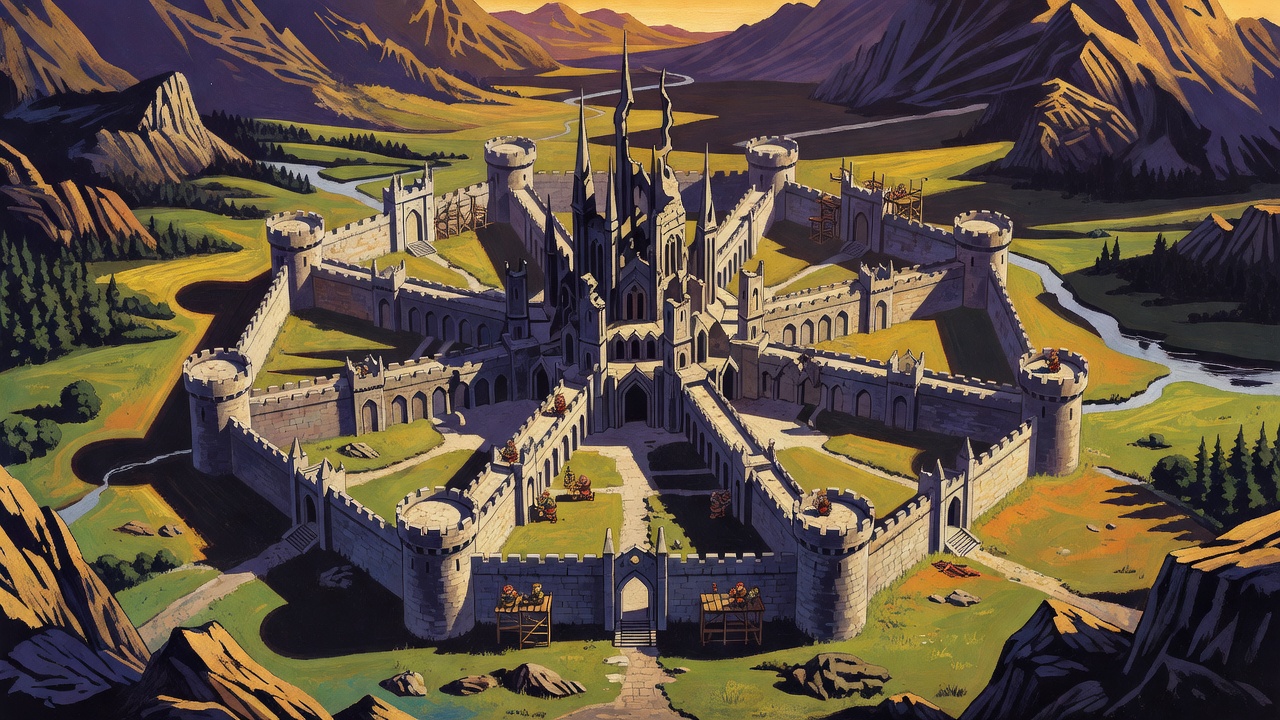
The heart of Laith’s world is the Valley — in full, the Valley of Fear — in the Dead Lands: water meadows, timber, a ridge of white marble, and ground full of mithril from an ancient war. In it stands the First Temple, the Fallen One’s altar inside a partly ruined castle of the Super-Nova class, which Laith restores in The Clan and buys on credit: twelve monthly payments of two million gold.
Over the books the castle fills: hellhounds in their den, dragons, Thror’s dwarves rebuilding the walls, a kindergarten for the hospice children in one wing and a rehabilitation centre for freed slaves in another, and in the elven garden, under a young mellorn tree, Taali’s tomb with its carved golden roof. In The Battle refugees flood the Valley; in The War the fight for the First Temple reaches its finale, and the gods themselves join in.
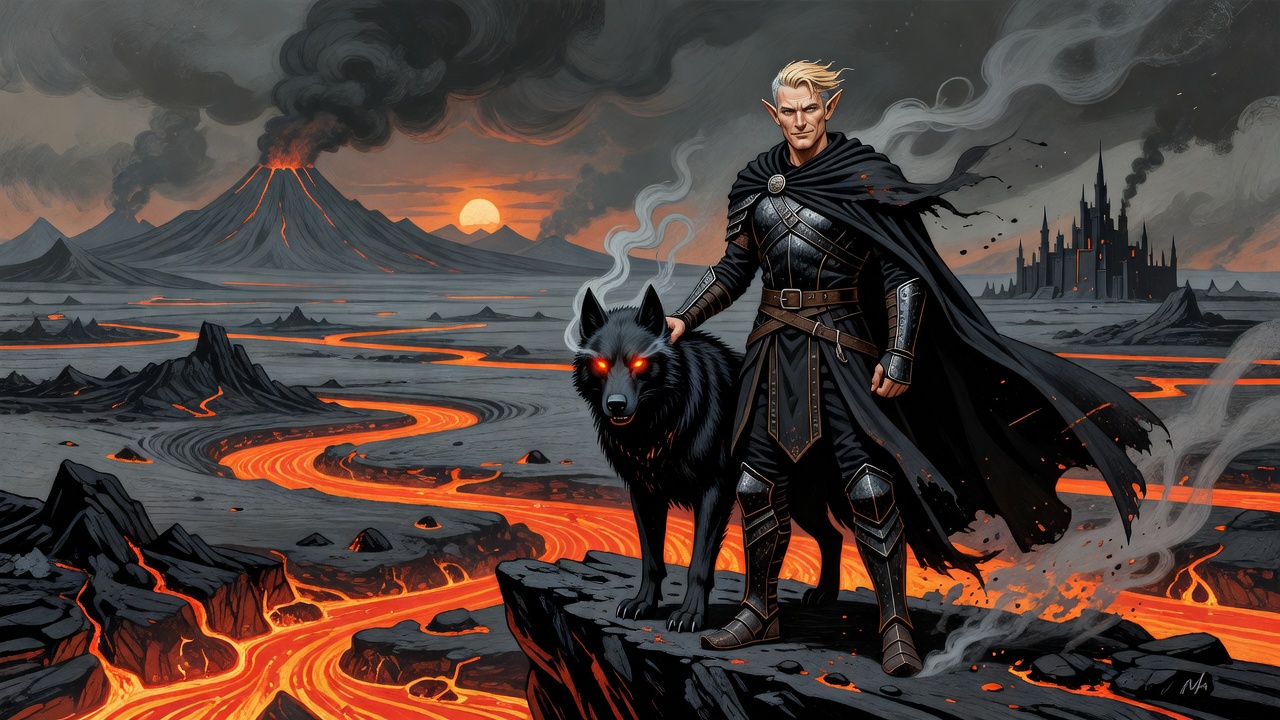
Inferno is a raid plane of volcanic wastelands, split into a hundred dominions under Supreme Demons, of which sixteen or seventeen survive. In Inferno Laith leads a raid there and makes a pact with the Supreme Demon Asmodeus, a fallen seraph, who will betray him in The War. One more place matters: the Crypt of Chronos, a dungeon under a castle built by Tavor’s father, where a week passes for every minute outside. From The Battle the clan uses it to train for months on the eve of war.
Nine books, one world coming loose
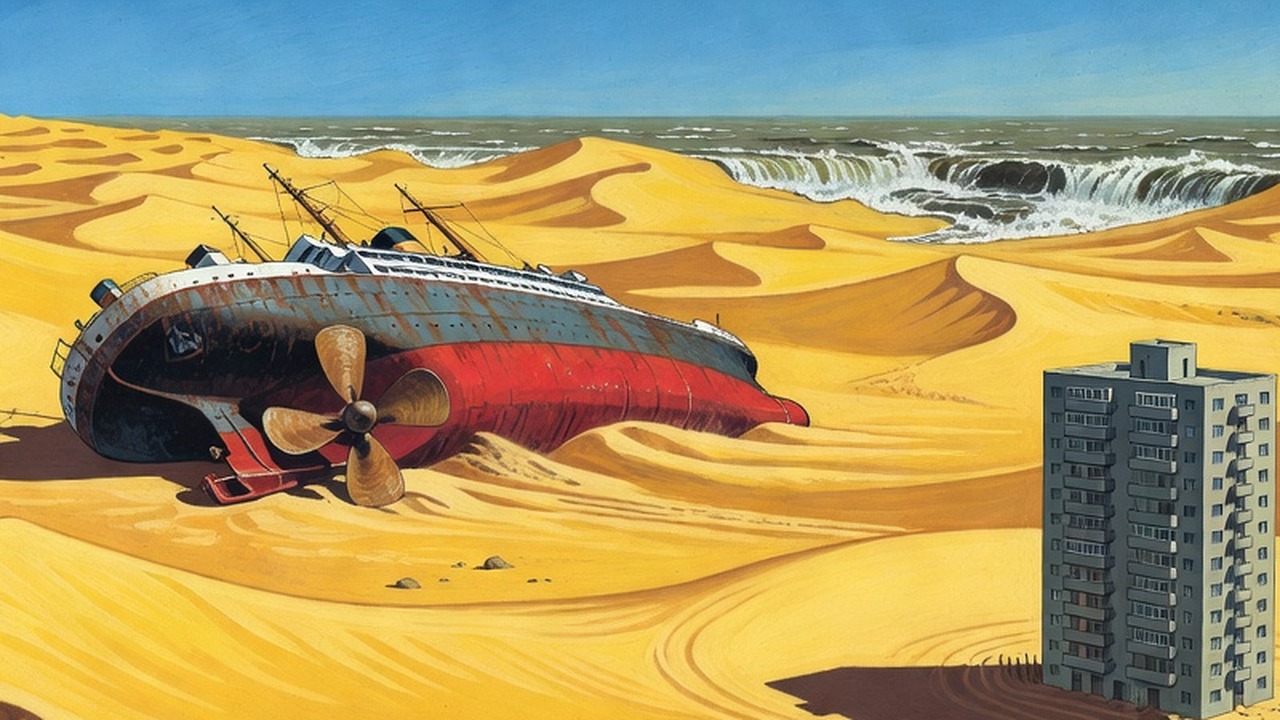
Book by book the world grows more real and comes further away from Earth. AlterWorld introduces the perma effect and virtual slavery; The Clan builds a perma society, with a castle, a temple and a new god. In The Duty, in its blurb’s words, “The virtual world has seen its first birth — and its first death,” and the Fallen One warns that the cord to Earth is thinning. In Inferno belief summons real gods and real demons, and reality starts to tear. The Battle and The War are the war for the First Temple, in which even the gods take part, and halfway through The War the Rupture tears AlterWorld away from Earth: game mechanics fail, ordinary players are thrown out, Earth’s debris lands in the Frontier, and AlterWorld’s creatures reach Earth. In The Ultimation (in Russian, Exodus) demons from three game worlds — AlterWorld, Diablo and Heroes of Might and Magic — invade Earth, and Laith goes there to fight them. His last fight with Asmodeus leaves a crater four kilometres wide in Inferno and no sign of him. For five years that was the end.
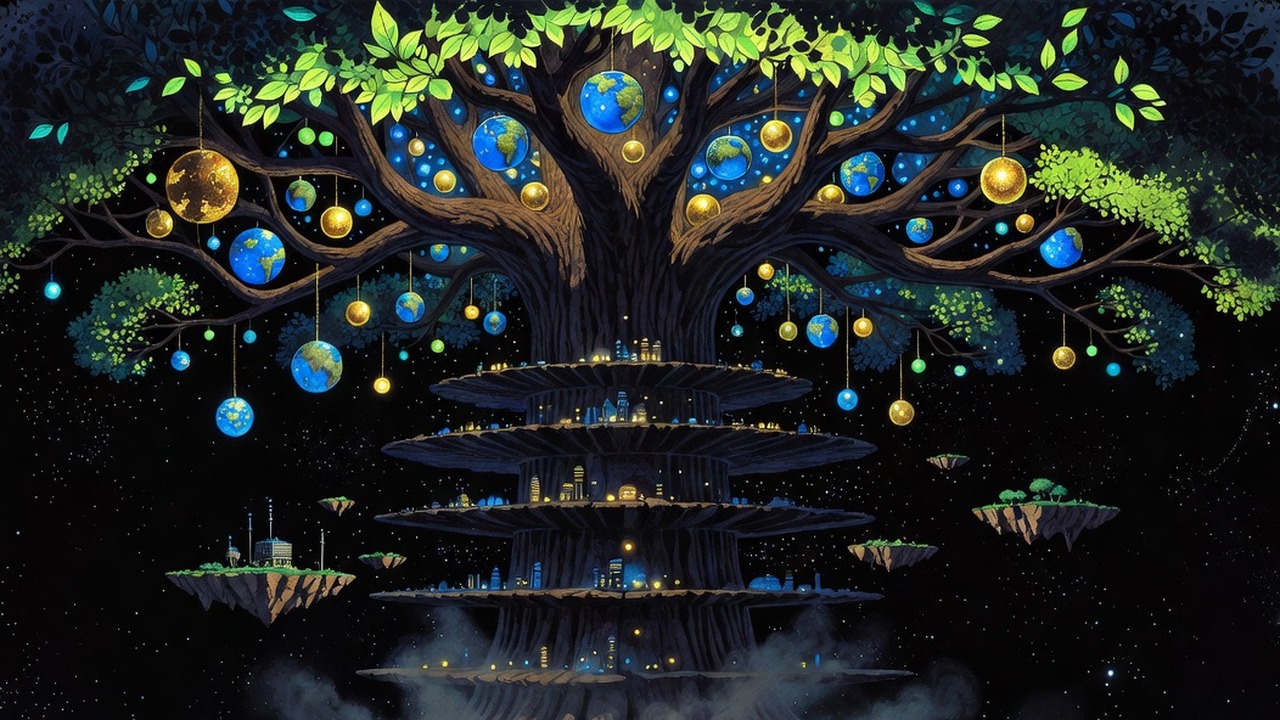
A Newborn God (Russian 2020, English 2022) starts the hero over: Laith wakes as a level-1 god, the least of AlterWorld’s twenty-nine, in the Divine Nursery, on the World Tree where every god lives, and spends his faith on the friends he left behind until he falls to the bottom of the Tree. Without him the alliance cracks, and interludes dated Year 22, by a calendar counted from the Battle at the walls of the First Temple, bring Tavor back, past level 700, to claim the City of Light as its king. The Road Home (Russian 2021, English 2025) sends him back up as a Militant God of Justice, with a small pantheon of his own, a crude blade that can cut a world from the Tree, and a year to carry AlterWorld to safety while, in the blurb’s words, “the virtual world is deprived of magic.” It ends unresolved. A tenth book is being serialised in Russian, unfinished.
LitRPG, and no adaptation
Play to Live first came out from the Moscow publisher Eksmo in 2013, among the founding titles of its LitRPG series, launched that August. “D. Rus” is the pen name of a writer born in Kyiv in 1975, with a degree in mathematics and computer science: a lapsed gamer whose first draft was savaged on Eksmo’s forum, who posted it on the Samizdat site instead, found readers, and had four publishers’ offers. Audible’s author biography says critics credit him with creating LitRPG single-handedly. The record is more crowded: Wikipedia, citing Magic Dome Books, has the word coined late in 2013 by the writer Vasily Mahanenko and the editors Dmitry Malkin and Alex Bobl, and gives a 2012 web novel by Dem Mikhailov as the first Russian book in the style. Play to Live is one of the genre’s founding series, not its first.
The English editions were self-published on Kindle from 2014; Amazon names no translator, Audible’s editions of the fifth and sixth credit Alisa Bogodarova, and the Russian database fantlab says Rus translated the first five himself; the ninth came from Zweihänder Publishing in 2025, and Michael Goldstrom reads the first seven for Audible. Readers in both languages love the premise, the humour and the Fallen One, and object to the hero’s luck, the treatment of women and the nationalist asides.
No adaptation of any kind has been found — no film, series, animation, game, comic or stage version, made or announced — as of October 2026. fantlab lists no film for the cycle or any of its books; IMDb, Steam, Wikidata and BoardGameGeek turn up only unrelated titles, two of them games called AlterWorld; the rights agency offers translations only; Russian and English searches, comics, manga and webtoons included, found nothing. Beyond translations, there are only straight audiobook readings.
The nine books at a glance
| # | English title | Russian title | Russian / English | Where Laith stands | What changes in the world |
|---|---|---|---|---|---|
| I | AlterWorld | «Срыв» (Breakdown) | 2013 / 2014 | goes perma as a High Elf warlock, then death knight; founds a clan; captured and tortured by the Forest Cats, the book breaking off as the Fallen One intervenes | the perma effect; virtual slavery |
| II | The Clan | «Клан» | 2013 / 2014 | First Priest of the Fallen One, lord of the First Temple, Prince of the House of Night; his Moscow body dies; Ruata betrays him to Lolth | perma society takes shape; governments reach for AlterWorld’s gold; the first new dark god, Macaria |
| III | The Duty | «Долг» (Duty) | 2013 / 2014 | freed from Lolth’s halls on hard terms; wins a war in the Frontier; loses Taali | the first birth and the first death; the cord to Earth thins |
| IV | Inferno | «Инферно» | 2014 / 2015 | brings Aule into the dark pantheon; allies with Asmodeus; strikes the Bright-Faced One | faith summons real gods and demons; gnolls at the Kremlin |
| V | The Battle | «Битва» | 2014 / 2015 | Chief of the alliance; borrows Tavor’s body; trains his clan in the time-crypt | the Light invades the Russian cluster; refugees flood the Valley |
| VI | The War | «Война» | 2015 / 2015 | holds the First Temple; dies as Asmodeus breaks through to Earth (respawning in VII) | the gods fight; the Rupture tears AlterWorld from Earth; the Baltic pours into the Frontier |
| VII | The Ultimation | «Исход» (Exodus) | 2015 / 2016 | fights the demons on Earth; ends a god, vanished in Inferno | demons from three game worlds invade Earth |
| VIII | AlterWorld: A Newborn God | «Путь молодого бога» (The Young God’s Path) | 2020 / 2022 | a level-1 god, last of AlterWorld’s twenty-nine, in the Divine Nursery; then at the bottom of the World Tree | the alliance cracks without him; the cosmos of the World Tree |
| IX | The Road Home | «Дорога домой» | 2021 / 2025 | Militant God of Justice; cuts AlterWorld from the Tree to carry it to safety; never gets it home | AlterWorld cut from the Tree and “deprived of magic”; the story stops unfinished |
The rules of the game
- Death and respawn. Players respawn at a bind point and run back to their gravestone, which keeps their gear for a while. A few weapons and rites mean final death: whoever dies on an altar by Lolth’s Spider Dagger goes to her Dark Halls (The Clan).
- Races and classes. Ten races and a dozen-odd classes; Laith is a High Elf warlock who becomes a death knight at about level 30 and is near level 50 after two weeks of game time.
- Fame and faith. Fame level 5, in The Clan, means children are named after you. Priests ordain priests, high priests summon gods, and from A Newborn God a god pays Faith Points for every change he makes to reality.
- Money. 100 copper make a silver, 10 silver a gold, 10 gold a US dollar; from Inferno purple mithril coins worth ten gold carry the Fallen One’s portrait. Real-money deals over a million dollars are supervised by the virtual police.
- Castles and domes. Castles come in classes (Bastion, Nova, Super-Nova), sit under force domes (Colossus is a strong one) and have spirits; Laith buys his on credit.
- Names and souls. Naming an NPC gives it a soul and a chance of rebirth; named and befriended NPCs can go perma, and Laith recruits them.
- The interface. System messages, quest notices and stat windows run through every book; it fades as Max goes perma, and in A Newborn God the gods’ help desk gives a young god from a game world game interfaces as a kindness.
- Time. In the Crypt of Chronos a week passes for every minute outside; in the Divine Nursery time runs at 1:100.
Across the nine books
- Laith: High Elf warlock, death knight from about level 30 (I); First Priest of the Fallen One, lord of the First Temple, Prince of the House of Night (II); Chief of the alliance (V); a god by the end of VII; a level-1 god, the least of AlterWorld’s, in the Divine Nursery (VIII); Militant God of Justice (IX).
- Max’s body: dies in Moscow during II.
- Taali: plays from Earth and never goes perma; dies on Earth at the end of III; her tomb stands in the First Temple’s garden.
- Ruata: a caged captive when Laith first meets her (I); princess of the House of Night, married to Laith by a quest and then his betrayer (II); later his wife, the readers’ wiki says.
- Max’s mother: on Earth (I-III); in AlterWorld from IV as an elf growing younger; High Priestess of Yavanna by VI.
- The Fallen One: a cast-out god (I); head of the dark pantheon from II; in IX still Laith’s patron, who helps send him to save AlterWorld and admits he has steered him since Book I (one reader says he deceives him too).
- Tavor: a Forest Cats warrior among Max’s captors, ordered to take him to the clan’s torturer (I), then escapes the Veterans’ storm swearing revenge (II); strikes at Max’s people on Earth (III); his soul trapped in a Lump of Nerves (IV) and his body borrowed by Laith (V); back in VIII’s interludes to claim the City of Light as its king.
- Earth and AlterWorld: gold and people cross one way (I-V); the Rupture (VI); invasion of Earth (VII); AlterWorld cut from the World Tree (IX).
Notes
- Names. The English edition renames the hero (Gleb becomes Max), the cryonics firm (Alcor becomes Chronos) and the Veterans’ white pest (Cheburashka becomes Pooh the Bear); Tanya plays as Taali. The German edition of Books 1-2, translated from the English, also gives the City of Light for the high elves’ capital (Russian Ясный город, literally “Clear City”), the Fallen One, Ray31 and Crimson9. Other English forms used here were not seen in the English text and may differ: the drow capital (Изначальный: “City of Origin” in that German edition), the Children of the Night, the Bright-Faced One and Barrymore.
- The series title is Russian «Играть, чтобы жить», Play to Live; Amazon sells Book 1 as AlterWorld: Play to Live.
- The Ultimation’s English blurb is the blurb of The War reused; the book itself follows the Russian Exodus annotation.
- Stories (English 2015, 40 pages) holds two 2014 stories: The Three Bears and the Legion of Zombies, in which a tank crew meets an undead legion when AlterWorld breaks into Earth, and Call of Duty, Doc’s story of moving dying children into the game.
- Book 10. fantlab lists «Играть, чтобы жить — 10» as an unfinished web serial (October 2026); there is no English edition, and Amazon numbers The Road Home as the last of nine.