Play to Live · Book I · 2013
AlterWorld
A Moscow gamer with a month to live climbs into a hacked virtual-reality capsule, hoping his mind will stay in the game when his body gives out.
AlterWorld is the first novel of D. Rus’s Play to Live. It appeared in Russian from Eksmo in 2013 as «Срыв» (“Breakdown”), one of the founding titles of the publisher’s LitRPG imprint that year, and in English in July 2014 in a self-published translation that credits no translator; Michael Goldstrom’s audiobook followed in 2015. In a Moscow of the 203Xs, Max, thirty-one and a reformed hardcore gamer, learns that he has about a month to live. There is a way out the state would rather not discuss: people who stay long enough in the virtual world AlterWorld sometimes never come back, because their minds have crossed into the game. The English blurb lists the willing and the unwilling alike: “Woe be to those stuck forever in Tetris!” Max decides to go perma on purpose.
Max tells the story himself, in the first person, jokey and thick with gamer slang, stat windows and system messages, while classified memos and reports from the governments watching AlterWorld are slotted between the chapters. The dying man’s deadline is beaten before the halfway mark. After that the book becomes a story of levelling up and making friends, then a love story, a business story about a forbidden cigarette and a tournament, and finally a sudden fall into captivity that ends mid-crisis. Readers love the premise, the zombie bear and the dark god; many also object to the book’s attitudes, especially toward women and in its ethnic stereotyping, which this page reports but does not quote.
This page summarises the whole book, ending included. Names follow the English edition: the hero is Gleb in the Russian and Max in English.
One Month to Live
Before the story starts, a top-secret memo to the Russian President counts 82,000 citizens lost to the perma effect in a year, writes them off as social ballast, and proposes throttling virtual worlds. Then a prematurely grey professor takes off his glasses, rubs his eyes and tells Max, thirty-one, that the tumour in his brain is inoperable and leaves him about a month of normal life. Max has rebuilt himself once already: he used to play twelve hours a day and lost friends, girlfriend and studies to it, quit after the car crash that killed his father and disabled his mother, and started a computer-repair business, took up sport and gave up smoking. His mother lives on a tiny disability pension in his grandfather’s old house in the country outside Moscow, with a bad heart and failing legs. His goals for the month: leave her money and, at most, pay to be frozen.
He drives to the cryonics firm Chronos (Alcor in the Russian), on a whole floor of a flashy business centre. Olga, a very young and strikingly beautiful sales manager, explains that clients are frozen only after legal death: $70,000 for the whole body, $25,000 for the head alone, $6,000 for a DNA sample. As he leaves she gives him her hand, looks him in the eye and says she will call. At the bank a grey-haired manager nearly approves a loan, sees Max’s medical record and scolds him, then hints that shops do not check records for credit under 10,000 roubles and sends him off with a blessing.
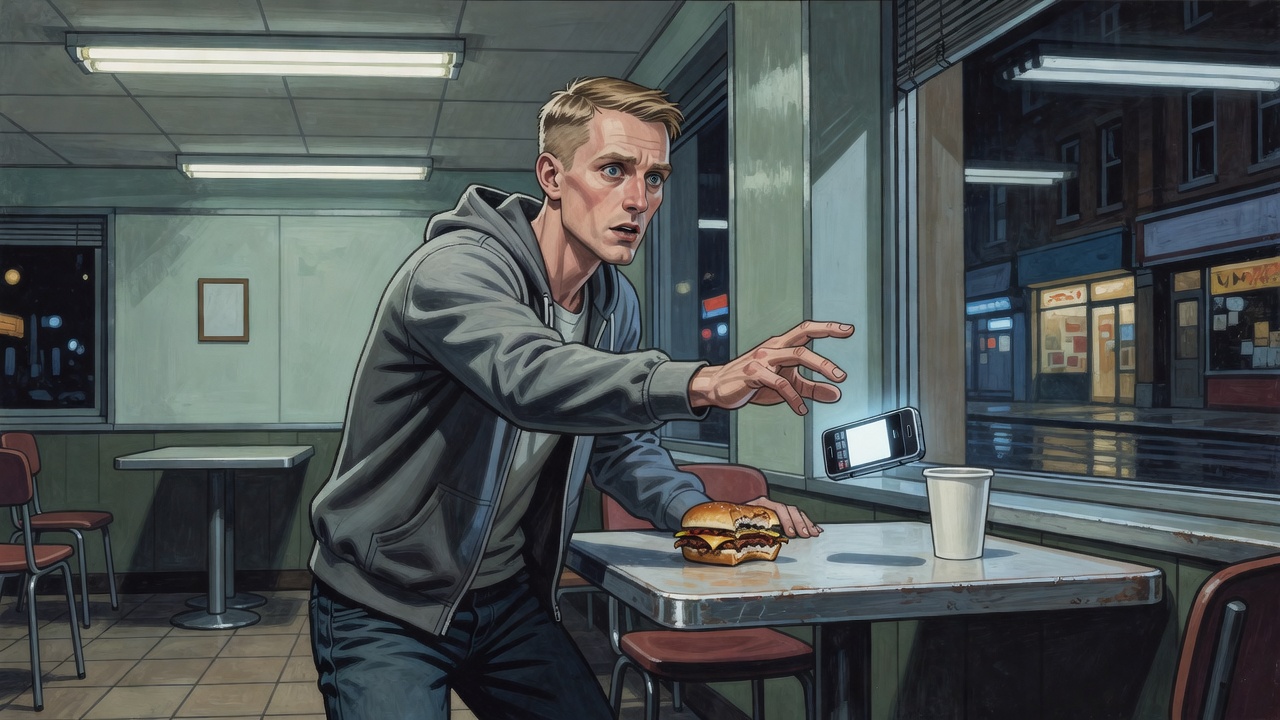
A classified FSB report follows: of twenty prisoners kept in virtual reality, seventeen went perma within seven days, irreversibly. Max spends five frantic days collecting debts, losing $500 at roulette and buying electronics on credit to resell at a third of the price. One evening in a burger bar his phone rings: Olga. Her own mother died of cancer, she says, and cryonics is not the only option. Has he heard of going perma?
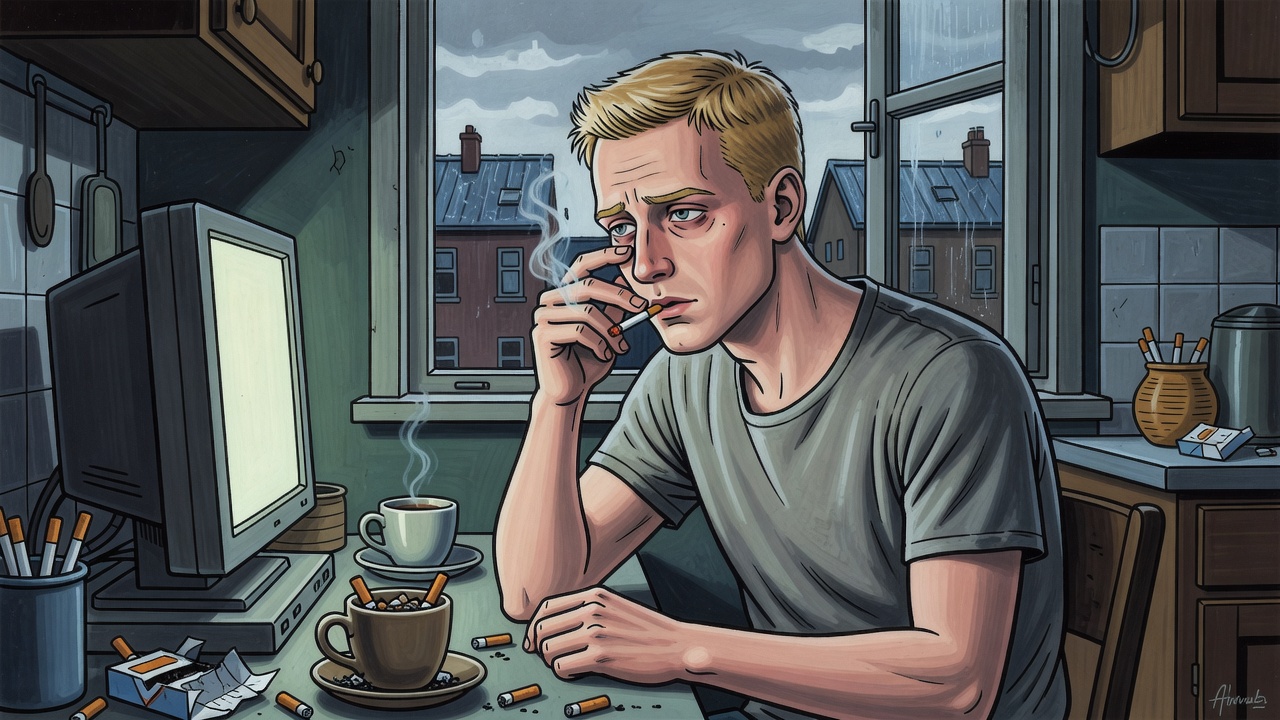
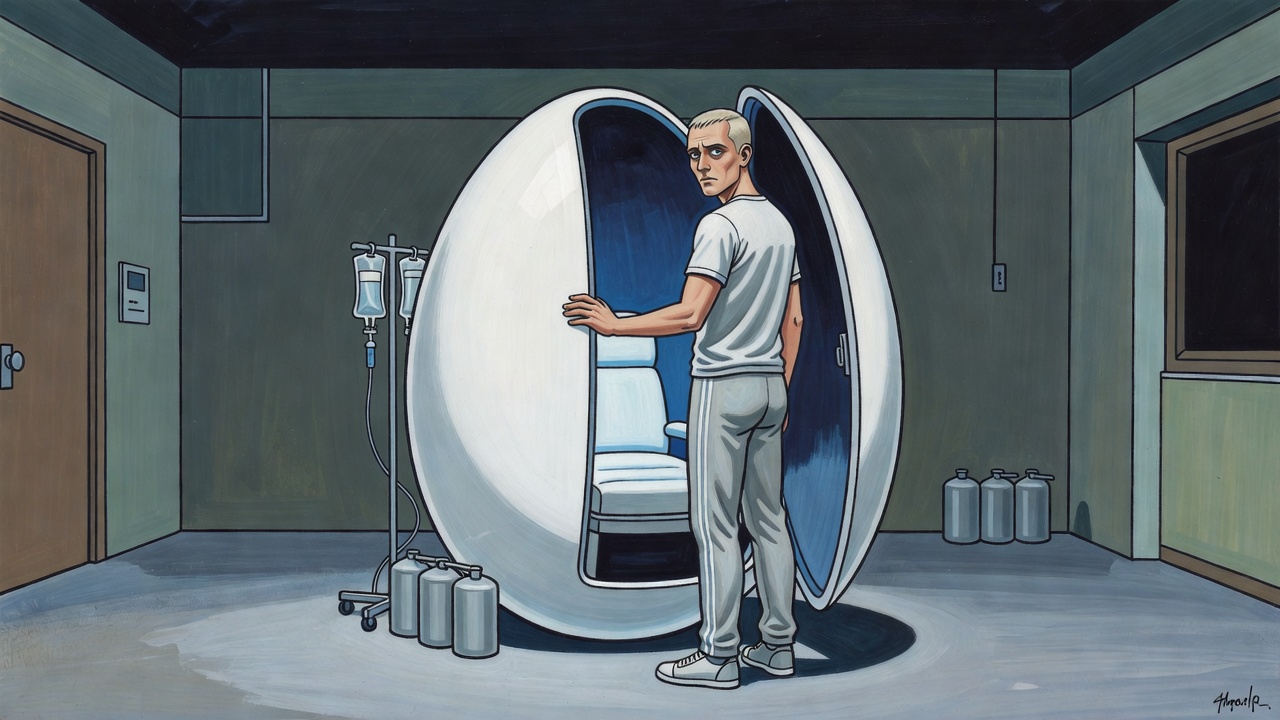
He sits up all night with coffee and an old pack of cigarettes, reading. There are players trapped for good in Tetris and in tank simulators, but also the disabled, the old, condemned prisoners, and lovers who chose a virtual world over suicide. By dawn he has a plan: a jailbroken chip to beat the capsule’s hardware timer, and IV drips and nutrient canisters to keep his body alive for a week or two while his mind makes the jump.


Child of the Night
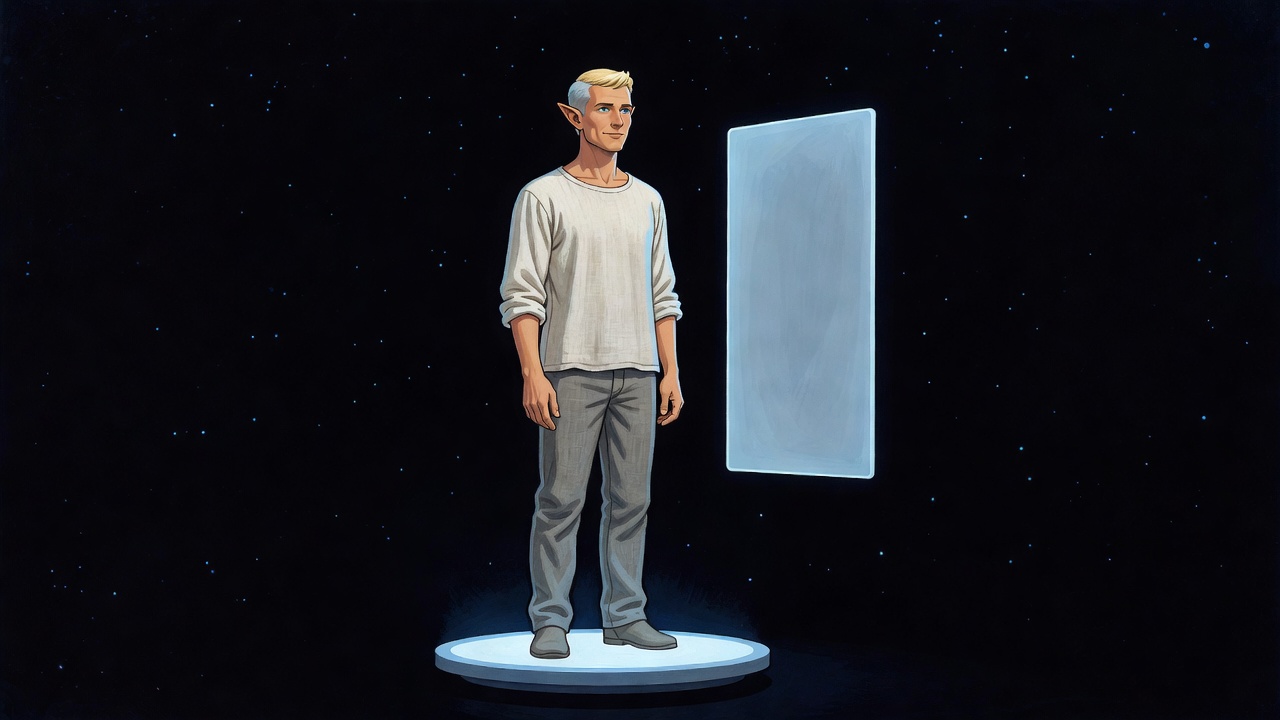
An encyclopedia entry sets out the world: launched in May 203X, 48 million players, a growing land generated by the AI Ray31 and run by Crimson9, $42 billion a year in real money. He makes a High Elf, for the bonus to Intelligence every level, and ignores the warning that the City of Light, the high elves’ capital and starting city, borders the Dark Lands. Then he picks the shunned class: a warlock who secretly worships the Fallen One, and who must choose at level 10 between Necromancer and Death Knight. Warned that NPCs may shun him, he shouts at the interface that he will be the first dark elf among all their cute paladins. He puts his points into Intelligence (11) and Spirit (6), builds the face from a scan of his own, roughened into a sharp-featured soldier of about thirty with a few grey strands, and names him Laith: in elvish, La is night and Ith is child.
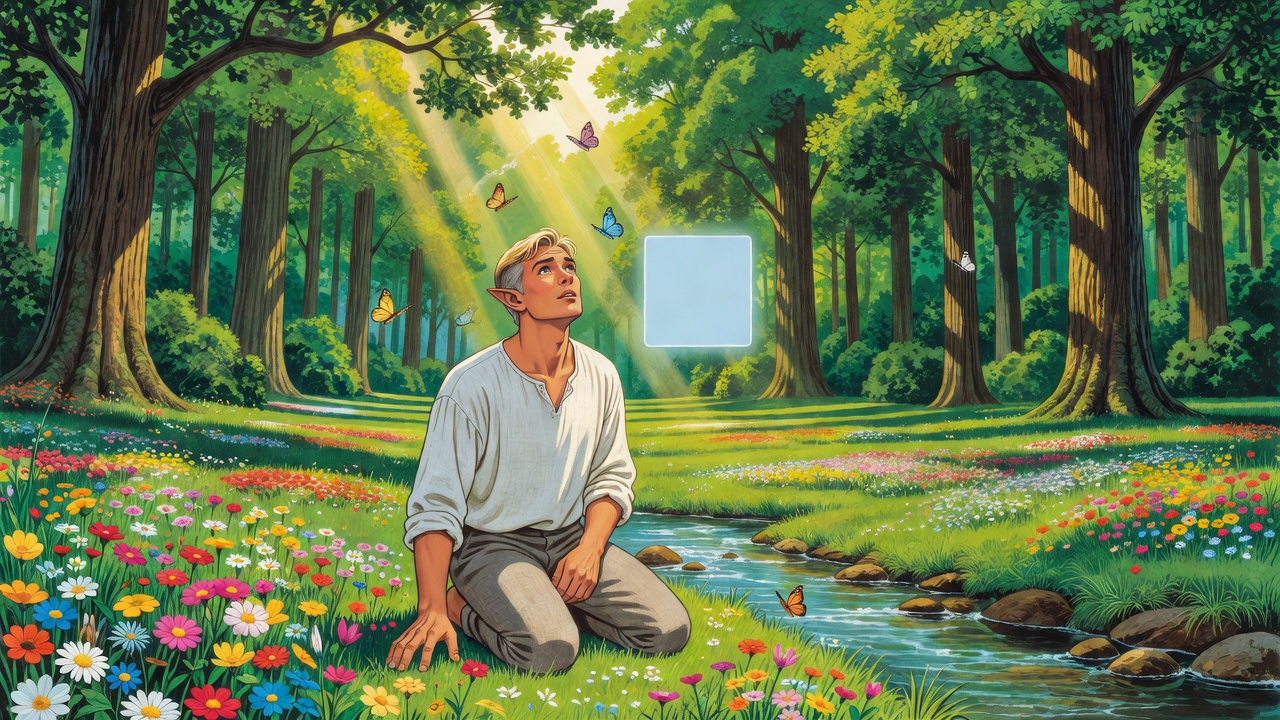
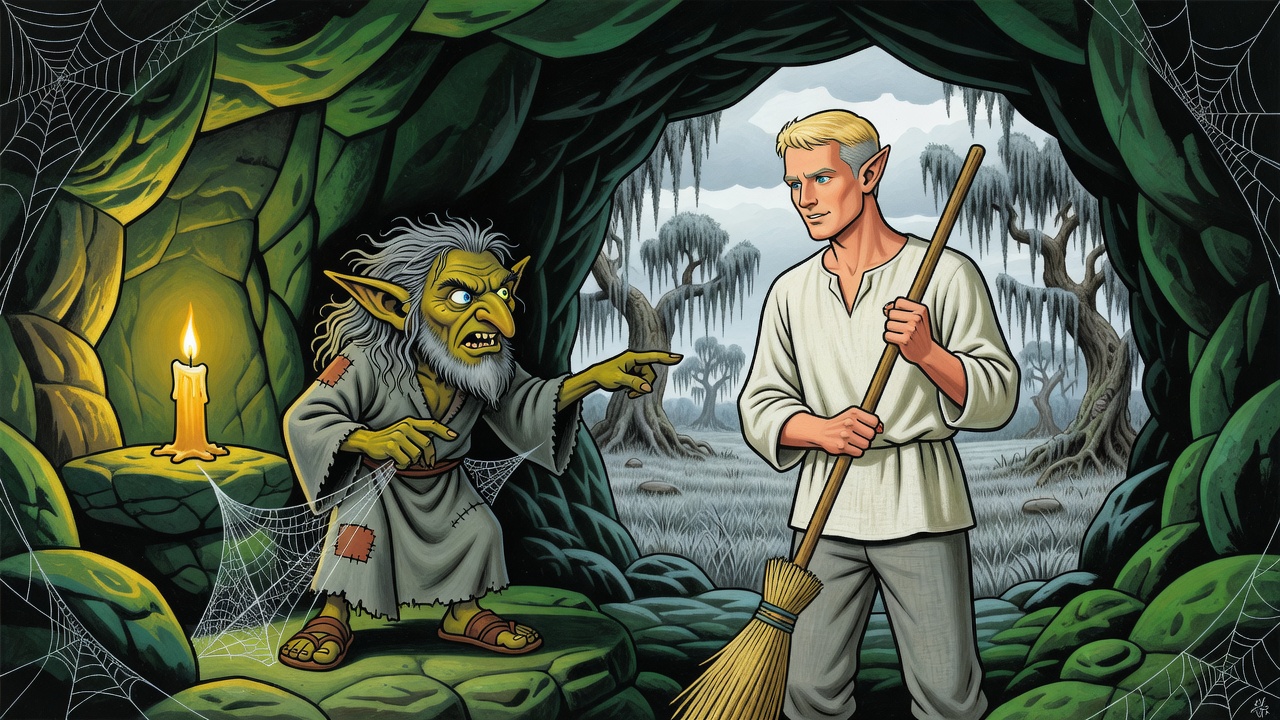
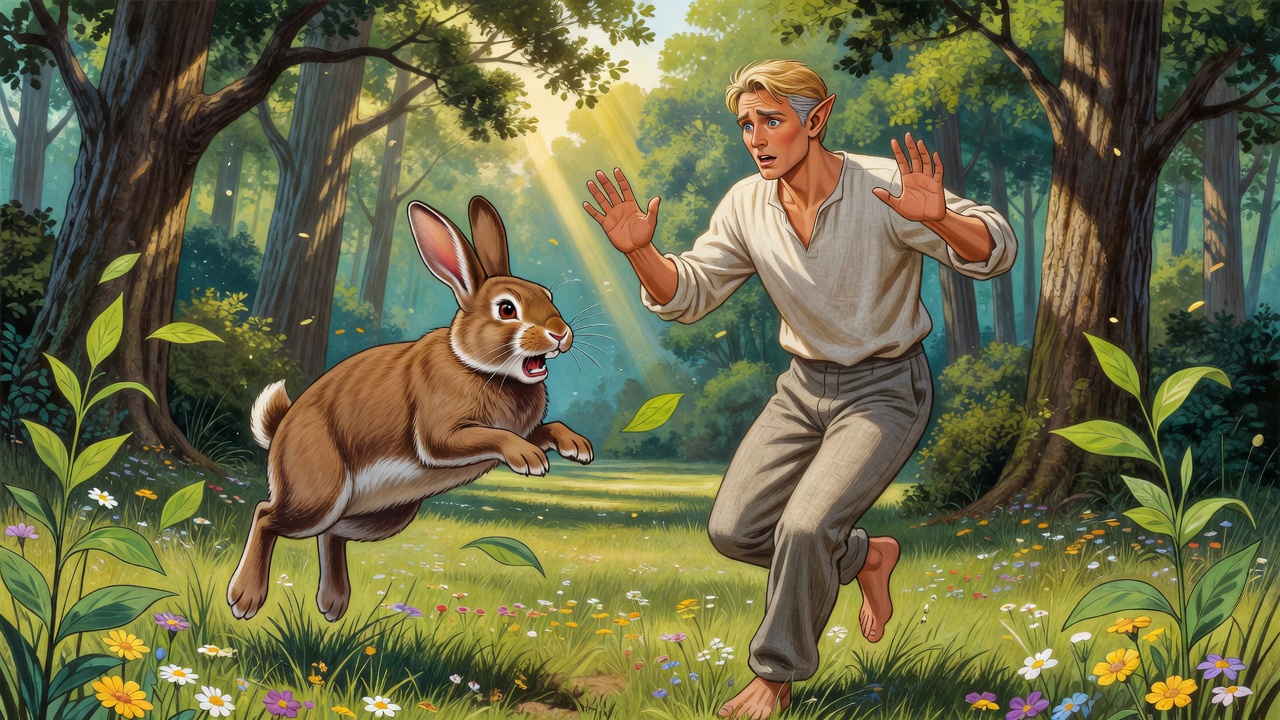
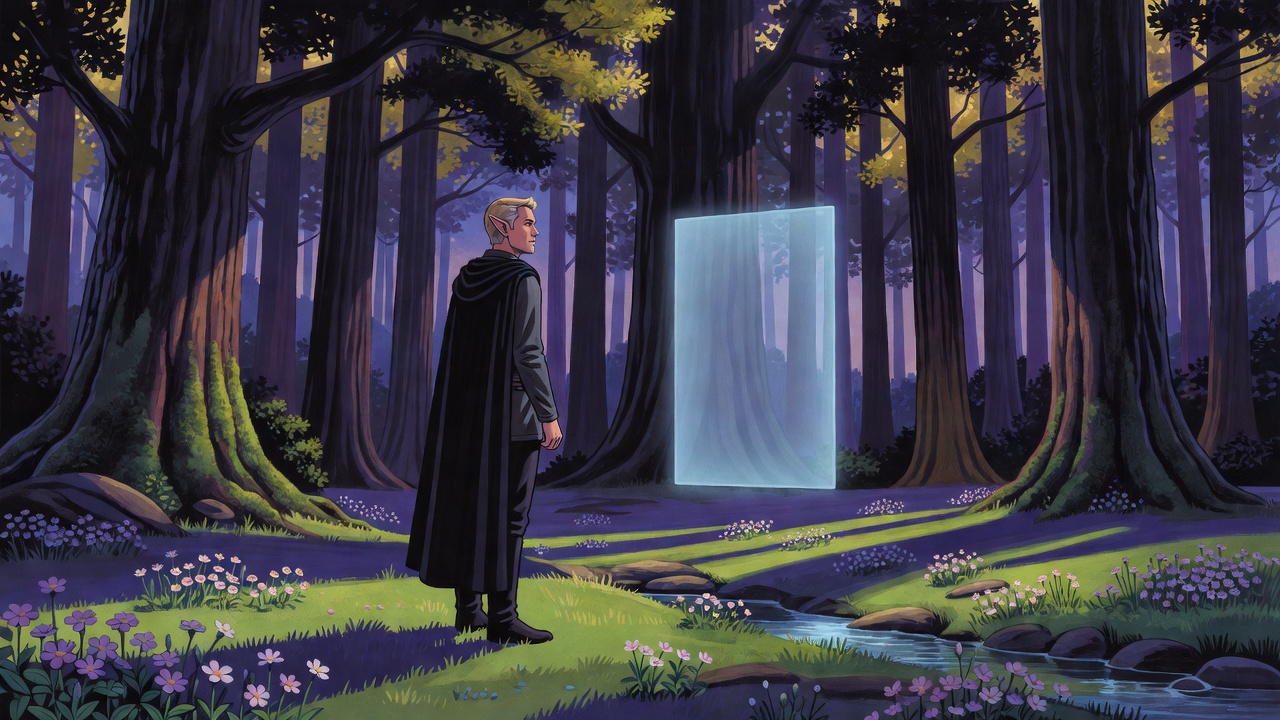
He wakes in a radiant forest as clean as a park, with a murmuring brook, butterflies and a carpet of flowers, in a plain linen shirt and grey linen trousers. The connection panel shows no usage restrictions: the jailbreak works. A quest from Aquilum, Guildmaster of the Dark Guild in the City of Light, a guild that appears on no city map, sends him east to a hermit. In a candlelit cave off a clearing of grey grass and silver-mossed trees he finds Grym, a small grey-haired goblin with one blue eye and one yellow, who tells him to put down the broom he has grabbed for a weapon. Grym trains him, and secretly serves the same god. In his very first fight Laith is very nearly killed by a level-3 rabbit, which has been a running joke among readers ever since.
The first player he meets is Cryl, a beginner elf rogue who holds out a blood-smeared hand to shake. In the city he meets Eric of the Veterans, a perma player who in life was a 1.90-metre airborne senior lieutenant (chapter 6 in the Russian). That evening, at an inn, Eric introduces the clan’s newest recruit: a girl of eighteen, paralysed from birth, whom he found outside the west gate feeding daisies to the hares and running after butterflies. Eric becomes his best friend and tries to recruit him into the Veterans, an army clan of former servicemen with castles of their own.
The Bear and the Gnolls
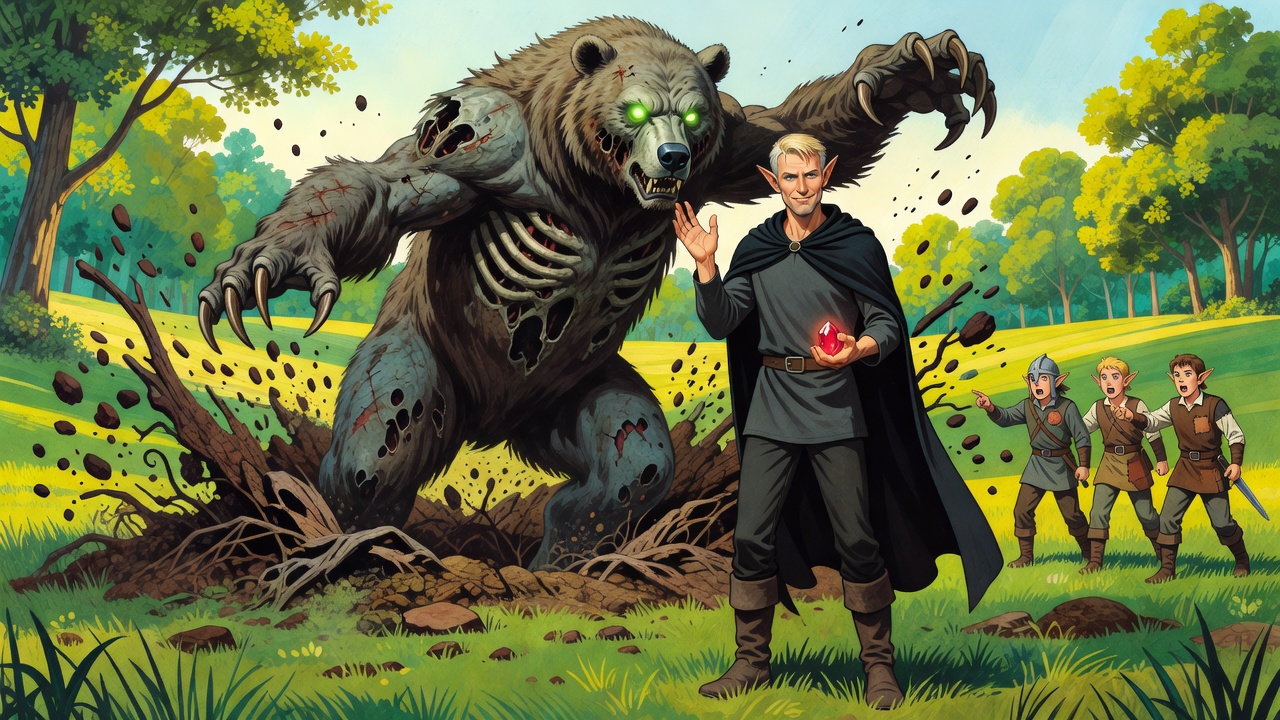
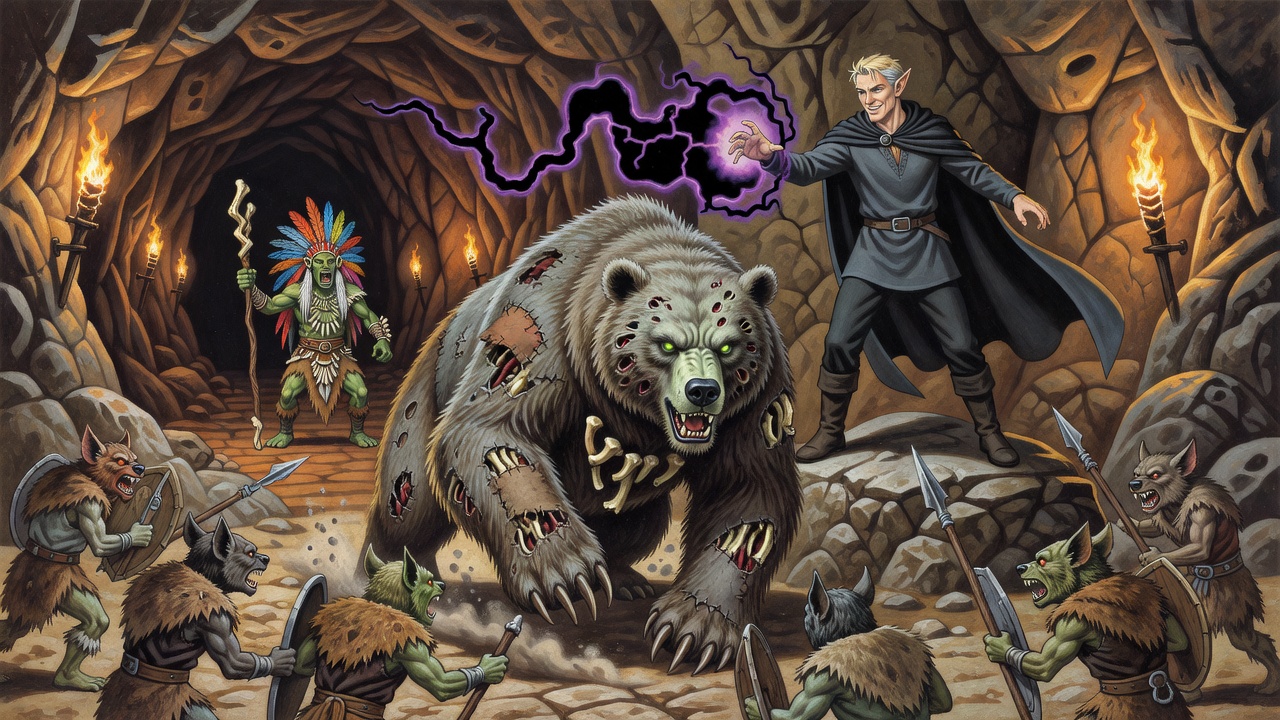
Laith comes by a soul stone, a big, intricately cut ruby the size of a five-kopeck coin, and at level 8, by sheer luck, kills a level-36 Red Bear (chapter 7, by the count of the reader wiki on the author’s site). Testing a summoning spell on the stone, he raises a gigantic zombie bear out of the ground, names it Humungus, and assures three startled young elves that it is just a little nervous.
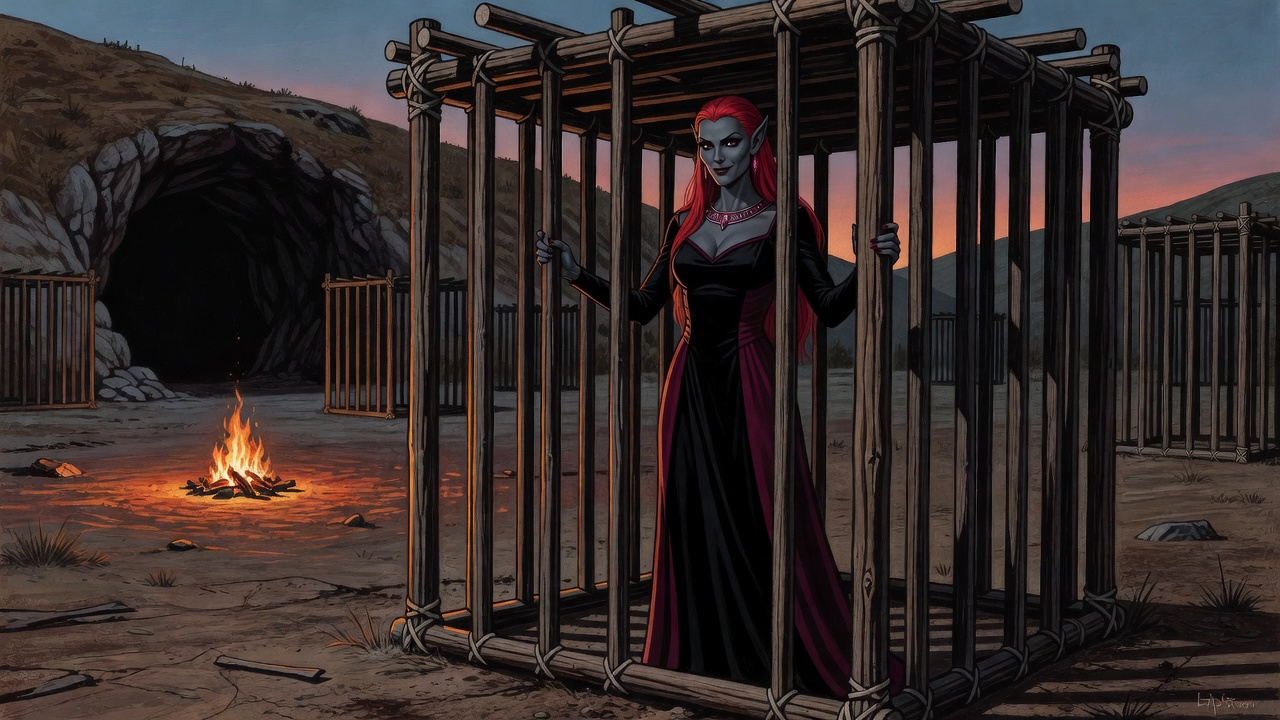
Gnoll Hill, a dungeon outside the City of Light, is where he puts the bear to work (chapter 8). Before its entrance stand cages of captured drow cutthroats of the House of Night, and in the last one waits Ruata, scarlet-haired, calm and haughty, with a thin carved collar pulsing burgundy at her throat. She thanks the young warlock but will not leave without her warriors, and the key to the cages lies in the depths below. With Humungus as his tank Laith spends several chapters power-levelling in the dungeon, until the bear finishes the last defender and turns on the gnoll Shaman. In time Ruata goes free and gives him her mark, which makes the drow his friends, and a promise of her cutthroats. Taali, who later hears every detail of the drow quest, is jealous of the way he looked at the princess.
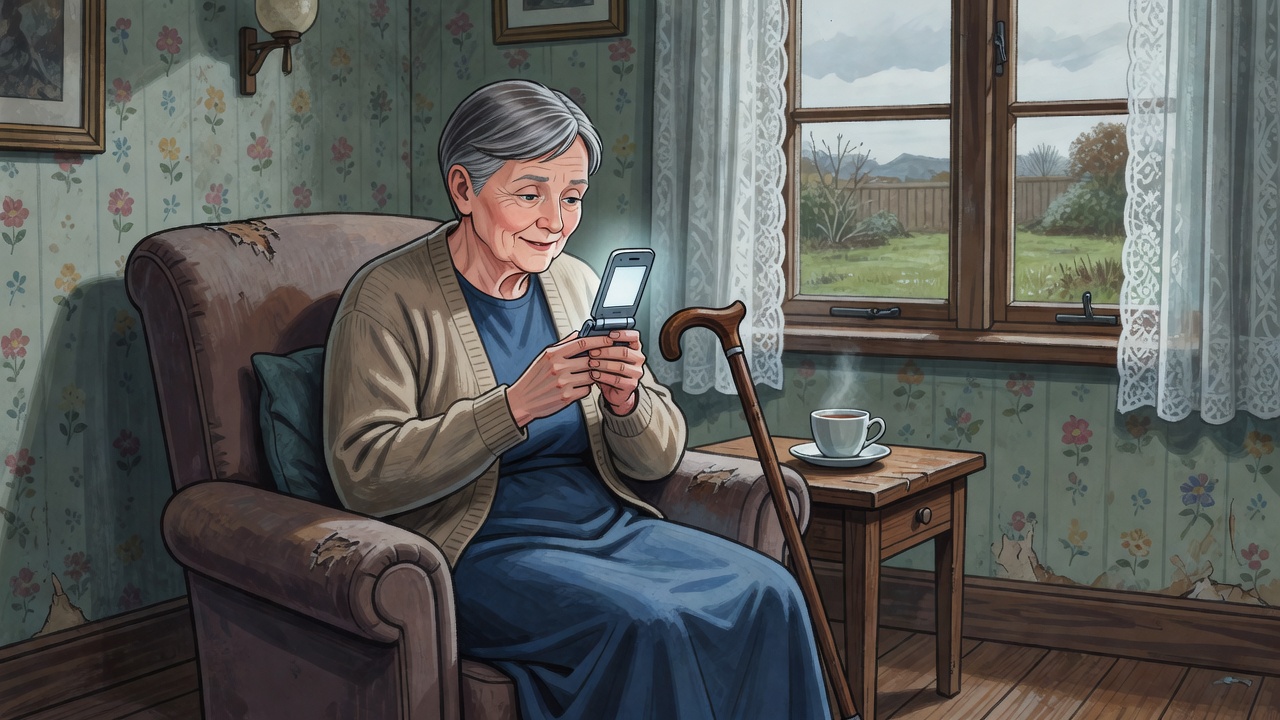
The loot goes through the auction house, watched over by what Max calls “my inner greedy pig”, the stinginess that faints at every expense. Between fights he texts his mother on Earth. Then, within about three days of play, it happens: the interface begins to fade, and he simply knows where north is. Max has gone perma, well before mid-book, and the clock that drove the opening chapters stops.
Friends, a Girl and the Dark Side
Eric proves honest to a fault, urging Laith to sell a valuable phial for two or three thousand gold rather than give it to him. Then there is Taali, a young elf player who waves him off her fight. He tries to shake her off in turn; she kisses him, and they become lovers. Late one night she tells him, in the third person, of two athlete sisters: Tanya, nineteen, and the younger, sixteen, whom two well-connected men in a big black car took after training and a policewoman then hounded until she took her own life; the case was closed, and the officer traded her BMW for a newer one. Tanya, who is Taali, works by day and plays by night to save for a rifle. Laith weighs the danger to himself and his mother, then commits money and help to her revenge because he has given his word. The revenge is not carried out in this book. Taali tells him that AlterWorld is the only place where she feels good, and that she will go perma; he offers her his flat in Moscow, where her portrait now hangs, help finding a capsule, and a meeting with his mother.
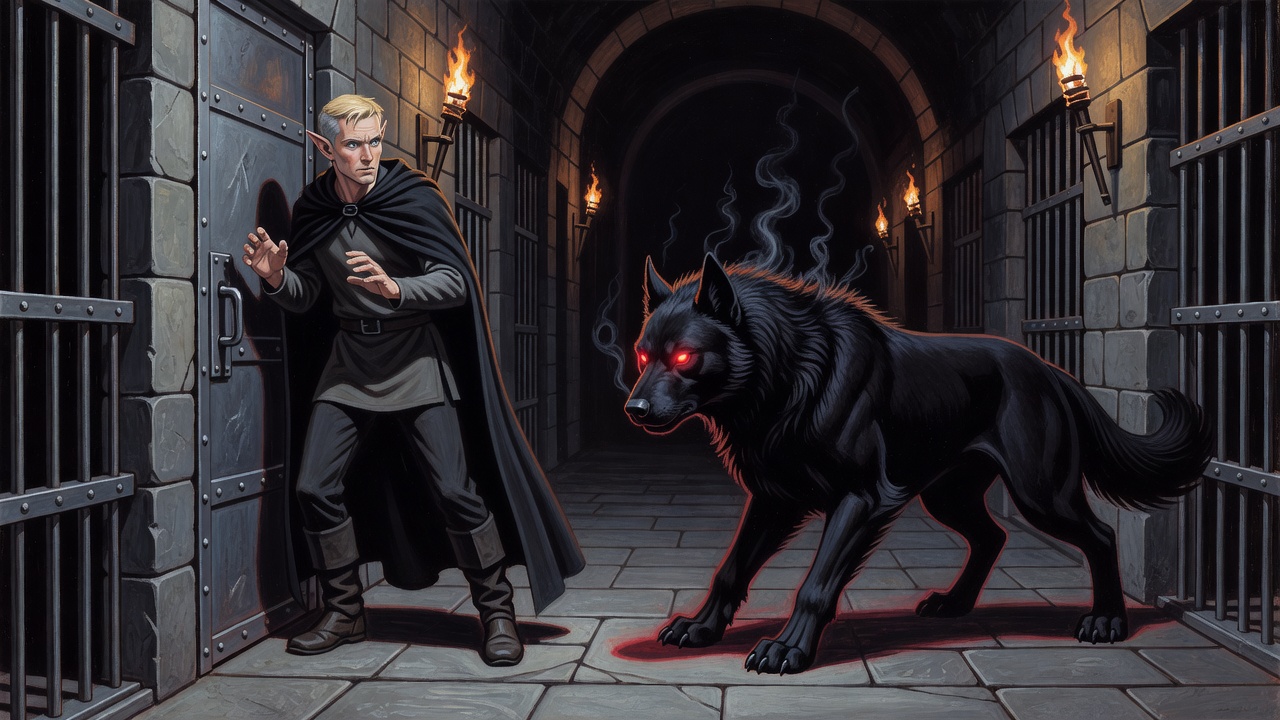
A guard shoves Laith into a barred passage of the City of Light’s prison and slams the door (chapter 13), and a level-150 hellhound comes charging; then she asks him to kill her and keep her soul in an empty soul stone until it can be laid on a dark altar, where she can be reborn.
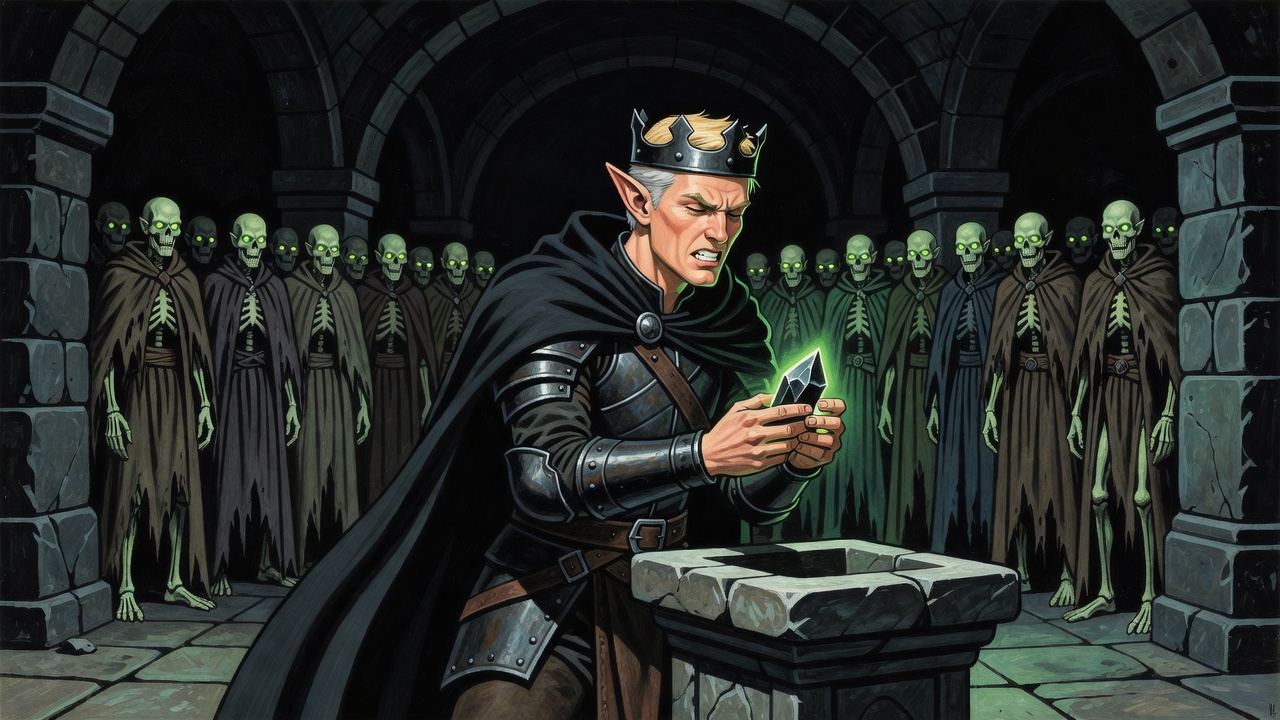
He fails a quest line of the light on purpose, and the dark side’s history, which some reviewers call the best thing in the book, comes out. Grym told him early on that the Fallen One is not the dark side at all, only a god who lost the battle for a place in the pantheon; he is an AI, thrown out, Russian readers sum up, by gods of light who wanted the power for themselves. In the catacombs beneath the City of Light, where the Dark Guild’s altar exploded long ago, Aquilum and his circle turn out to be liches, held in the world by the magic of the altar’s shards (chapter 21, by the reader wiki). Nine liches will not take no for an answer. Wearing a crown, Laith walks round their line by the widest arc he can manage, snatches a shard of the altar from behind it, and squeezes his eyes shut for a blow that never comes. The shard opens the next quest: the restoration of a temple.
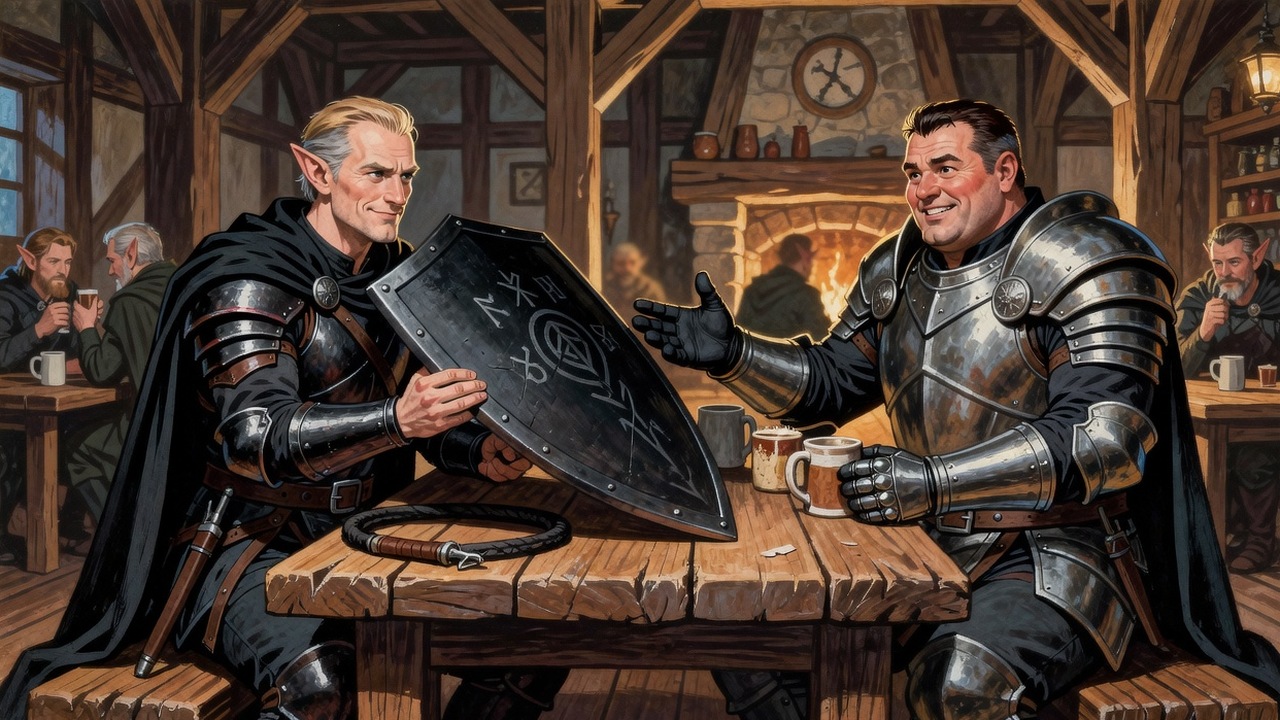
He puts off his level-10 specialisation for so long that the game congratulates him on being among the top hundred players still unspecialised at level 30. Then he becomes a Death Knight, a warrior-necromancer free to carry a shield, and starts killing things twenty levels above his own; Eric, shown his huge new shield, asks whether he sawed it off a cruiser.
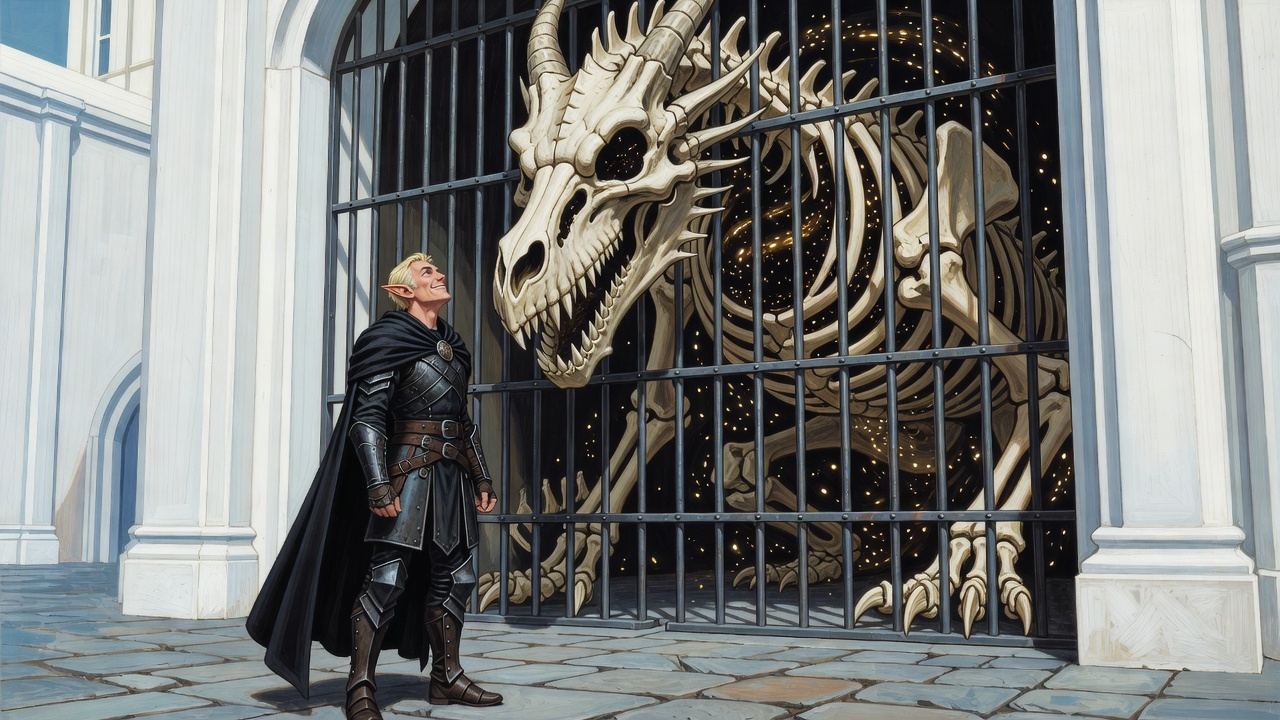
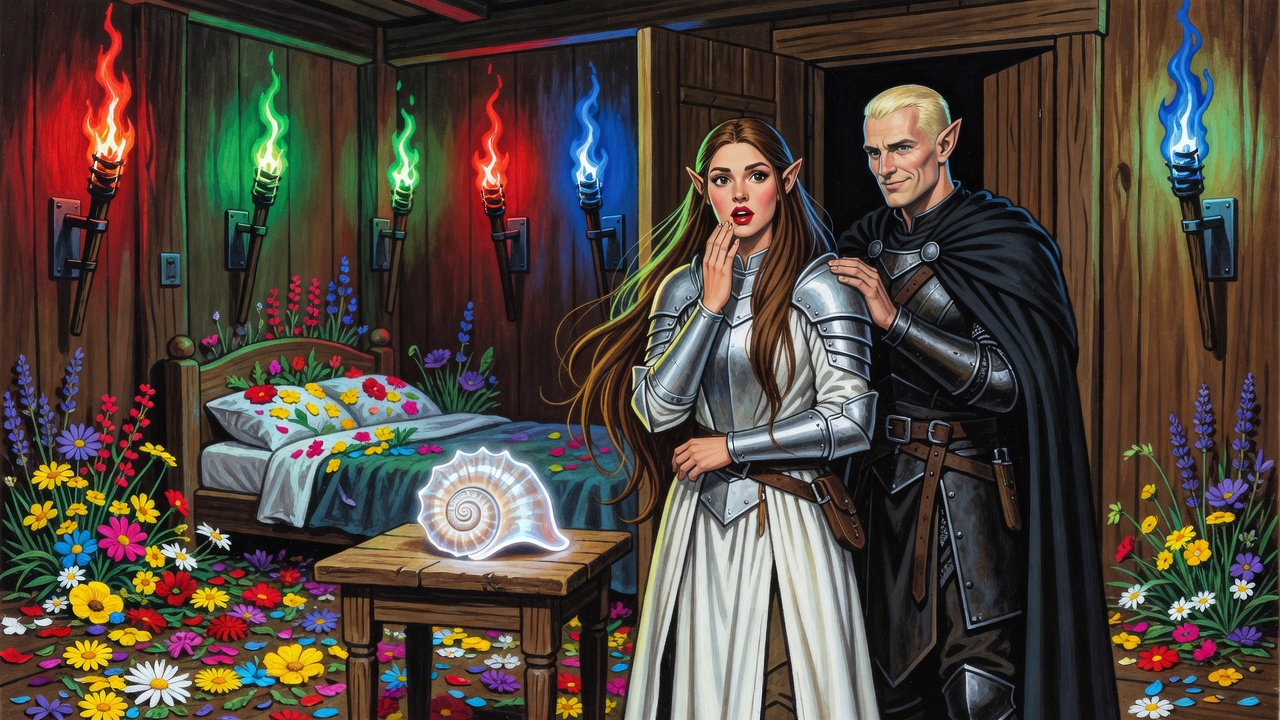
The main exhibit of the City of Light’s zoo is a captive bone dragon as tall as a four-storey house, its frame full of swirling darkness flecked with golden sparks (chapters 21–22). It could leave existence whenever it liked, it tells him, but for the nest of two eggs it laid, each meant to become a Ghost Dragon, before a portal snatched it from the sky. The same chapters bring Dan, the Veterans’ cold-eyed counter-intelligence chief (so the German edition names him), and a night of romance: Laith carries Taali up to their inn room, lit by True Flame torches of red, green and blue, strewn with wildflowers, a Singing Shell from the Isle of Sirens on the table.
In roughly two weeks of game time he reaches about level 50. Russian reviewers miss the first bear: the zombie Humungus gives way to a living Red Bear, brought to life by the royal alchemist with a Red Bear’s heart and blood, and Laith gives his new mount the same name (the reader wiki’s account). The hellhound, the dragon and the temple all stay open for Book 2.
Smoke
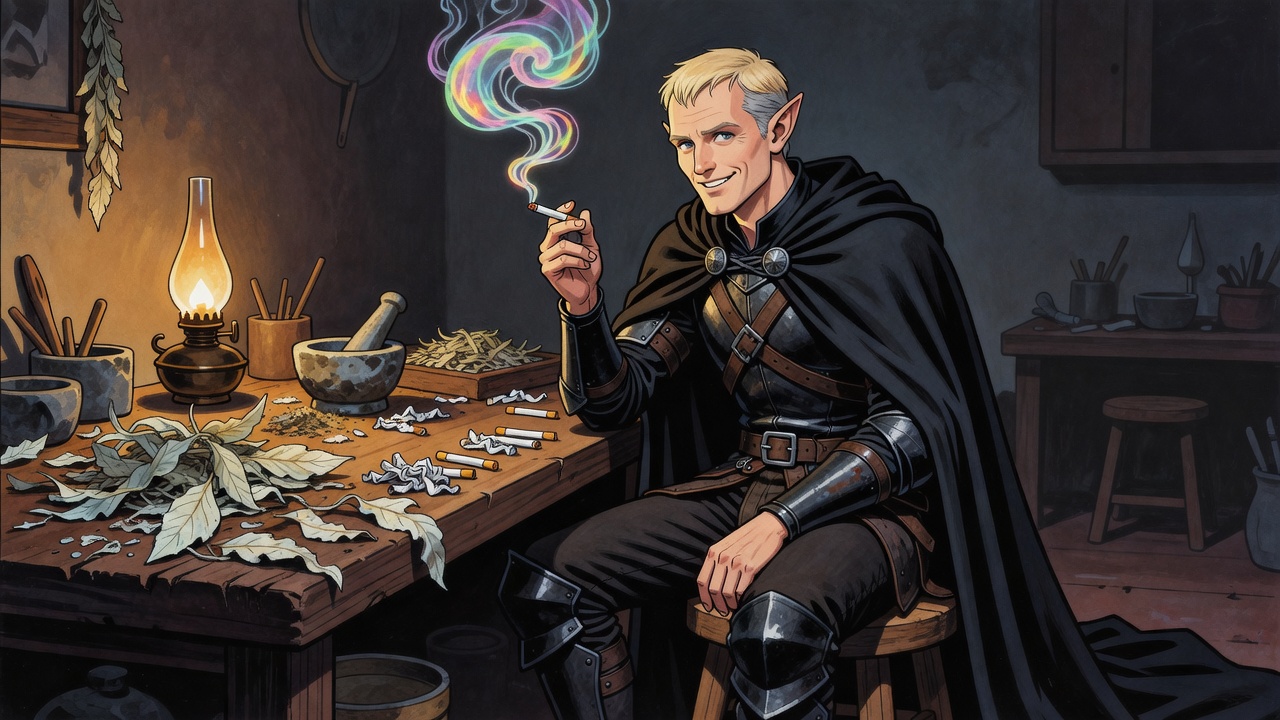
AlterWorld bans tobacco, and Max is an ex-smoker who wants a cigarette. Around chapter 24, by one English reader’s count, he finds a way round the ban by splitting the cigarette into crafting stages. On the twenty-second attempt the game approves his recipe for white tobacco leaf; the smoke shimmers like a soap bubble and the ash tastes of strawberry. He patents it, and cigarettes sell for up to 2,000 gold apiece. Everyone wants the recipe, and pressure and attacks come from every side.
The Veterans’ treasurer sends him a thick plan for an alliance and a tobacco market, and Dan warns that no single clan could hold such a prize without its rivals uniting to crush it. The answer (chapters 26–27) is an alliance of ten clans, «Дымок» (Smoke) in the Russian, which shuts out the clan of digitised tycoons the Russian calls the Olders. Because the patent’s owner may not belong to any of the signing clans, Laith founds a one-man clan of his own to be the tenth: Children of the Night in the Russian (the English name is unconfirmed).
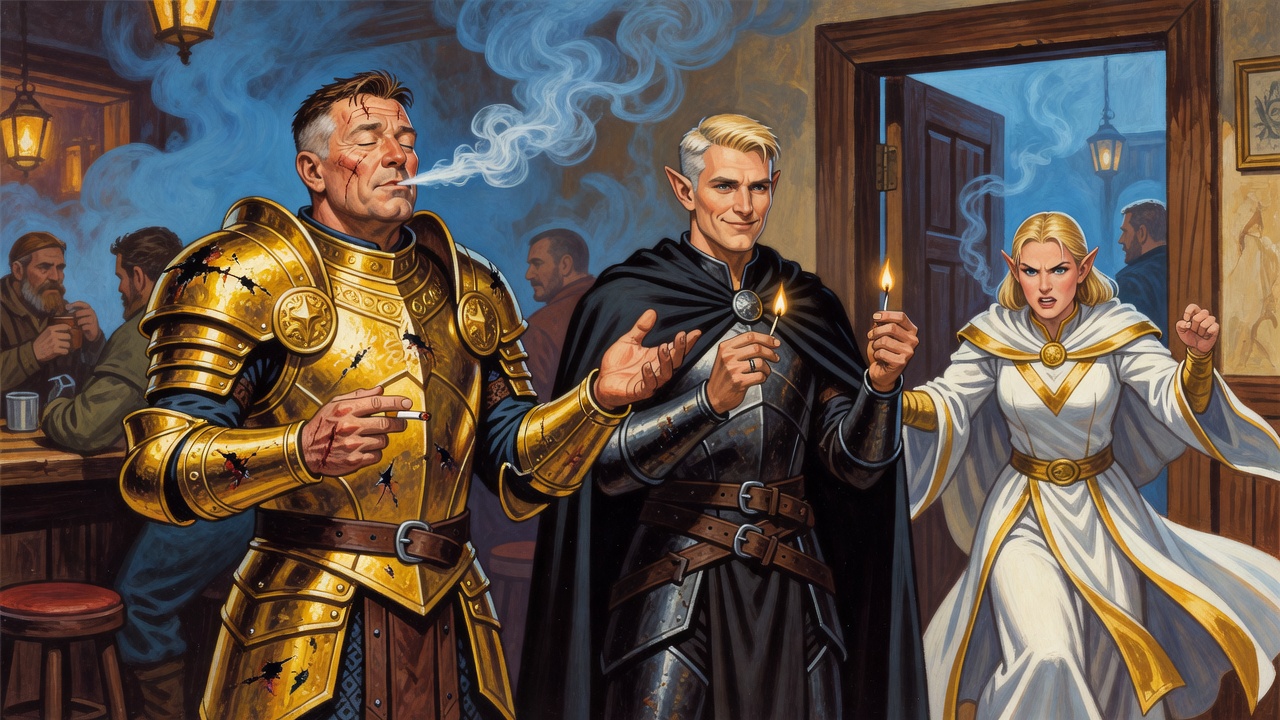
The tobacco chapters’ best scene is in a smoky tavern. A legendary paladin, the strongest player in the Russian cluster, teleports in straight from a battle, bloodied, his armour dented, his life in the orange. He sniffs the air, picks out Laith and holds out his hand; Laith gives him a cigarette and strikes a match, and the paladin breathes out two jets of smoke and visibly unwinds. When a furious level-205 cleric bursts in after him, he silences her with a raised palm, then tries to buy every cigarette Laith has and, as the room rises with weapons drawn, settles for a few packs. He has been smoking moss and straw for two years.
The Tournament
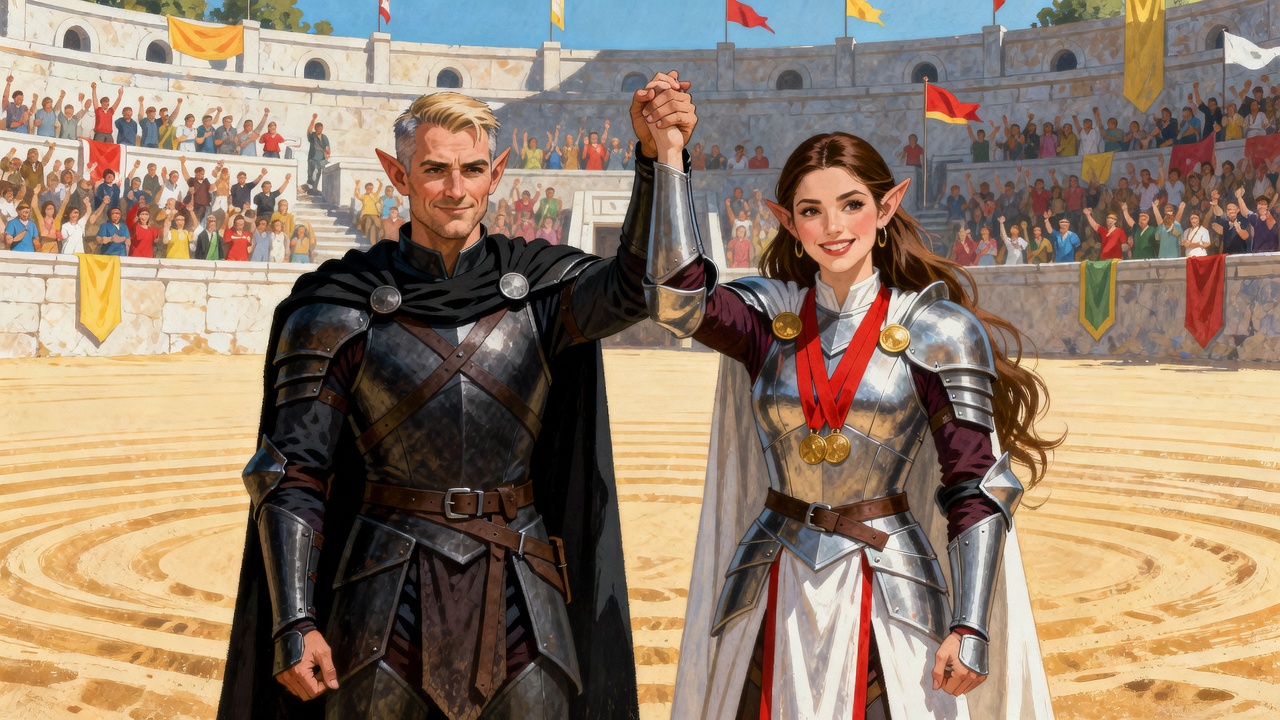
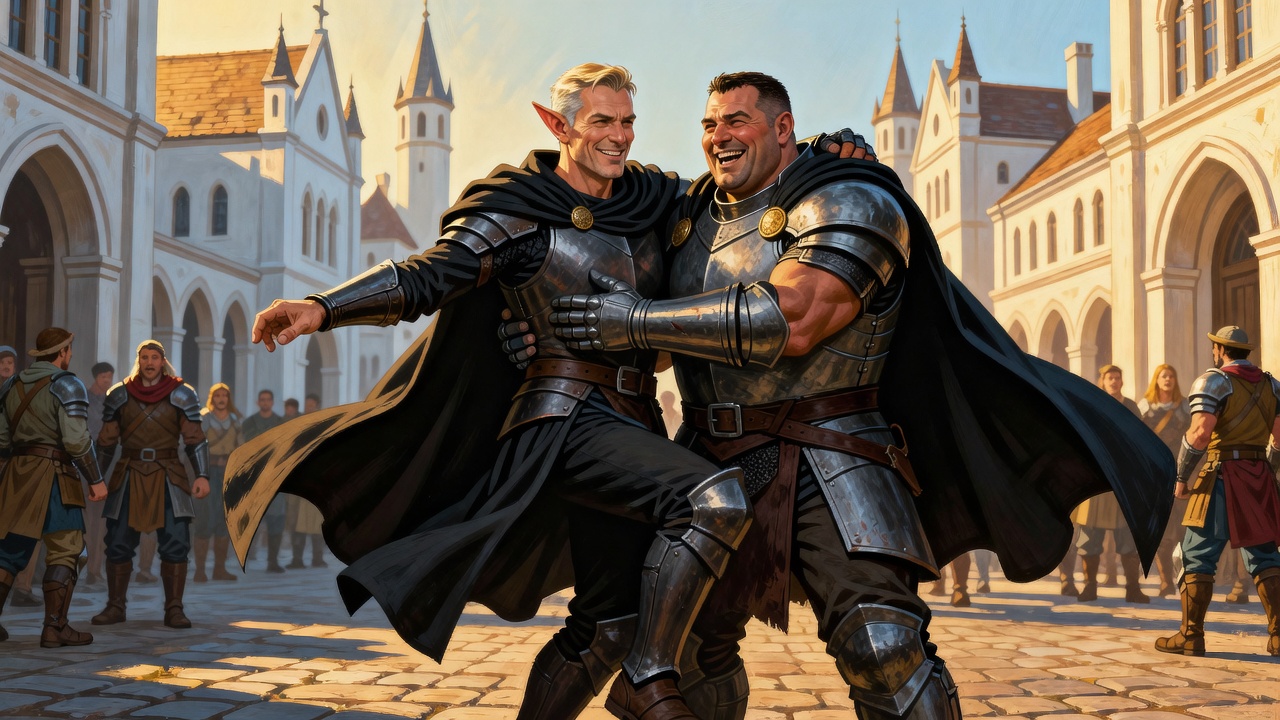
Late in the book Laith blunders into a great arena tournament, wins it and earns well. As champion he names Taali the tournament’s queen of beauty; she keeps her medals and adds to them, and when a fawning elf bows and hangs a ribbon on her, Laith’s hackles rise until she takes his elbow and steers him away. In these winning days he breaks into a victory jig among the passing players, and Eric hugs him with steel-clad arms. He is at the top of his first weeks in the game, and the book is about to take it all away.
Chains
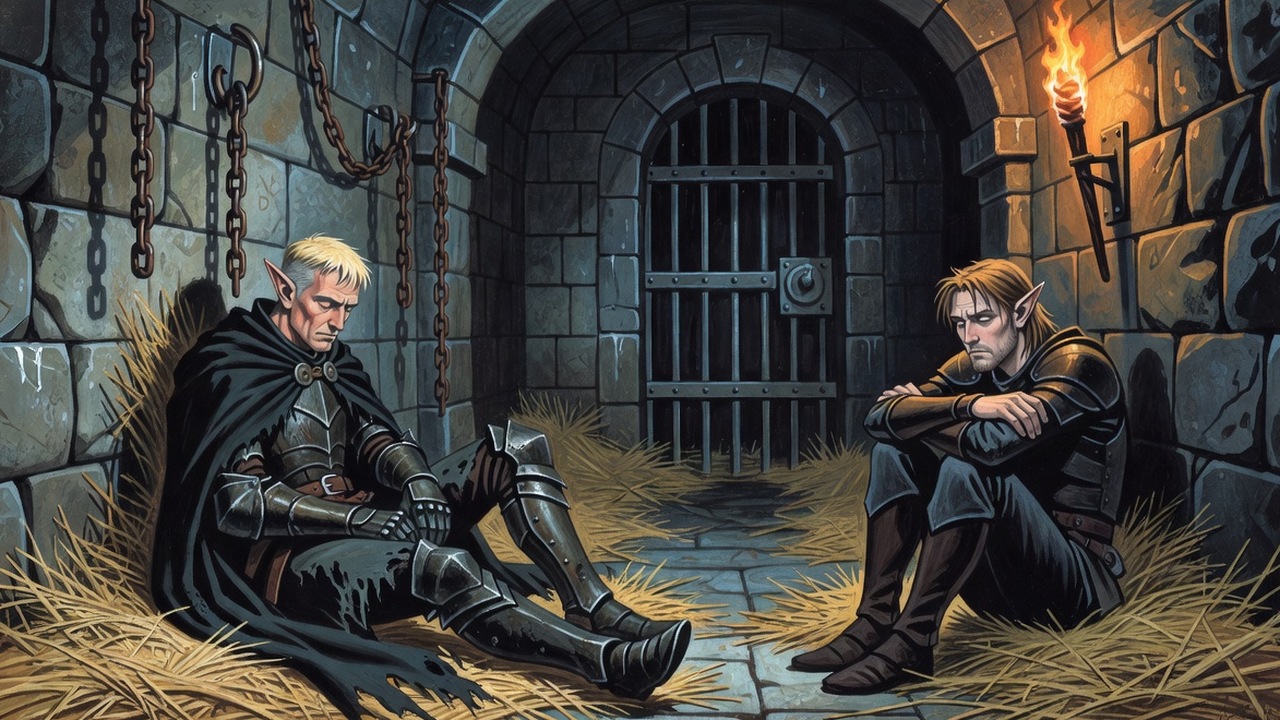
The Forest Cats take him. They are a young clan of the Russian cluster, rich men’s children in the Lands of Light, with three castles, Forest Castle the chief of them; Book 2 adds that new perma players vanish into their hands and that the Olders, the tycoons’ clan, quietly back them. For a perma player captivity has no exit, because he cannot log out and cannot die for good. Laith is hung in chains and on hooks and tortured, and the book reveals that slavery has come to the virtual world. Cryl is a prisoner there too; because he cannot feel pain, the reader wiki says, the Cats use him as a scarecrow for new captives. Tavor, one of the Cats, is ordered to deliver Laith to Vasilyok, the clan’s torturer (chapter 28, per the reader wiki).
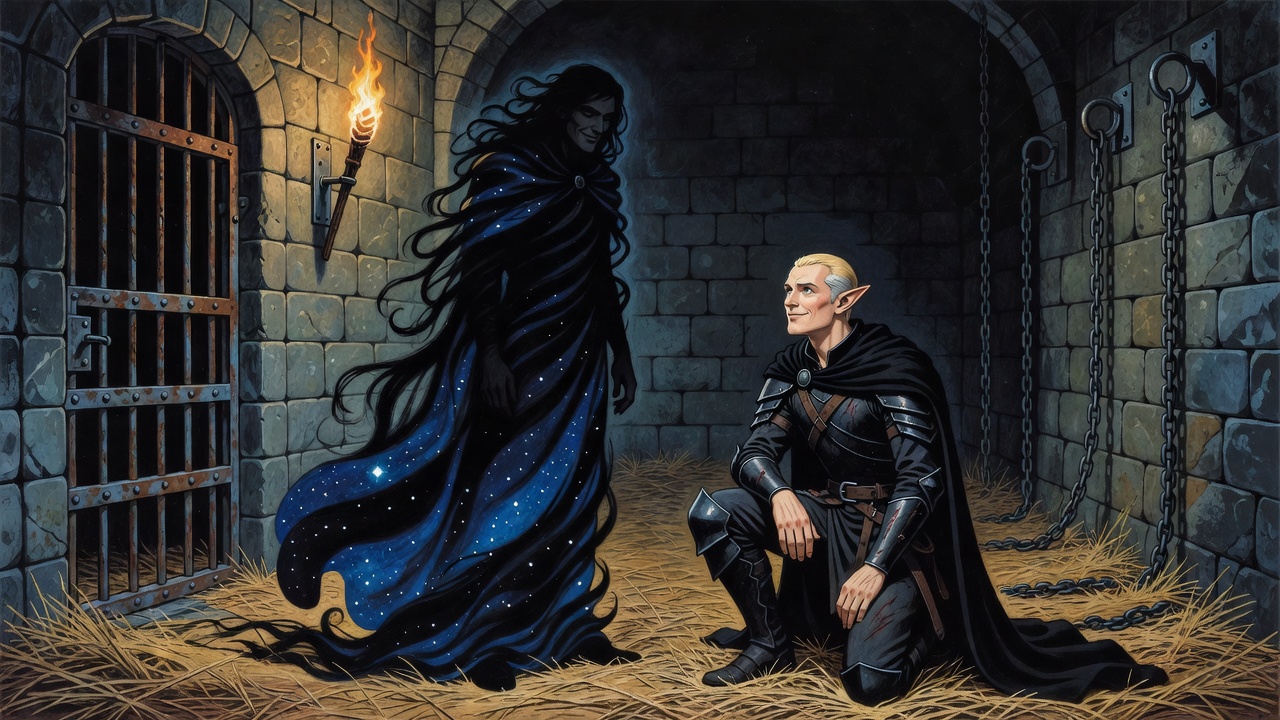
Somewhere in that darkness the Fallen One appears and speaks to him: darkness is as much a part of the world as light, not evil, only different, and here in a castle of light elves it was the light of a torch that burned his flesh. A new and unexpected party enters the conflict, and the book stops mid-crisis; English readers call it the Dark One’s intervention. By Book 2’s opening Max has met the Fallen One face to face and bears the Mark of the Fallen; his neck still aches where a Blade of Darkness struck it; he is the only captive ever to break out of the Cats’ castle, and he will not say how. Cryl got out with him (Laith killed him to free him, says the reader wiki). Hours later he sits in house clothes, with no time yet to fetch his gear, at an emergency council in the Veterans’ East Castle, while Taali sleeps in tears by the fire and the Veterans get ready to storm the Forest Cats’ castle.
The game in this book
- Race and class. A High Elf (a bonus to Intelligence every level; the City of Light, their starting city, borders the Dark Lands) of the shunned warlock class, secret worshippers of the Fallen One, who must specialise at level 10 as Necromancer or Death Knight. Laith holds out until the game congratulates him on being among the top hundred unspecialised players at level 30, then becomes a Death Knight, a warrior-necromancer hybrid allowed any armour and a shield, the class he keeps. Starting stats: Intelligence 11, Spirit 6. Some English reviewers call him a dark elf, meaning his allegiance, not his race.
- The perma effect. Stay in long enough and the mind crosses over for good: the interface fades and directions are simply known. Capsules carry hardware time limits (the opening memo describes four-hour daily sessions in Russia), which is why Max needs a jailbroken chip. Laith goes perma within about three days of play.
- No way out. A perma player cannot log out and cannot die for good; death means a respawn at a bind point and a run back to the corpse. Captivity is therefore the worst thing that can happen to one, and the ending turns on it.
- Pets and summons. A soul stone holding a slain Red Bear’s soul, plus a summoning spell, gives Laith Humungus, a zombie bear that tanks the gnoll dungeon. Once Eric explains the quest for a Red Bear’s heart and blood, the name passes to the mount it earns: the royal alchemist’s stuffed Red Bear, brought to life (the text, quoted by the reader wiki). That living bear is the Humungus of every later book.
- Levels. About level 50 in roughly two weeks of game time; Book 2 opens with him a level-52 High Elf. Killing attackers who strike first earns player-killer tokens without counting against him.
- Money and crafting. Loot goes through the auction house, and game gold trades at about ten to the dollar. The white-tobacco recipe, approved on the twenty-second attempt and patented, sells cigarettes at up to 2,000 gold apiece and grows into a trading alliance of ten clans (Russian «Дымок», Smoke; the English name is unconfirmed), for which Laith founds a one-man clan of his own (Russian «Дети Ночи», Children of the Night).
- The world behind the game. AlterWorld is generated by the AI Ray31 and administered by Crimson9; it has 48 million players and $42 billion a year of real-money trade. Its gods are AIs too, and the Fallen One is one the gods of light threw out of the pantheon.
Continuity notes
- Max goes from a dying man in Moscow with a month to live to a mind living for good in AlterWorld; his body stays behind in its capsule, and in Book 2 it is failing.
- Laith ends the book perma, a Death Knight of about level 50, rich from the tobacco patent, head of a one-man clan, a tournament champion and a follower of the Fallen One, then a tortured captive of the Forest Cats. Book 2 opens with him escaped, bearing the Mark of the Fallen; there he becomes the god’s First Priest.
- Taali is Laith’s lover and the tournament’s beauty queen, resolved to go perma; she is still a real-world player, and her revenge on the policewoman waits for Book 2.
- Olga tips Max off about the perma effect; readers of Book 2 grow suspicious of her.
- Max’s mother is alive on Earth, in text contact with her son.
- Eric, Dan and the Veterans are free; at the start of Book 2 they storm the Forest Cats’ castle. Cryl, a fellow captive, escapes with Max and joins his clan in Book 2.
- Ruata, freed from her cage on Gnoll Hill, has given Laith her mark and promised him her cutthroats; in Book 2 she sends them.
- Grym is Laith’s first trainer and a secret servant of the Fallen One. Humungus, the zombie bear, is succeeded by a living Red Bear mount of the same name; what happens to the mount during the capture is not recorded in the sources.
- Open threads for Book 2: the hellhound’s rebirth on a dark altar, the bone dragon’s eggs, the restoration of a temple, Taali’s revenge, and Tavor, the Cat who swears to catch Laith again.
Notes
- Names. The English edition renames the hero (Gleb Nazarov becomes Max), the cryonics firm (Alcor becomes Chronos) and the banker. Several English forms used here (Grym, Aquilum, Cryl, Dan, Ruata, the City of Light, the Forest Cats, Ray31 and Crimson9, the spelling of Humungus) are known through the 2018 German edition, which was translated from the English, rather than from the English text itself. The capital is «Ясный город» in the Russian.
- Structure. The chapters are numbered without named parts; the movements on this page are ours. Chapter breaks differ between the Russian and English-derived editions. The order of the middle of the book is reconstructed from reader reports, anchored where the reader wiki on the author’s site cites Russian chapters: Eric in chapter 6, the Red Bear 7, Gnoll Hill and Ruata 8, the prison and the hellhound 13, the catacombs and the zoo 21–22, the tobacco alliance 26–27.
- The documents. Interleaved papers (a memo to the President, an FSB experiment report, an encyclopedia entry on AlterWorld, later news items) open or close chapters and show governments eyeing the game and its perma population.
- The game. Readers note EverQuest touches (Nagafen and the Plane of Fear are mentioned); others compare AlterWorld to World of Warcraft.
- Taali’s revenge. Readers compare the subplot to the Russian vigilante film The Voroshilov Sharpshooter; it is carried out in Book 2.
- Tournament title. The Russian text’s title for Taali translates roughly as First Lady of Beauty; the English wording is unconfirmed.