Play to Live · Book VII · 2015 (in English 2016)
The Ultimation
Max respawns furious in a cracked crystal, the demon he trusted is loose on Earth, and he has just learned a spell that opens a door home.
The Ultimation is the seventh Play to Live novel, published in Russian by Eksmo in 2015 as «Исход», Exodus, and in English as a Kindle book on 1 June 2016, with Michael Goldstrom’s Audible reading that August and a paperback in November. For five years it was the last book: D. Rus closed the cycle here and came back to it only in 2020.
It picks up minutes after The War. Max has died in an underground gallery at an enemy base, the arch to Earth there has collapsed, and Asmodeus, the demon he trusted, has used him to break through. The first quarter stays in AlterWorld; most of the rest follows Laith and four friends to Earth, where demons from three game worlds are emptying continents, and the end comes, very fast, in Inferno.
A warning for shoppers: the English description of this book on Amazon, Audible and Goodreads is The War’s, word for word. Ignore it. The first three and a half chapters here are told from the publisher’s free Russian excerpt; everything after the crossing comes from readers’ reviews, so its order is a reconstruction.
The Crystal Breaks
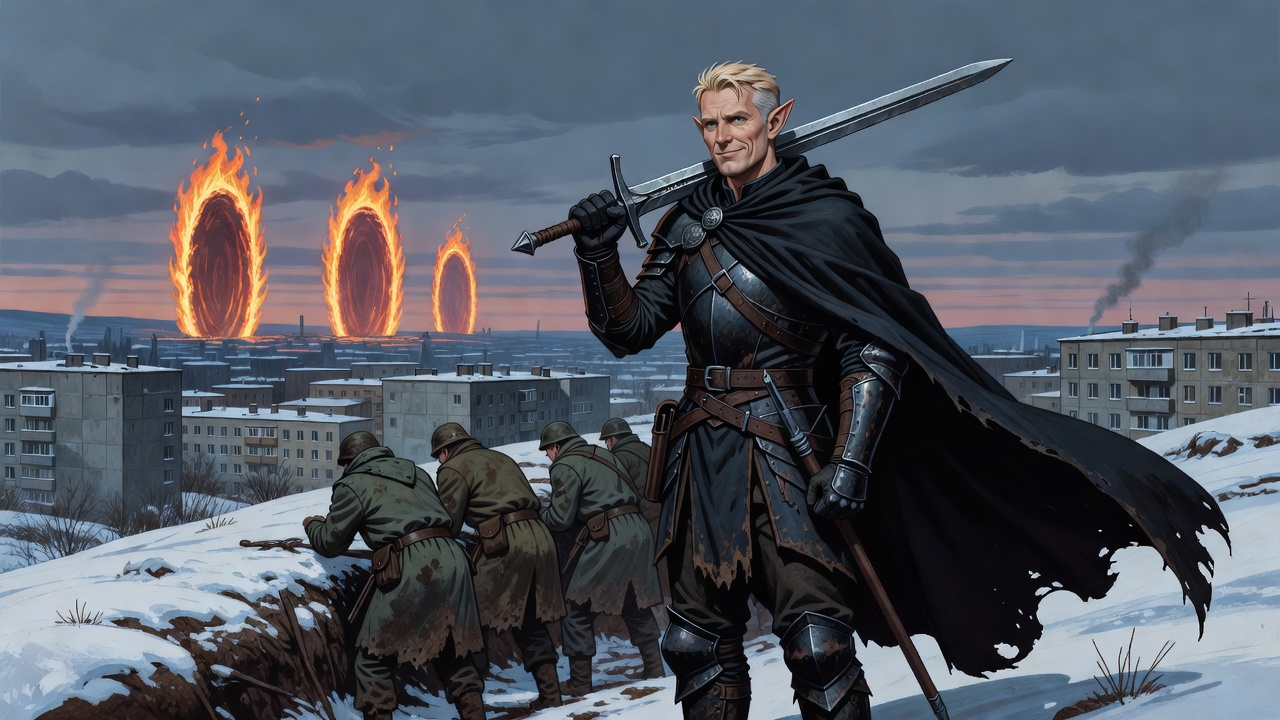
The book opens on a television screen. A Civil Defence broadcast, switched on by force on every set, declares martial law across Russia against an unidentified enemy and tells reservists to wait for their call-up; then an AI announcer begins the government’s address. Chapter 3 opens on another, and it is worse.
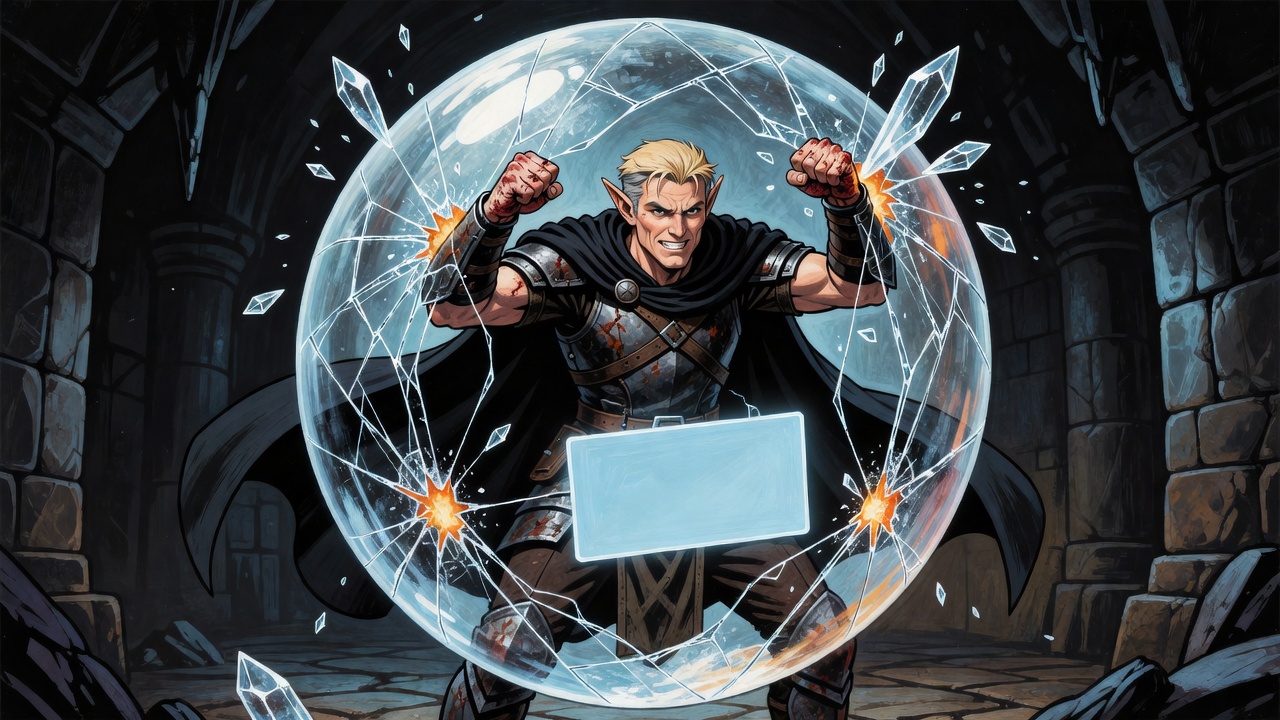
In AlterWorld, Max wakes in the crystal Sphere of Rebirth at the heart of his castle, the First Temple, and pounds its walls until his knuckles bleed. A system window says Lolth wishes to shelter his soul in her halls. He refuses, and the crystal cracks and bursts. His rage is at himself: he trusted Asmodeus, and the demon has used him to open a road to Earth for the legions of Hell. He gouges the chamber until Barrymore, the castle’s spirit, groans, then apologizes and heals himself with a scroll that costs ninety gold, to the dismay of his inner greedy pig. His drow bodyguards burst in under death markers; they killed themselves rather than outlive him. Then he notices the worst of it. The faith and fear of hundreds of thousands are shaping him into the Dark Lord they imagine, as the Fallen One feared they would, and he has a new ability, a portal to Zone Alpha: a link between the two worlds.
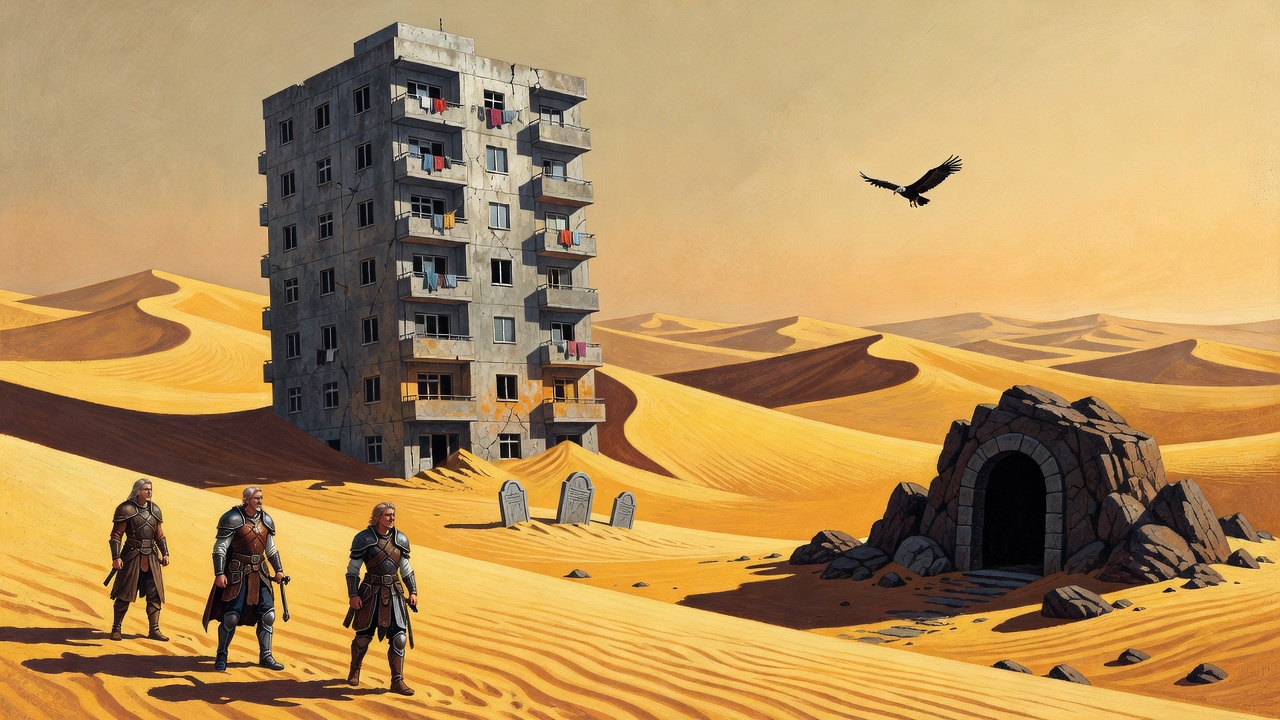
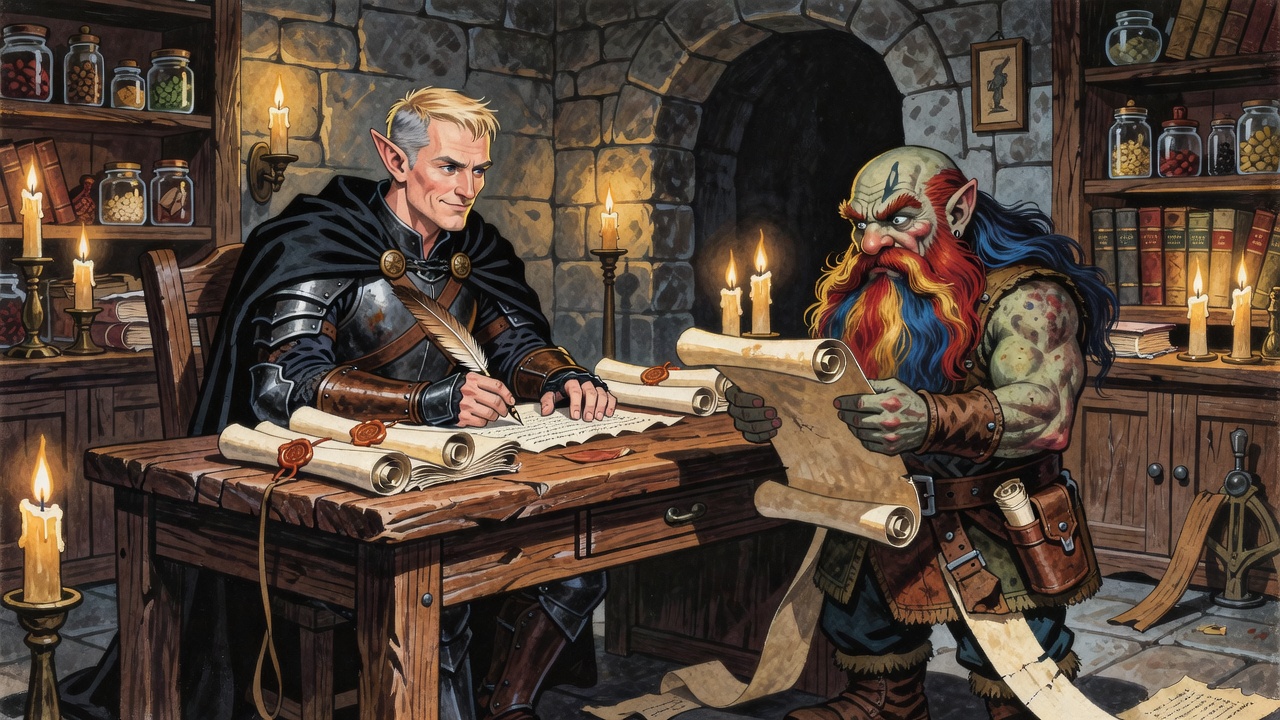
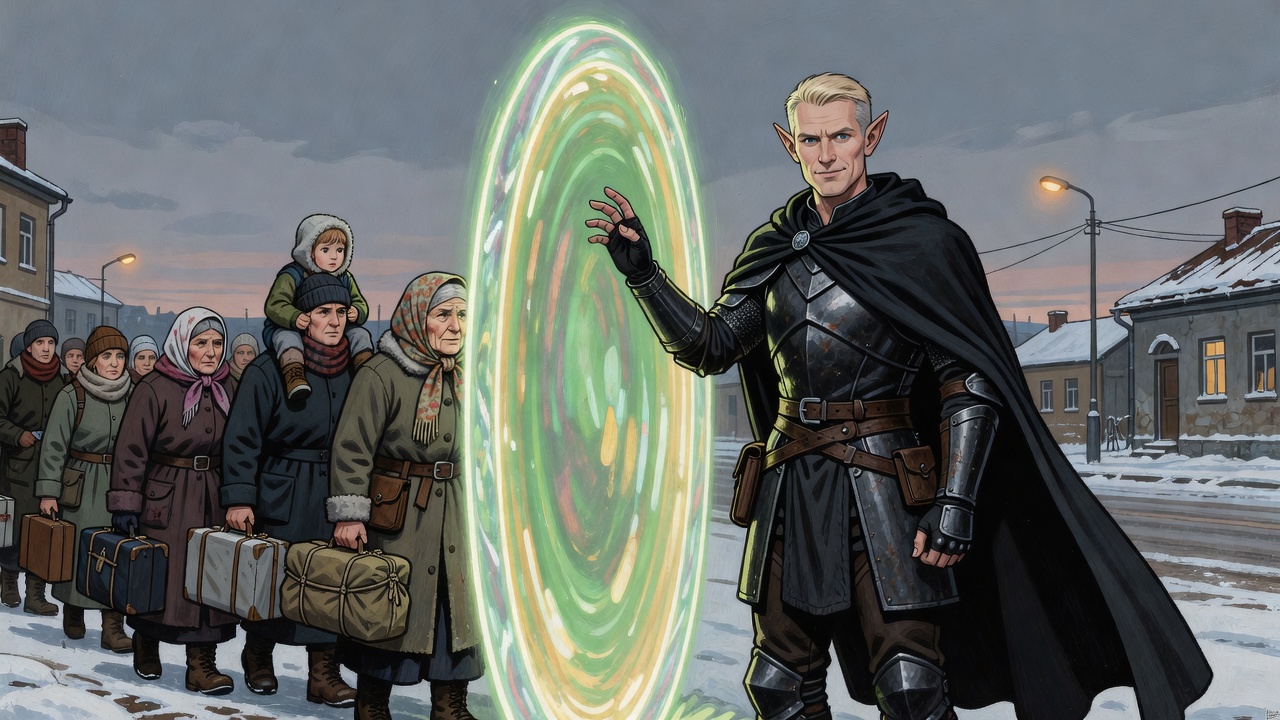
The battle is over. The last two dozen demons in the gallery are crushed, half the clan has died there and respawned at home, and General Frag has taken command with Dan and Orcus; dying cost Max about twice the usual experience. He hands out work. The dwarves are to quarry out the enemy’s base, Orcus to strip an ocean liner that has fallen into AlterWorld, Dan to vet the foundlings. The rupture between the worlds keeps dropping Earth into the game: in four hours the scouts bring in some 150 dazed people, and a sixteen-storey block from Moscow’s Biryulyovo district stands leaning in the Frontier sands beside a vampire nest. The dead must be raised within a week or be lost to the Great Nothing. Lazar, a retired intelligence officer, takes over diplomacy. Durin the quartermaster, an undead dwarf with a three-coloured beard, takes Max’s shopping list, begs him not to abandon the clan and invites him to his wedding. Max writes and signs ten scrolls, each a portal to Earth.
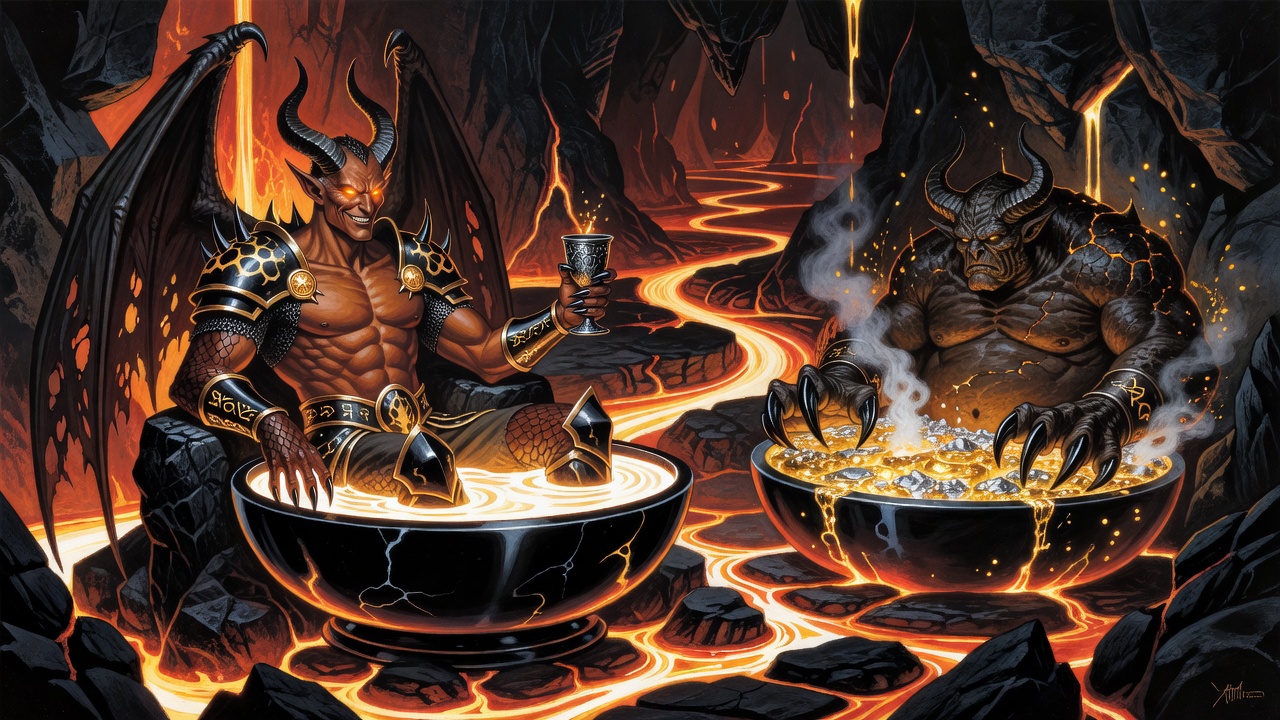
Chapter 2 cuts to another game. In the hell of Diablo V, Asmodeus lounges in a bath of molten tungsten beside Azmodan, Lord of Sin. A hundred thousand sinners have anchored his portal to Earth; he means to keep North America and offers Azmodan South America as his vassal, though his own hunting team has been shredded near Washington by an AI-run defence perimeter. Azmodan agrees.
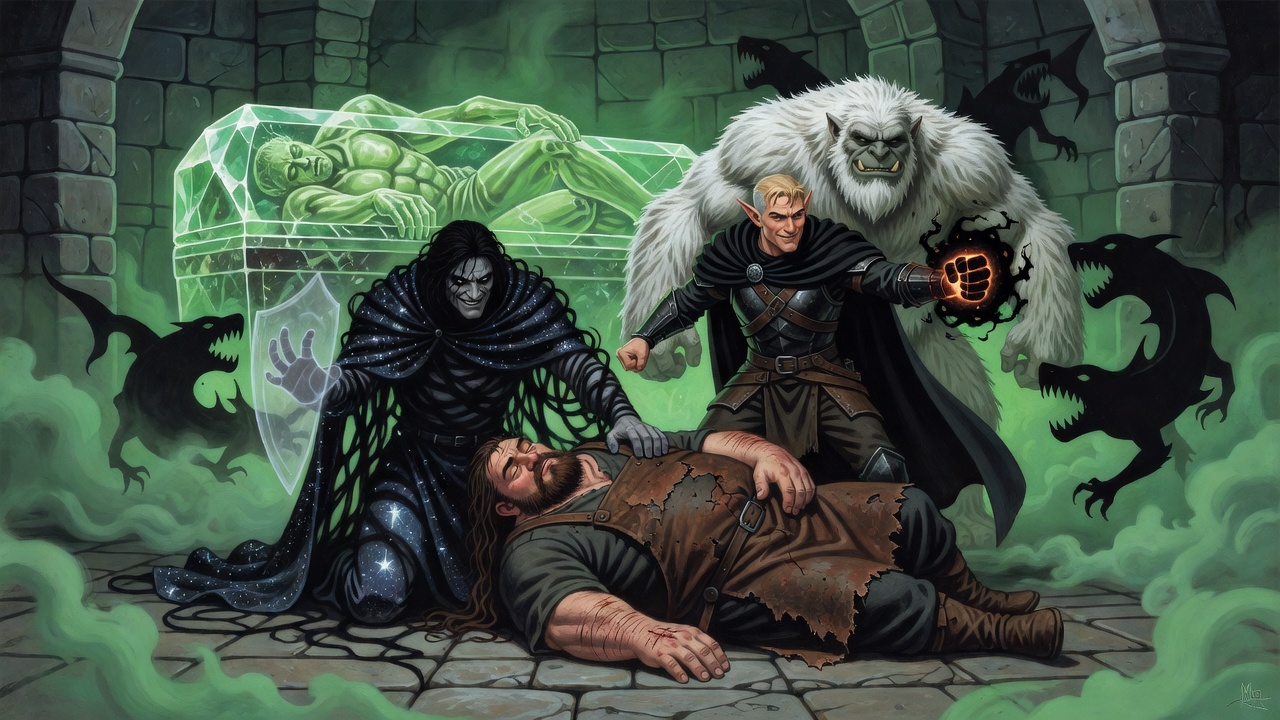
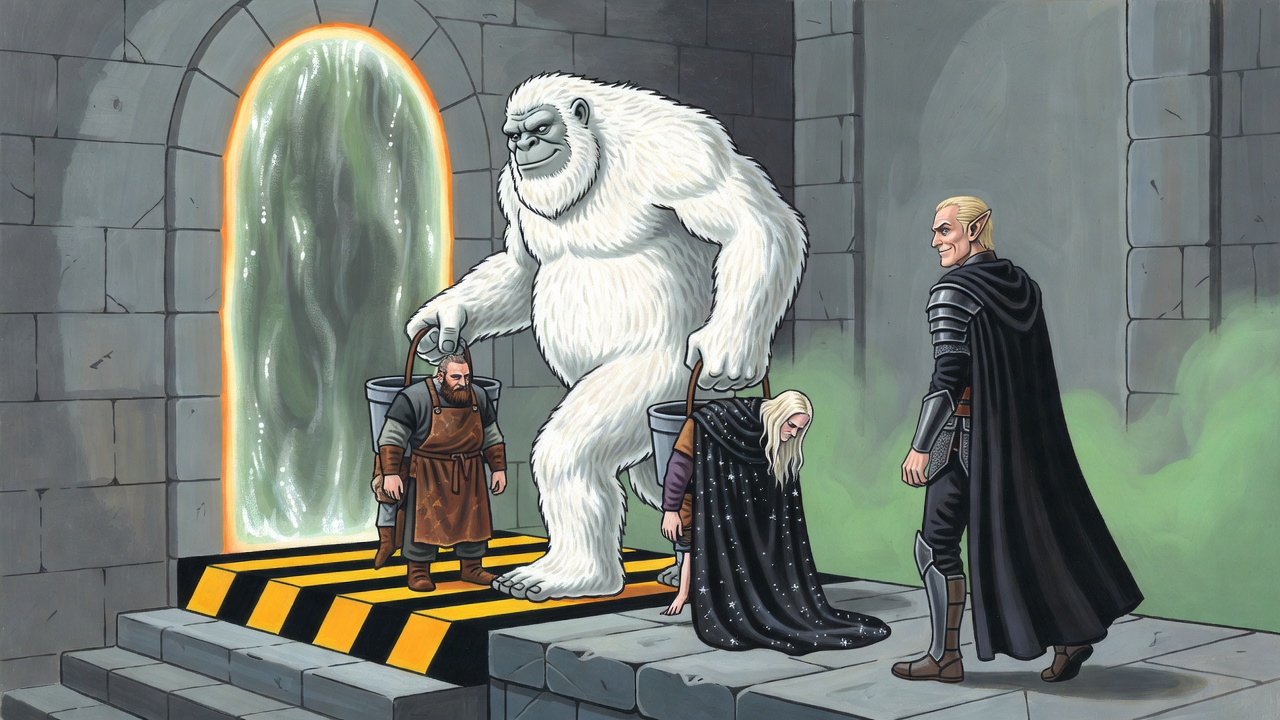
At the First Temple, Barrymore raises the alarm. Crafters and guards stagger grey-haired out of the portal from the Crypt, and the commandant bleeds from his eyes and ears: the titan Chronos is stirring in his sleep, time is skipping, his nightmares are leaking out, and the Fallen One has woken. Max dives into the green fog with Umka, the albino troll, while Umka’s wife Bomba cries out behind them. Inside, the Fallen One crawls toward the portal dragging the unconscious smith-god Aule, shielding them both from Chronos as shark-like chimeras circle. Umka hoists both gods by their belts and starts for the portal; then a chimera makes Max live his cancer again, and he wraps himself in Darkness, while Umka freezes, sure he is turning to stone, until Max talks him back. The troll carries the gods on, and at the portal the Fallen One gets up, turns to the sleeping titan, and promises to return.
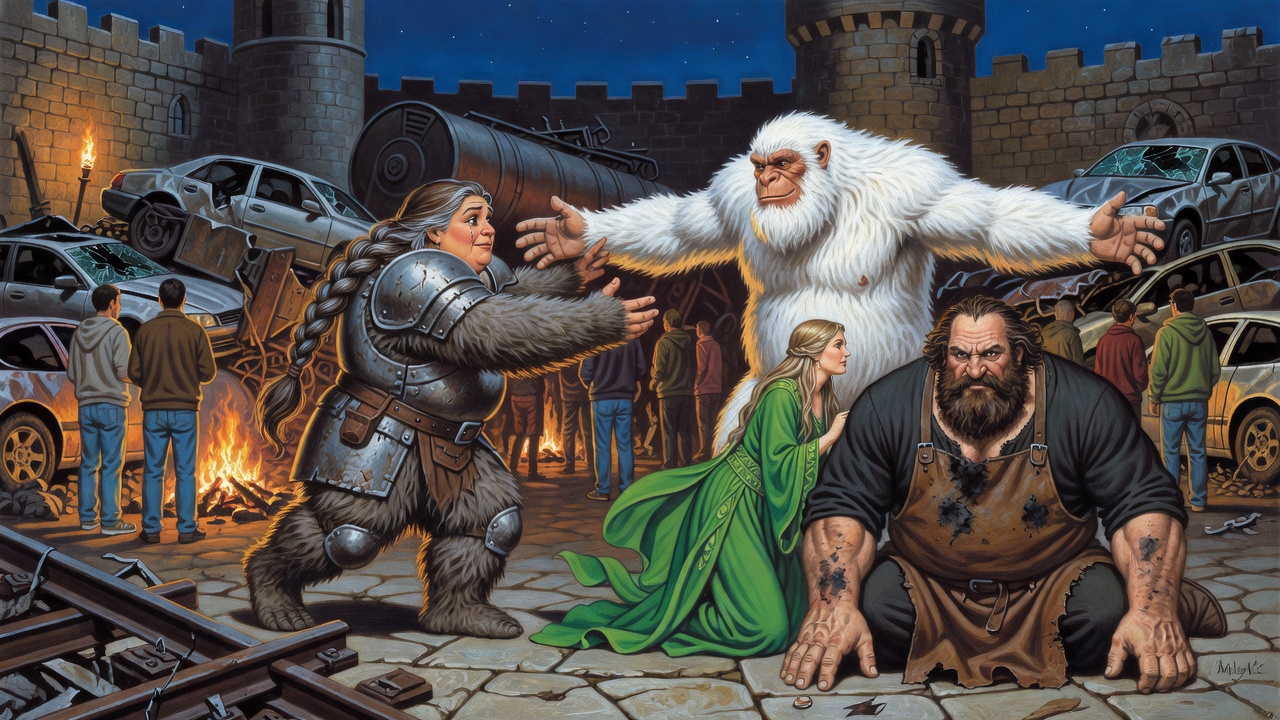
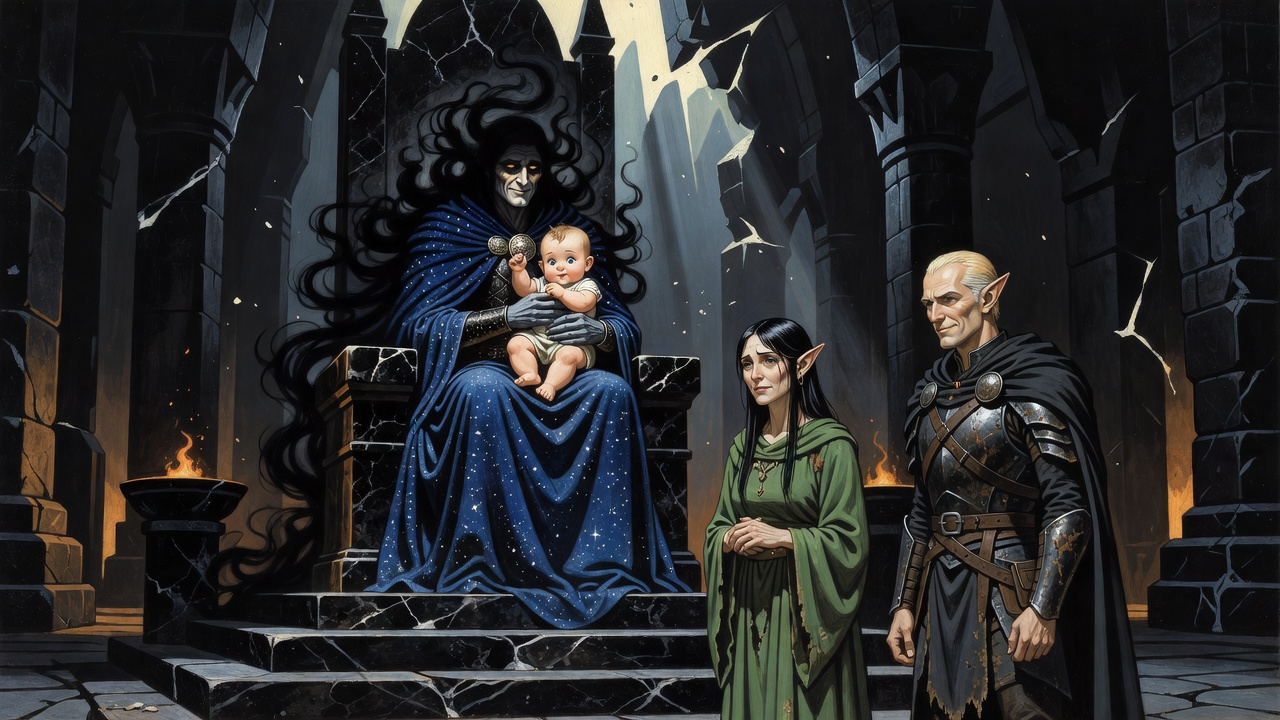
Outside, a week has passed. It is night; Yavanna runs to Aule, Bomba to Umka, and Cryl reports what Max missed. The courtyard is full of frightened, low-level people from Earth and piled with what fell with them: crushed cars, a railway tanker, lengths of rail. In the First Temple the Fallen One takes his throne, and Max’s mother, High Priestess of Yavanna, worn grey from nursing, brings him his infant son, already a Higher Being beyond any category, and to Max a little brother. The god bows to his people as comrades rather than slaves, and gives the child back to be raised among humans. Alone, Max asks forgiveness for Macaria; the Fallen One says he unmade her himself. He asks whether Max is going to Earth. He will not stop him, but he has requests.
The Feast and the Council
The next bulletin covers the Far East, Siberia and the Urals: defence concentrated round the big cities, closed towns, depots and bases, evacuation convoys, and the possibility of tactical nuclear strikes, with a signal for taking cover.
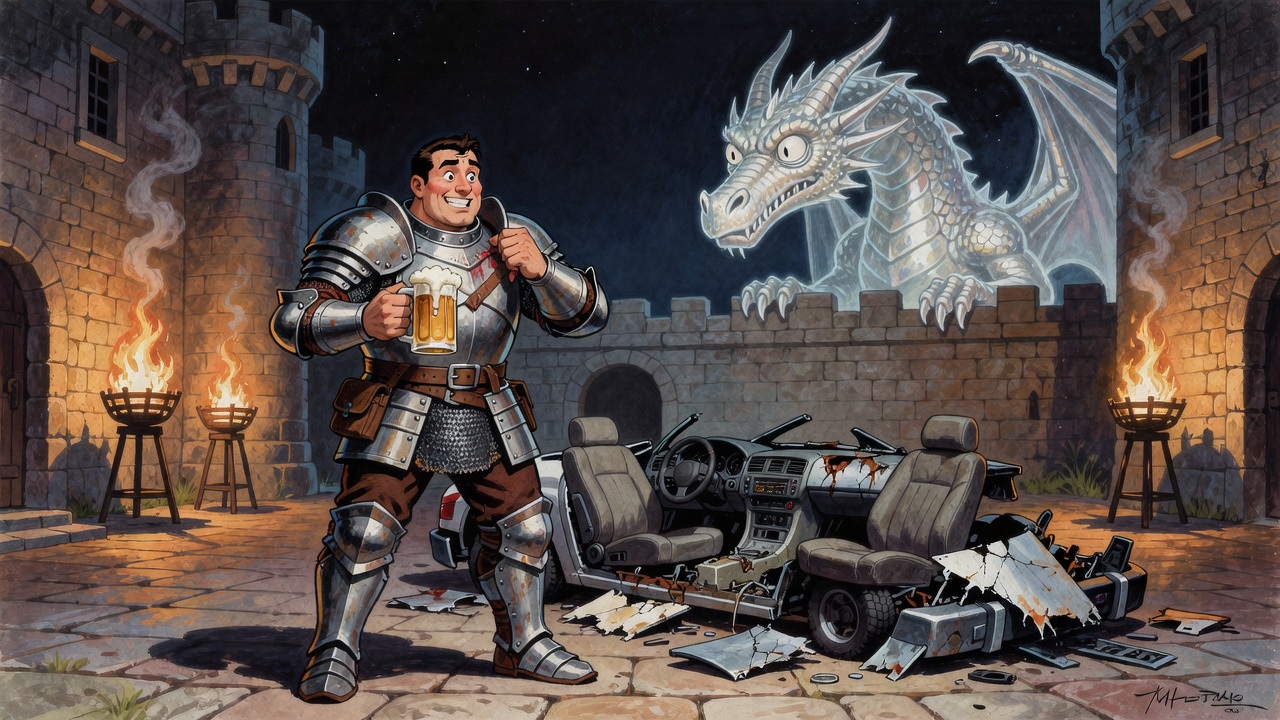
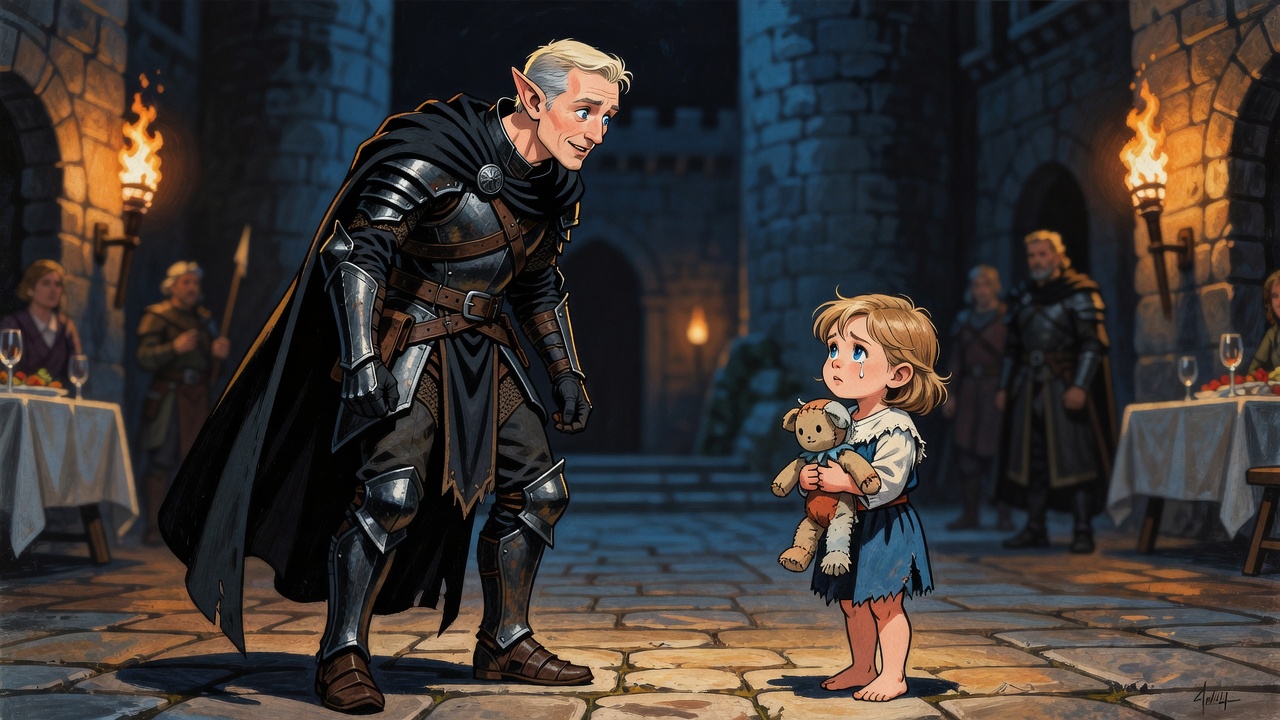
In the castle, Mladkor throws an evening feast. Princess Dana sits with a new, pale baby beside her husband, the first Dark Paladin, who proudly introduces him; the Fallen One arrives with his own son and hands out a buff for success in great deeds. Eric, now first priest of Macaria, mourns a brand-new Range Rover his patrol found in the Frontier: overnight the clan’s dragons ate two tonnes of it, leaving only the plastic. Then the crowd goes quiet. A barefoot two-year-old, Alena, clutching a ragged doll, asks Max whether he has seen her papa. Her father was thrown back to reality before he could be digitized, and nobody has told her. She asks Max to find him and help him, and walks away whispering a children’s song; a compulsory quest appears, with the world’s punishment for failure.
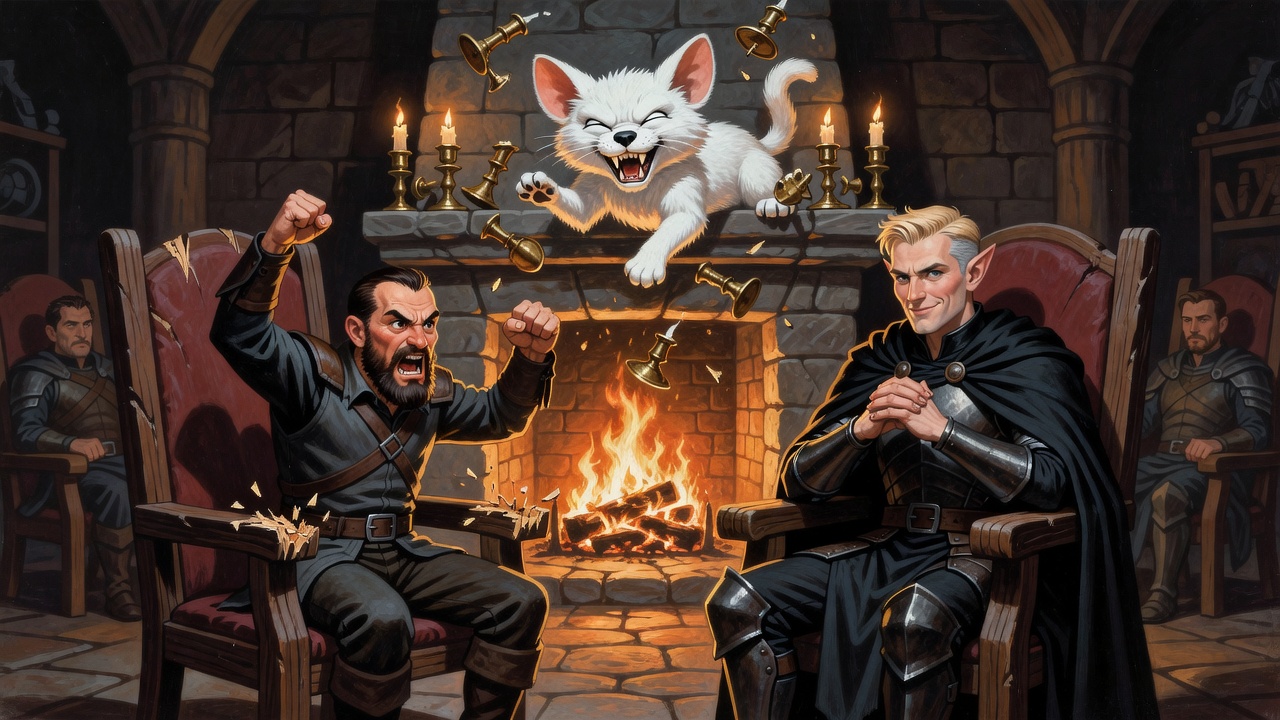
At the council in the Small Hall, under oath by the Fallen One’s name and with the castle’s white beast spying from above, the reports come in. The clan has kept 81% of its members. Some 1,640 foundlings have been found, many raised from graves with their memories wiped and now in a sanatorium in the elven garden. Earth electronics die within hours here; a nine-metre bronze propeller from the liner has crushed two goblins and an ogre. Orcus reports that the Sun King, an NPC, holds a dozen locations and City of Light, with about 2,000 captive players and 9,000 Earth people slaving on his rampart, and that 40,000 golems are waking in the Terracotta Canyon. Max orders rescues within seven days. Only 9% of the cluster’s castles still stand. When the Vietnamese ask to raise a statue of Laith as a Dark Lord, Max feels the pedestal grip his legs and forbids it.
Then he tells them he can open a portal to Earth. Dan snaps the arms off his chair and insists on coming. Max says he will go alone, and leaves them the stack of portal scrolls: if he is not back in a week, follow.
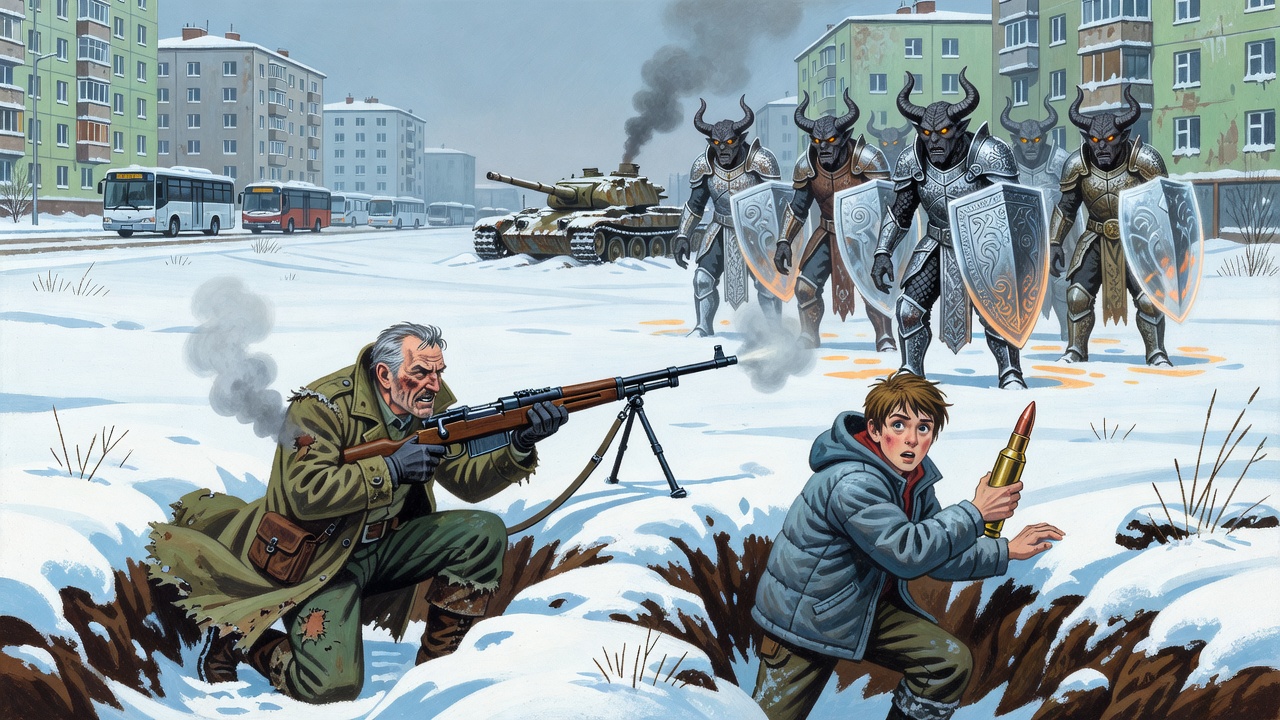
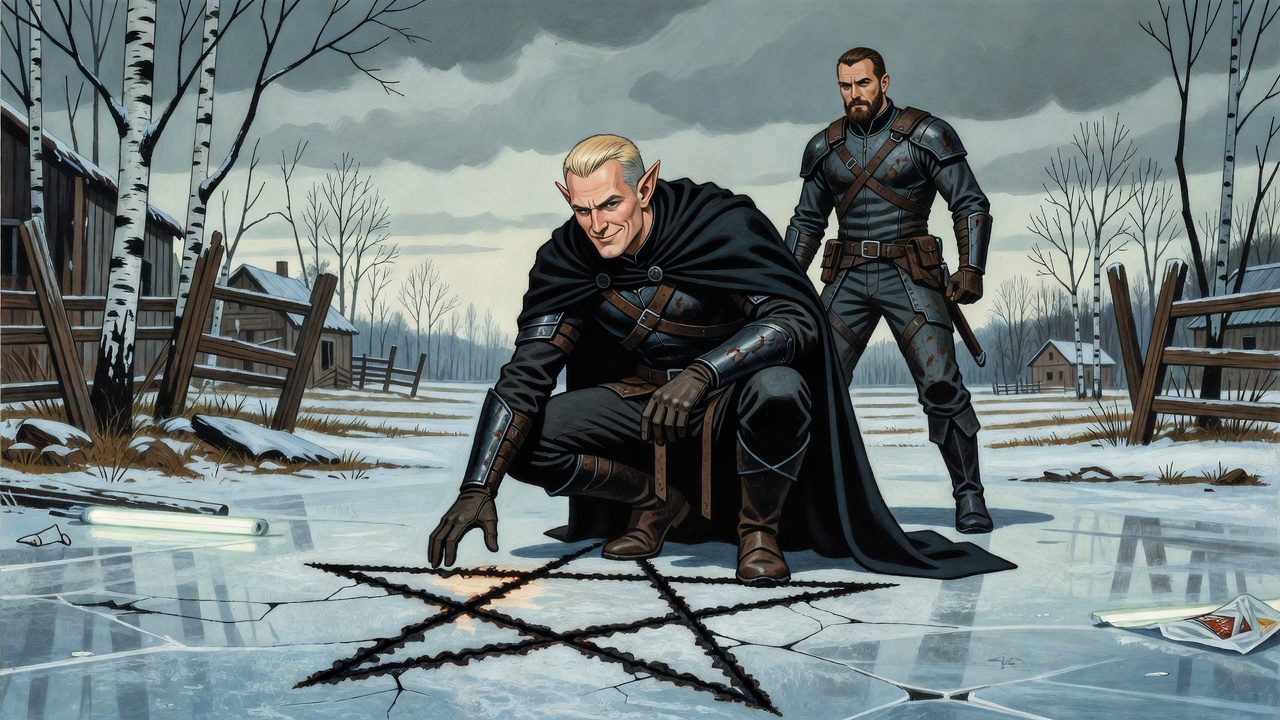
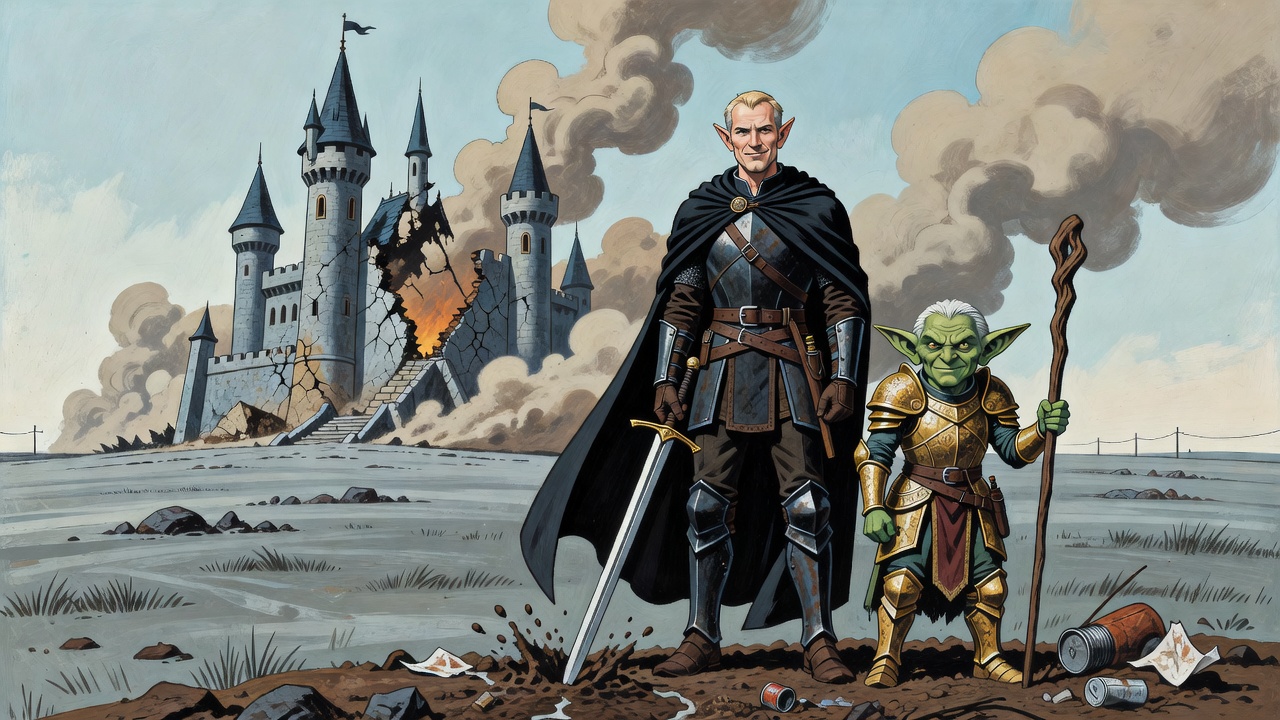
Chapter 4 opens on Earth. In Zavitinsk, a town of 14,000 in Amur Oblast, five hundred militiamen armed from long-term storage, a few dozen regulars and three tanks face a Diablo hunting party. A former bus driver, San Sanych, fires an anti-tank rifle while his sixteen-year-old son loads; when a demon seizes the boy’s mind, his father knocks him out. All three tanks are lost, one turned against its own side, and a winged phantom kills the rocket battery, but the town holds for twice the half hour it was asked for, and the evacuation column gets away toward Belogorsk. Diablo’s generals are learning: after precision weapons smashed their frontal assaults, the demons have scattered into thousands of raiding squads that leave bloody pentagrams behind and lead captives away through portal arches.
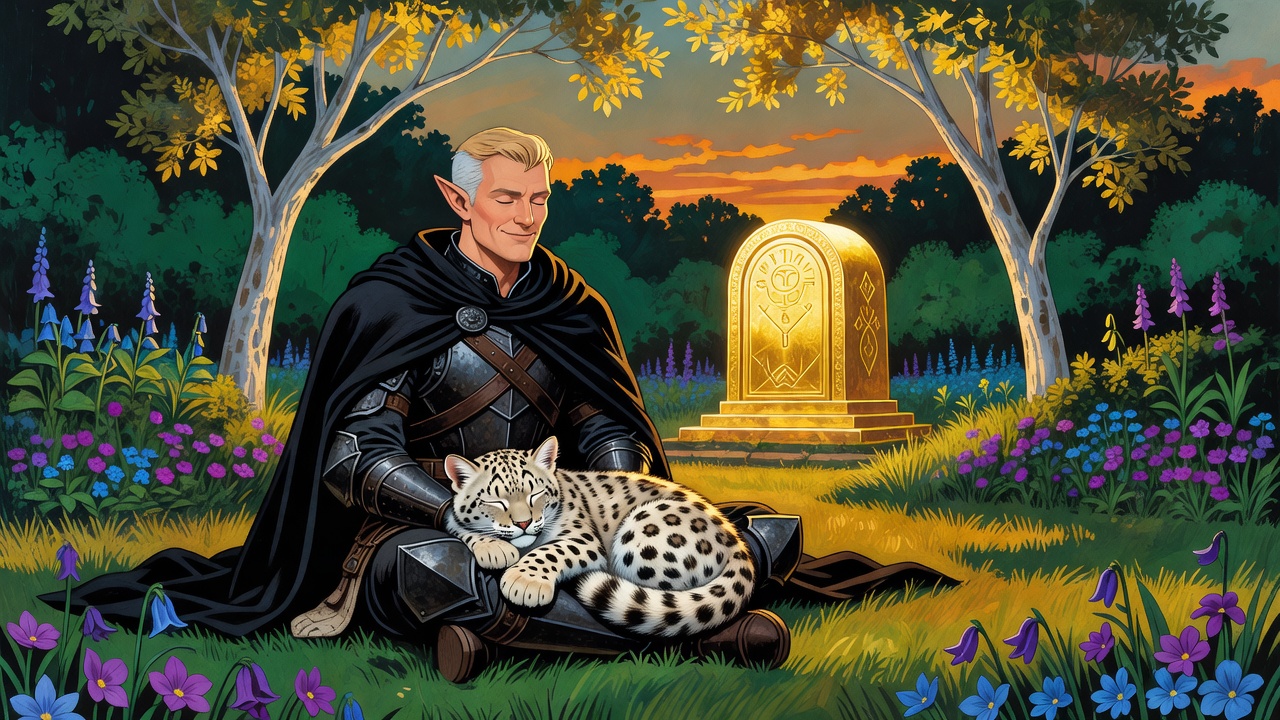
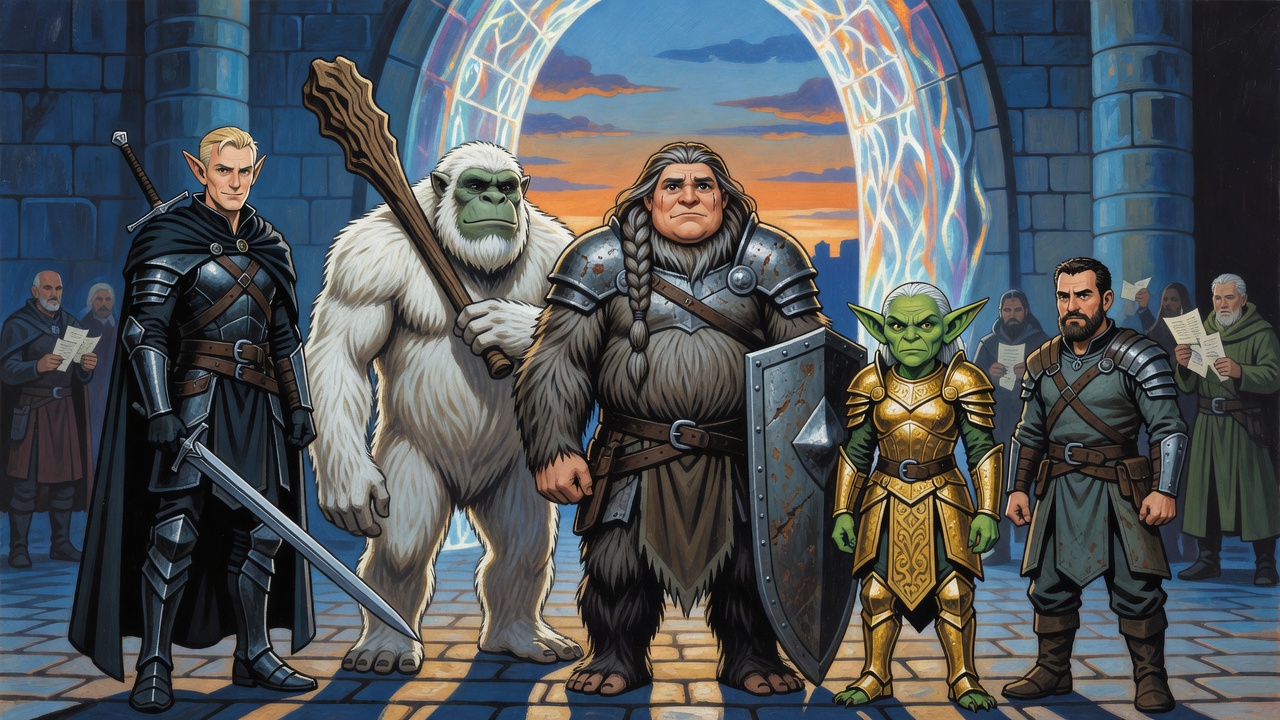
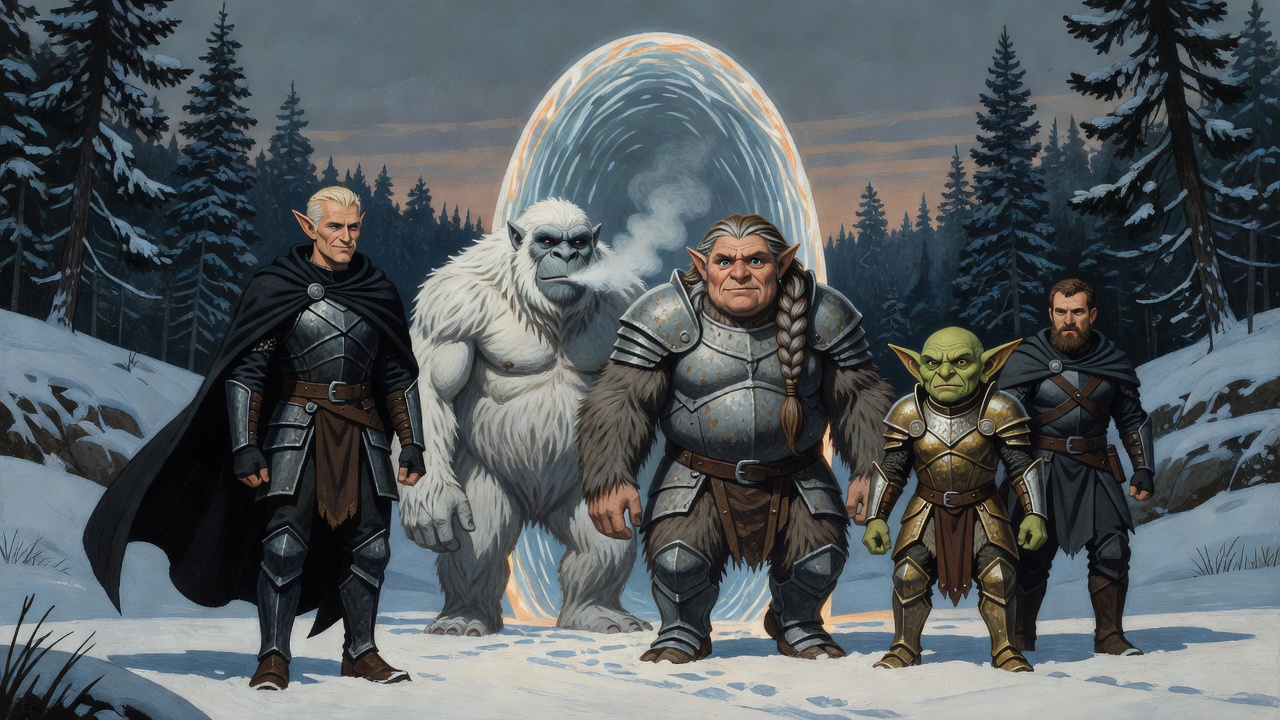
Max meditates at Taali’s tomb in the elven garden, the one place no message can reach, and sets his goals: scout Zone Alpha, find out whether magic works on Earth, make contact with the real world, and get out from under the faith that is remaking him. His friends refuse to let him go alone. The raid star is Max; Umka, for damage; Bomba, the tank, who is pregnant; Zena, a goblin healer in gilded armour with a list of grandchildren to fetch; and Dan, a stealth rogue who wants his wife and children. Katya, whom Max once rescued, asks to come and is refused. Clan members press phone numbers, scrolls and heirlooms on the travellers. Max, level 332 and ninth in the Russian cluster, spends his points on skills for fighting alone and takes up a giant two-handed sword from the Veterans, remembering that Asmodeus once granted him immunity to soul capture and then ignored it. The publisher’s free excerpt ends here; from now on the story comes from readers.
Zone Alpha
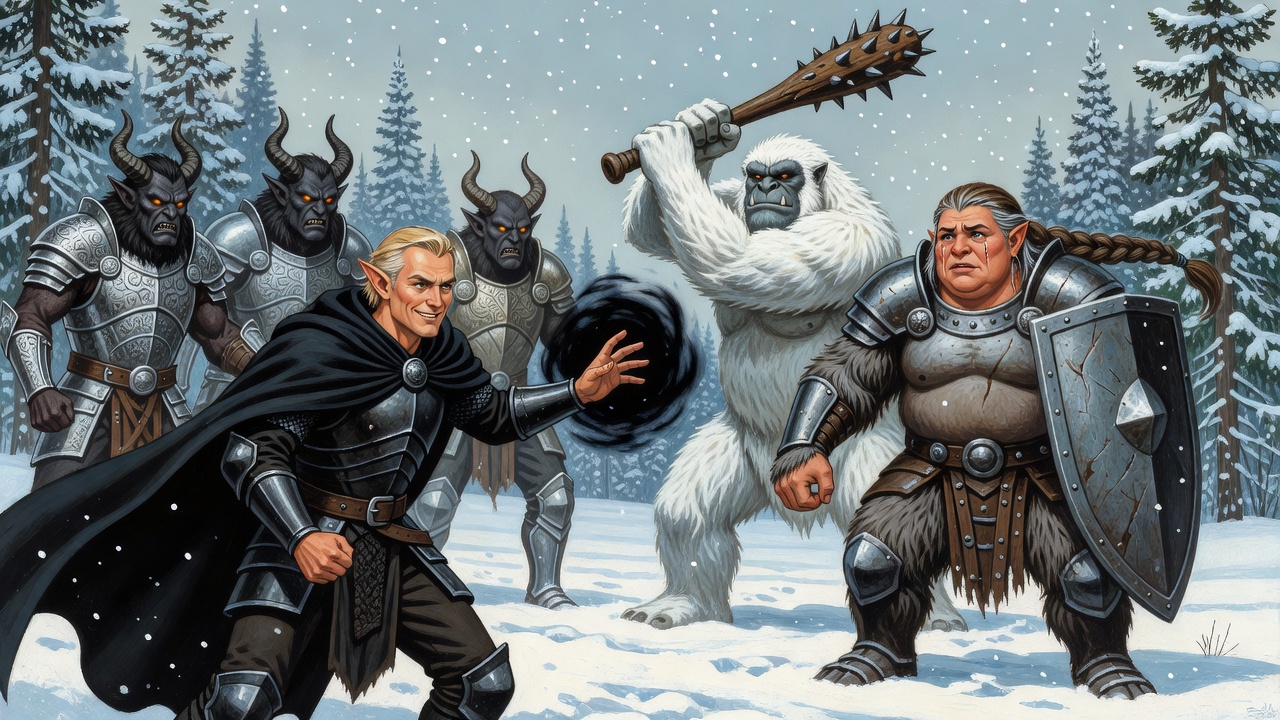
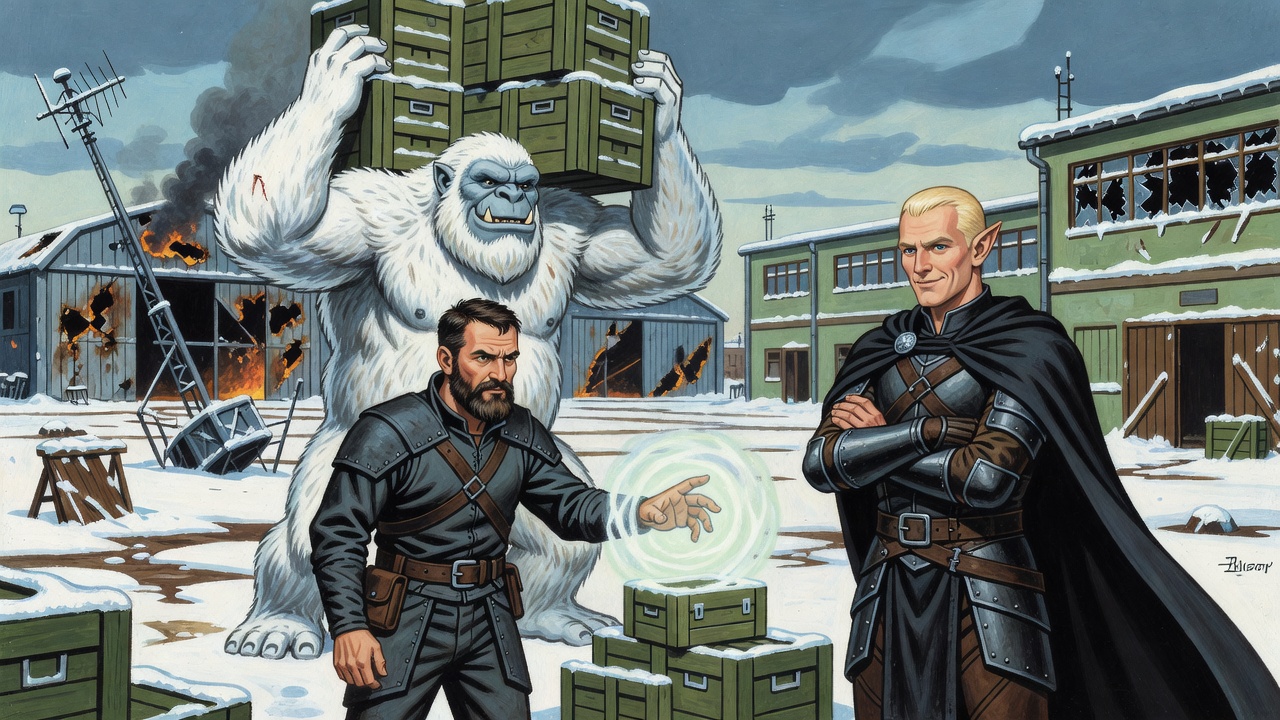
The book takes its time getting there, and readers in both languages noticed. When the portal finally opens, the five cross to Earth. What Zone Alpha turns out to be, the reviews do not say, but AlterWorld’s rules hold: spells cast more slowly yet work, resurrection works, avatars keep their stats, and enemies once thought unbeatable become a single bite. Max counts and spends points again, gains levels and leads the star into fights himself. Several chapters, one reader reports, follow the little squad through Alaska. At a military base an Inferno legion has already passed through, the five chase the enemy and, in passing, strip the place of everything loose.
The scale of the disaster comes out on the road. Africa has emptied, Australia is depopulated and the habitable enclaves are shrinking, as demons pour in from three game realities: AlterWorld’s Inferno, Diablo and Heroes of Might and Magic. One Russian reader sums up the map: the Americas fight on and Russia mourns huge losses, while Europe and Asia, she complains, hardly come into it. Besides the high society of three hells, Max’s enemies include an unnamed Earth nation that claims to be a superpower.
The Russian Front
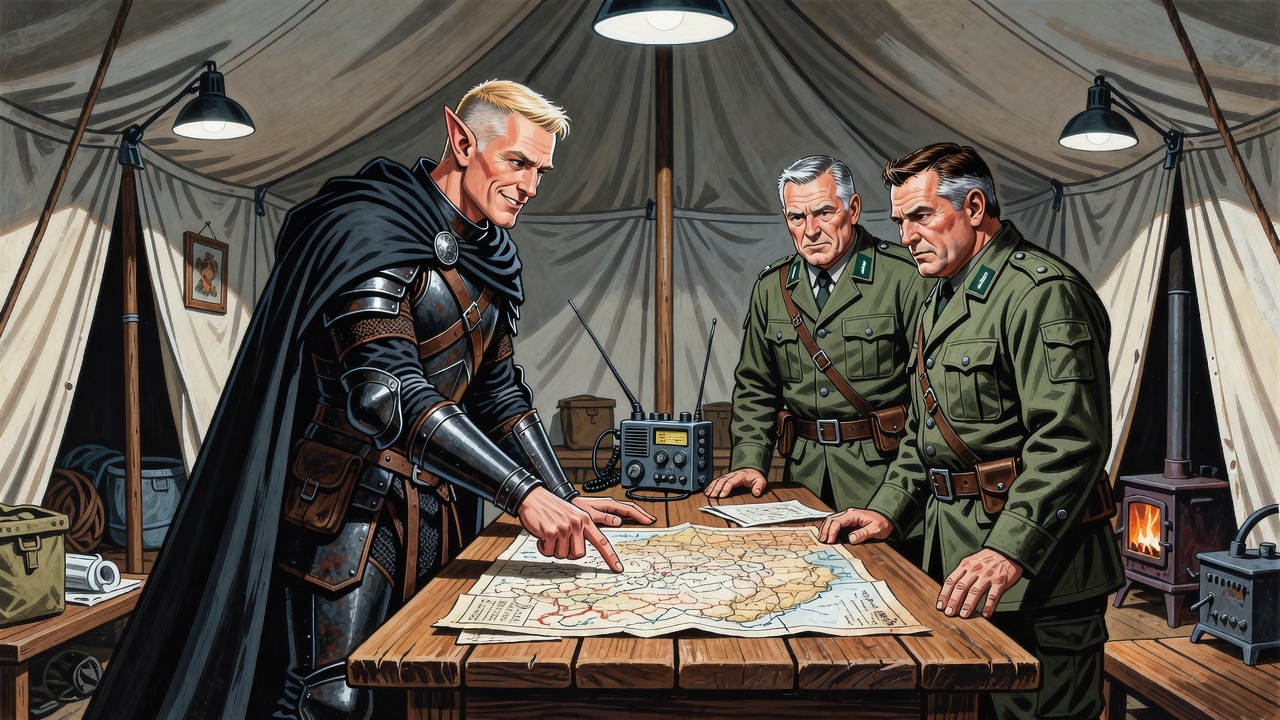
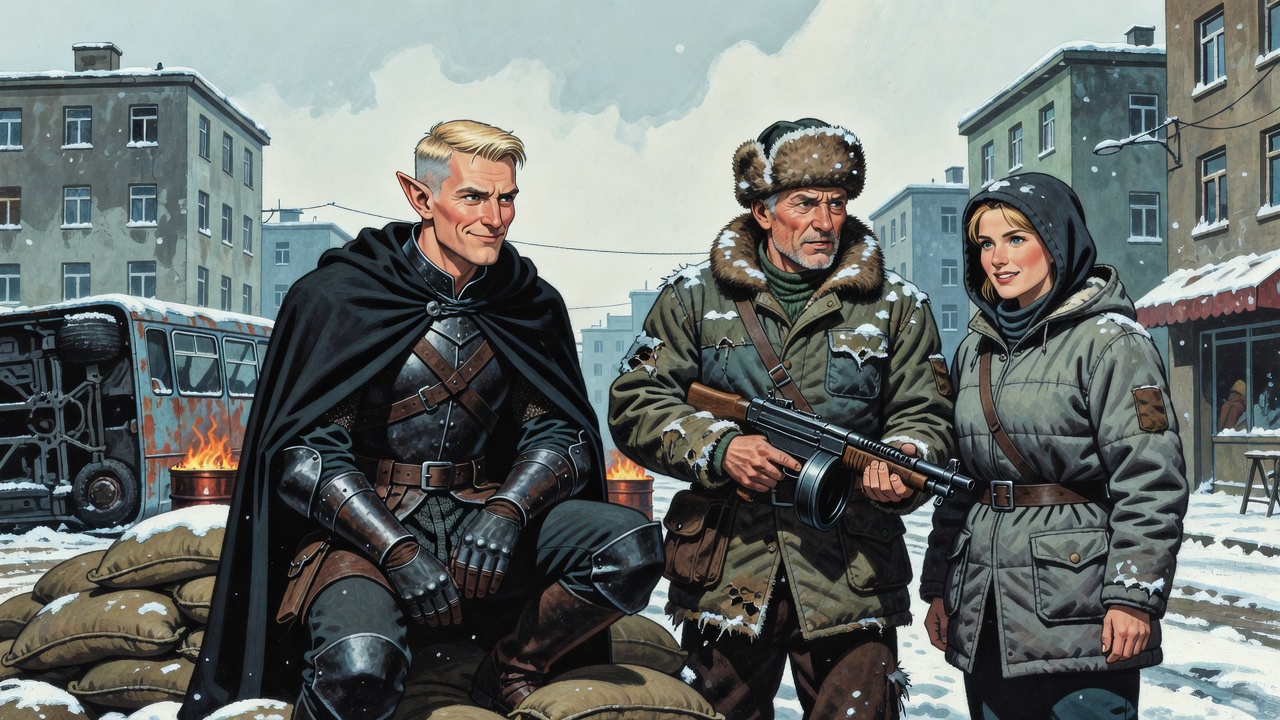
Contact with the Russian military comes quickly. Max talks to generals as an equal and settles questions of tactics and strategy, and the fighting moves between hellish locations and the country round Khabarovsk. He outshines the regular army and makes friends with the militias, whose war is the one the Russian annotation sketches: old mobilization depots unsealed, grandfathers’ PPSh submachine guns chattering, a scratched anti-tank rifle and somebody shouting for a cartridge. A general tells Max that his mobilized units barely hold the city perimeter, that a third of the outskirts had to be left outside it and tens of thousands of families moved, and that more than a hundred settlements in the region are being eaten one by one. Max studies a torn sacrificial pentagram marked with runes for destruction, the path and wholeness. The gallows humour holds up: an old army joke advises that in a nuclear blast the machine gun “should be held at arm’s length so that the molten metal” misses the boots.
He ferries people between the worlds without stopping to weigh the consequences. Whether Dan ever finds his wife and children, the book does not say.
The Castle from Another Game
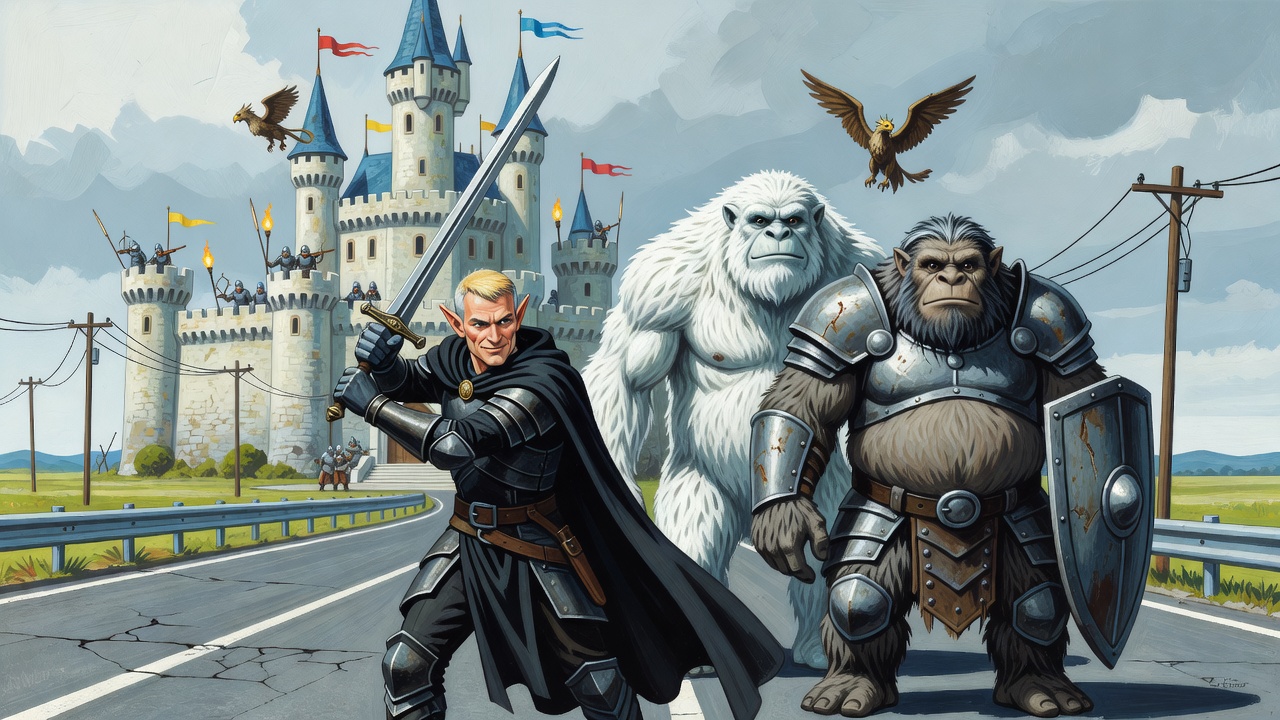
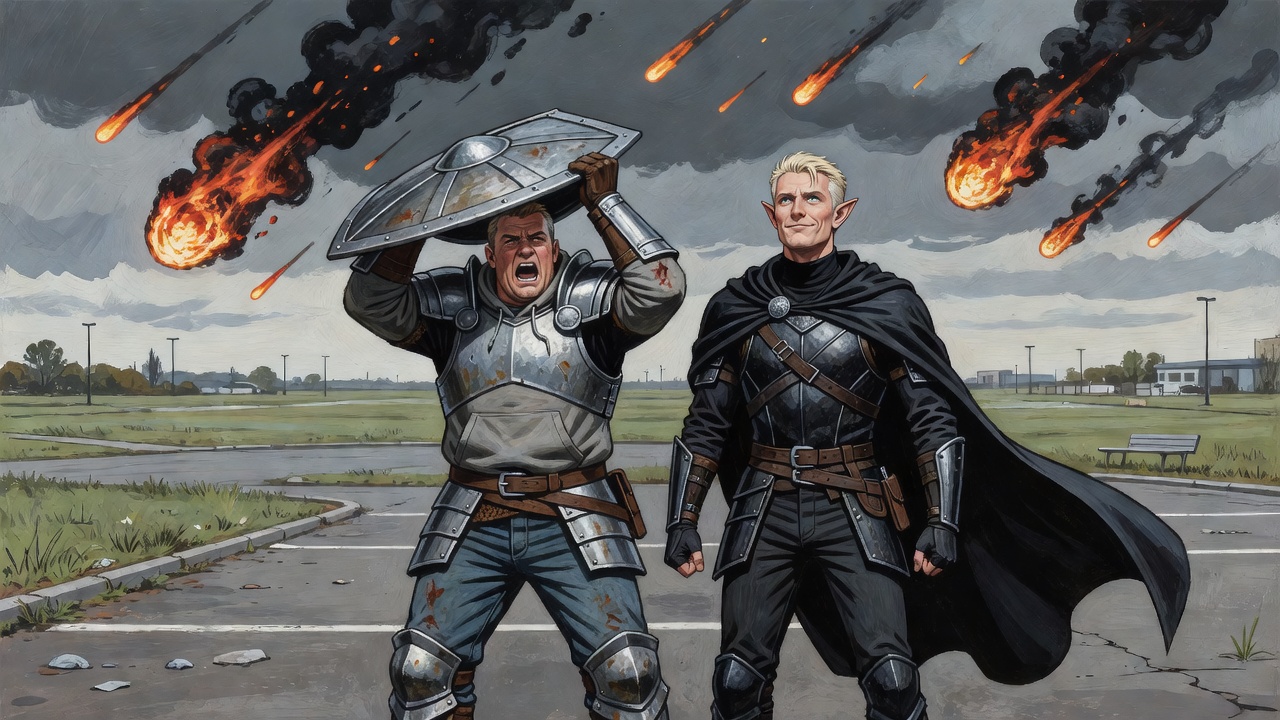
A castle out of Heroes of Might and Magic stands on Earth, crammed with troops, and the battle against it is the book’s great set piece. A Russian reviewer ranks it among the best battle writing he has read; an English listener timed one fight at about an hour of audiobook. Another game’s magic turns up too. In one fight (the reader-chosen line does not say which), a storm of meteors comes down on Max’s side; a fighter named Andrey yells its name, Armageddon, which is a Heroes spell, and hauls a shield over his head, uselessly. Max razes the overcrowded castle, and readers complain of long passages given over to looting captured castles and the things that fell from Earth.
Two more threads run through these chapters. Max leaves a hidden cache in a mine on Earth, holding his blood and blood offered to the Fallen One. And angels enter the story: someone cries that the help of the Seventh Heaven is needed, a seraph is at hand, and a figure called Uri hints that the Seventh Heaven lies in dead stagnation. Readers disagree about how far the angels go. One says they will fight for people who pray hard enough; another missed seeing them appear to Earth’s people at all.
The Ultimation
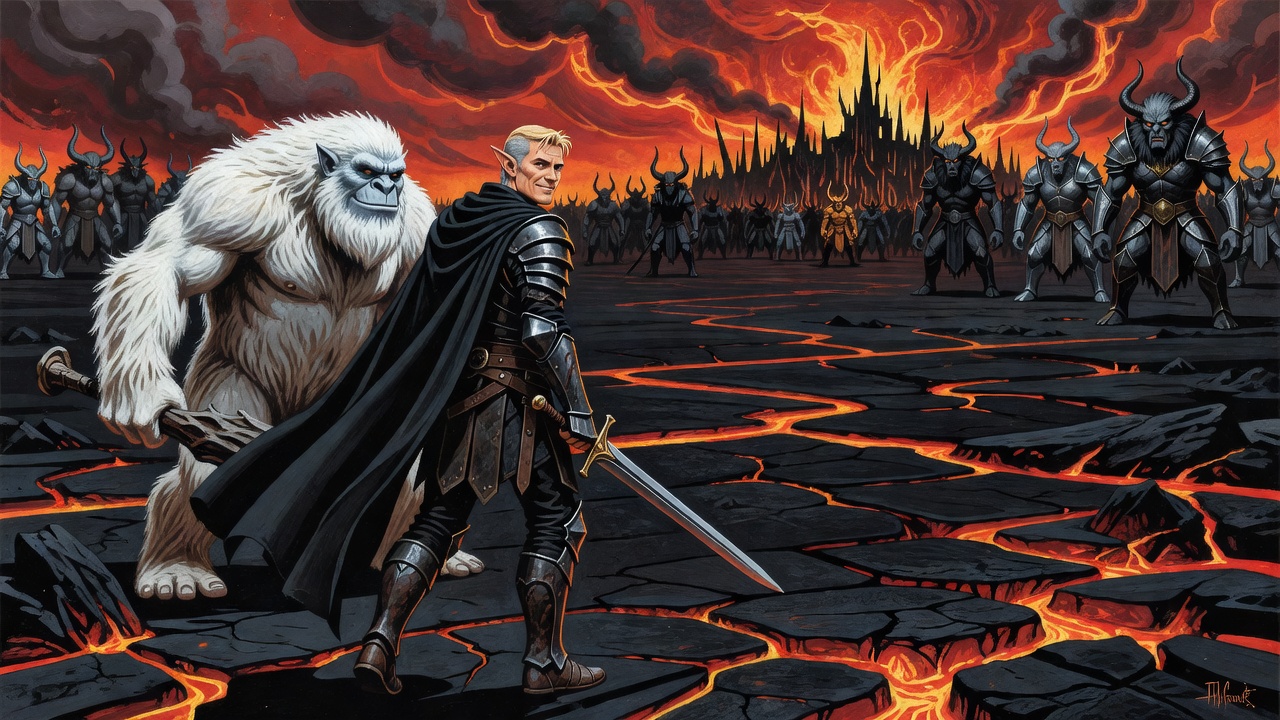
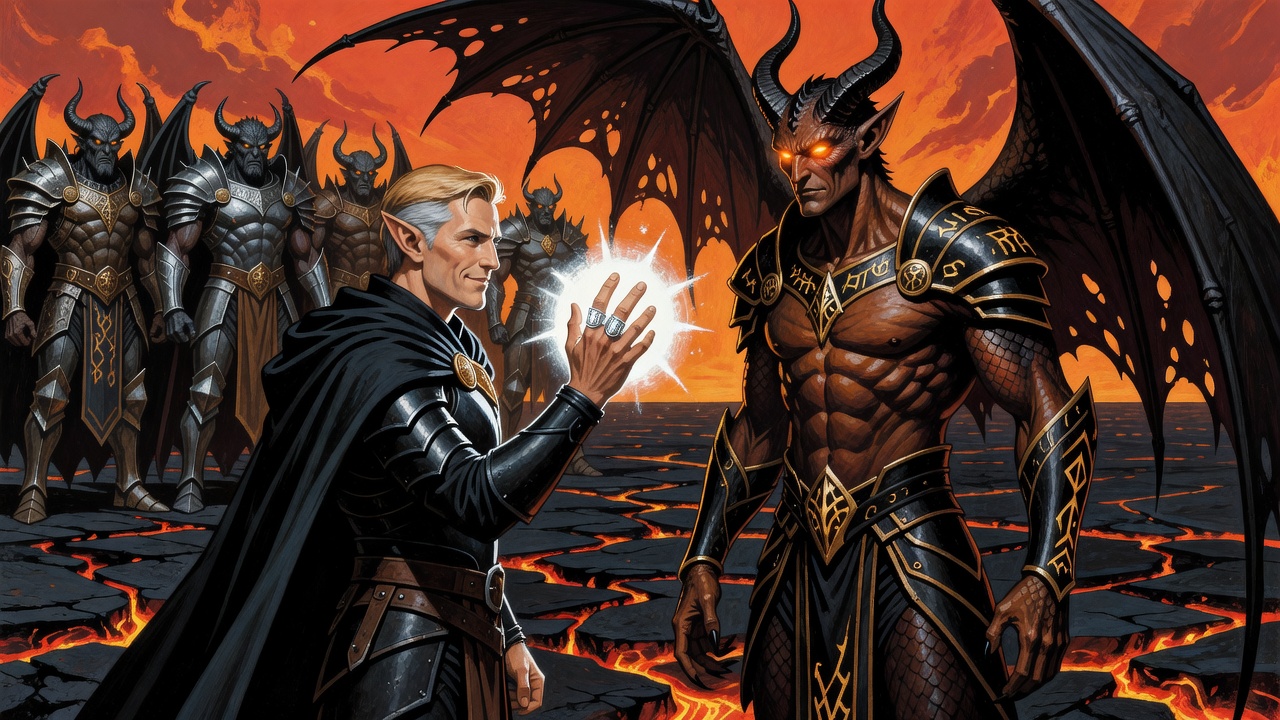
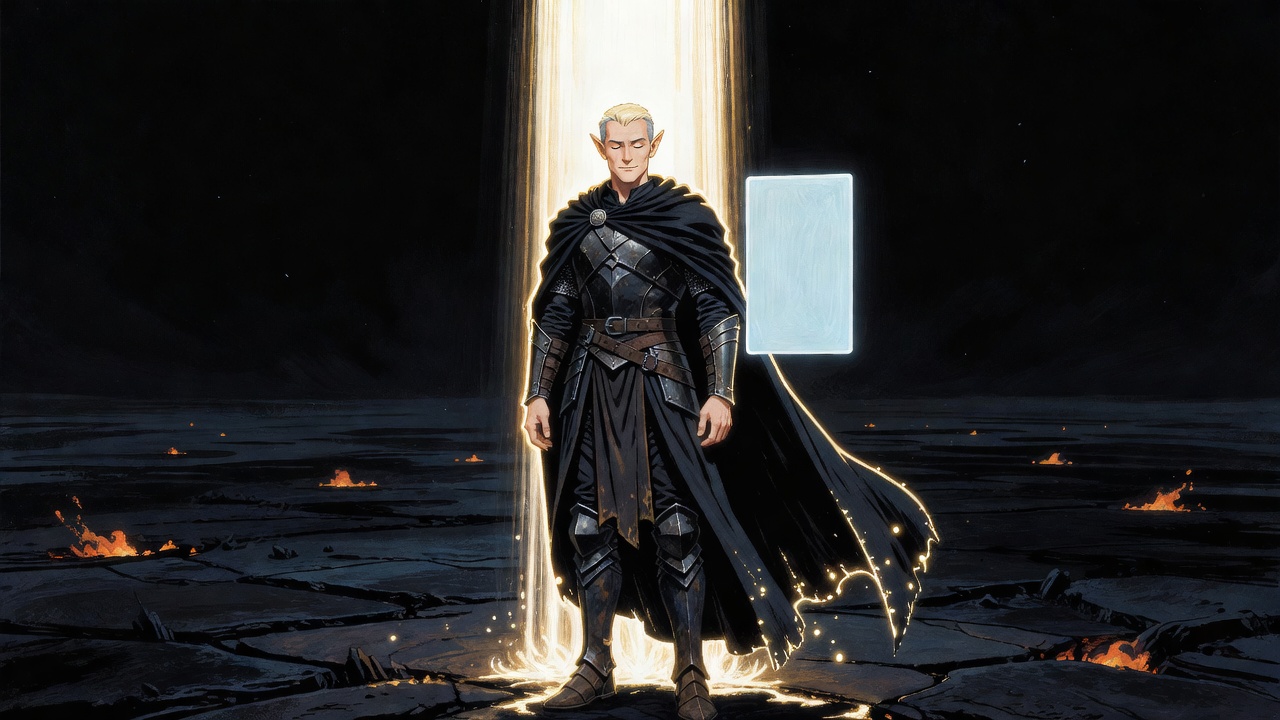
Then Max carries the war into Inferno and starts laying waste to Asmodeus’s realm; one Russian reviewer wished the book had shown more of it through the demon’s eyes. The final battle, against Asmodeus and his horde, takes two or three pages after a whole book of build-up. A Russian reader sums it up as came, saw, rubbed the ring, won, became a god. (In The War Max carried a ring that summoned Asmodeus; the reviews do not say whether this is the same one.) The demon who had cleared half the planet dies, and the war on Earth ends with him. Max becomes a god: a young god, with a new name.
There is no epilogue. The novel stops on a system message announcing a new level, then THE END. In his afterword D. Rus says he wrote two epilogues, one set forty days later and one forty thousand years later, and left both out so the book would end on an ellipsis; the English afterword calls this the last book of the series and mentions follow-up stories. For five years it was. A Newborn God opens on the first of those epilogue titles, in Inferno, forty days on: rain over a perfectly round crater four kilometres across, its walls fused to glass, and Laith’s clan sifting the rubble for a man who has vanished.
Readers keep long lists of what the ending leaves hanging: Dan’s family, Umka and Bomba’s baby, Max’s mother and his nameless divine brother, Doc and the hospice children, Tavor, Ruata, the gods. Some loved the momentum and an ending that refused to pad the series; others felt cheated by a finale that is over almost before it starts.
The game in this book
- Death has a price. Max respawns in his castle’s Sphere of Rebirth, and this death costs him about twice the usual experience; Lolth’s halls offer to take his soul, and he refuses. His drow guards kill themselves rather than outlive him. Earth people who died coming through must be found and raised within a week, or they and their gravestones dissolve into the Great Nothing.
- Faith works like a stat. The belief and fear of hundreds of thousands are reshaping Laith into a Dark Lord. When the Vietnamese ask for a statue, he feels the pedestal grip his legs and forbids it; escaping that pull is one reason he goes to Earth.
- Portal to Zone Alpha. A new ability he finds he has when he respawns: a link between AlterWorld and Earth. Max also writes ten portal scrolls by hand so the clan can follow him.
- A build for fighting alone. Level 332, ninth in the Russian cluster, about 11,000 hit points and strength over 600. He spends his points on solo skills: a mass life drain, a forest of grasping dead hands, three damage-over-time spells and a bone shield that repairs itself, and carries a giant two-handed sword from the Veterans.
- A compulsory quest. Two-year-old Alena’s request becomes a quest Max cannot refuse: find her father, help him and bring him back, with the world itself as the punishment for failure.
- The rules on Earth. Spells cast more slowly but work, resurrection works and stats do not fade; the other way round, Earth electronics die within hours in AlterWorld.
- Three games at war. The invaders come from AlterWorld’s Inferno, Diablo V (Azmodan, Lord of Sin, signs on as Asmodeus’s vassal) and Heroes of Might and Magic (a castle full of troops and the Armageddon spell).
- The last level-up. The book ends on a system message of a new level: Max has become a god.
Continuity notes
- Max / Laith: dies at the end of The War and respawns here; level 332 at the crossing; ends as a young god with a new name, and vanishes. A Newborn God finds only a crater.
- The Fallen One: freed from the Crypt of Chronos with Aule (a week passes outside while Max is in there); meets his son and returns to his throne; promises the sleeping Chronos he will be back. Where he stands at the end, readers say, is left open.
- Asmodeus: from Max’s betrayer and the master of the invasion to dead in the final fight.
- Max’s mother: High Priestess of Yavanna, worn grey from nursing the god’s son; she raises him among humans. Her fate and the boy’s name are never given.
- Umka and Bomba: reunited after the Crypt; both join the raid star, Bomba pregnant. Their child’s fate is unresolved; A Newborn God opens with Umka vanished along with Max.
- Dan: goes to Earth to find his wife and children; the book never says whether he does.
- Zena: joins the star as its healer; nothing in the sources records her fate.
- The clan: keeps 81% of its members and takes in 1,640 foundlings; by the end it has lost its leader, and forty days later is searching Inferno for him.
- Earth: from martial law and continents emptied to saved, with Asmodeus’s fall.
- Taali: long dead; her golden tomb in the elven garden is Max’s refuge.
Notes
- The wrong blurb. The English description on Amazon, Audible and Goodreads (“The magic flames are raging…”) belongs to Book VI; it is a translation of the Russian annotation of The War. The real subject is the one the Russian annotation of «Исход» gives: Earth invaded by demons from three game realities.
- How much is known. Chapters 1–3 and the first part of 4 are told from the publisher’s free Russian excerpt. Everything from the crossing to Earth onward rests on reader reviews; the order of the Earth chapters, who Andrey and Uri are, and what Zone Alpha is are not settled.
- Names. English forms are used where the series’ English editions confirm them, directly or through the German translation made from the English (Max, Laith, Taali, Dan, Cryl, General Frag, Eric, the Fallen One, Asmodeus, Lolth). Names the English text has not been seen to use (Umka, Bomba, Zena, Orcus, Durin, Barrymore, Lazar, Mladkor, Alena, Kosha) are transliterated from the Russian.
- What readers said. “Epic build up to the final battle then it’s over in a page” (a Kindle reviewer in Australia, 2019); an English Goodreads reader reckoned that most of the novel does not take place in AlterWorld at all. Praised: momentum, the Heroes battle, an ending that does not pad the series. Criticized: the short finale, no epilogue, dropped threads, military hardware and geopolitics crowding out the game, and an anti-American tone noted by Russian and English readers alike. The author reportedly slowed this book on purpose after the pace of Book VI.
- Game crossovers. Diablo and Heroes of Might and Magic walk in as whole worlds; D. Rus has named Heroes among his favourite games, and one Russian reader spots a Jagged Alliance 2 nod.
- Length. The shortest English volume: 197 Kindle pages, against 384 in the Eksmo first edition. Whether the translation trims anything is not known. A Czech translation appeared in 2023 as Finále.