D. Rus · Play to Live · 2013 – 2025
Play to Live, walked
Nine novels of AlterWorld, the online game a dying man moves into for good, summarized book by book and painted in about 250 frames.
This is an unofficial reader’s companion to Play to Live, D. Rus’s nine novels of AlterWorld, published in Russian by Eksmo from 2013 to 2021 and in English from 2014 to 2025. It is Max’s story: a thirty-one-year-old Moscow ex-gamer with a month to live, who climbs into a hacked virtual-reality capsule so that his mind can stay in the game when his body dies, and lives on as Laith, a High Elf serving a cast-out dark god. The first book came out in 2013 among the founding titles of Eksmo’s LitRPG series, and Audible’s author biography says critics credit Rus with creating the genre single-handedly. The record is more crowded than that, but Play to Live is one of the series that launched Russian LitRPG.
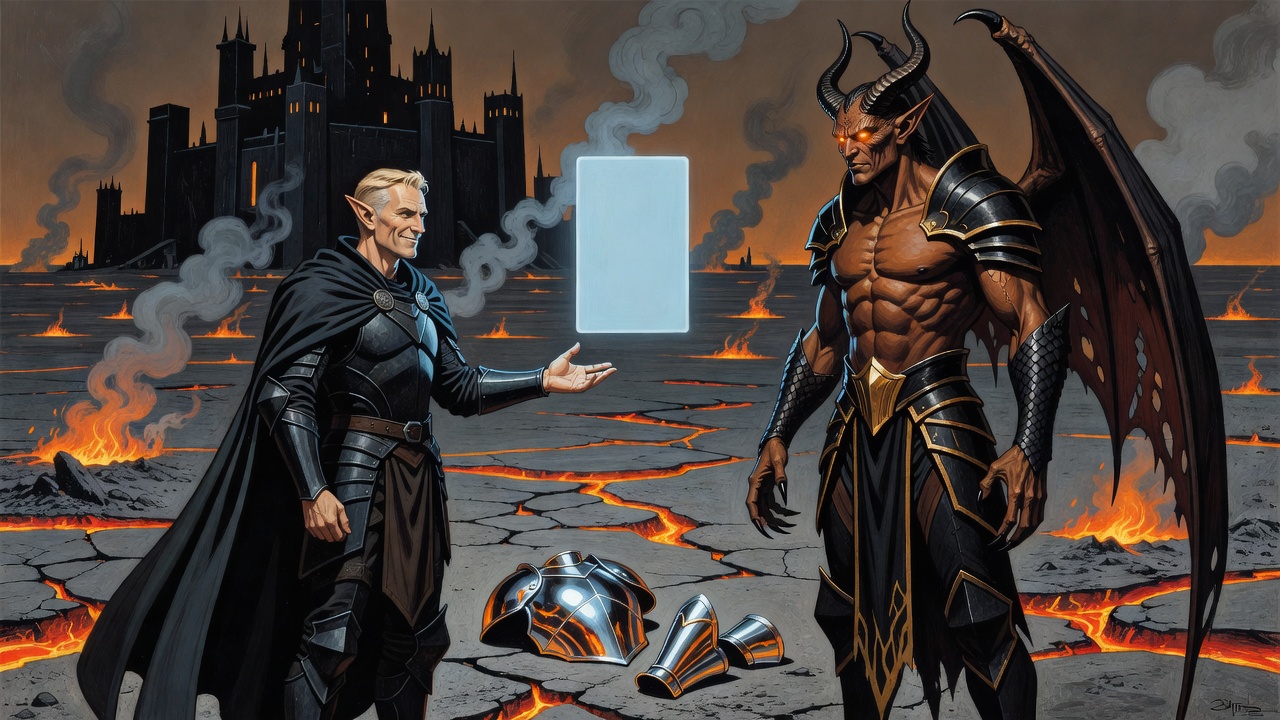
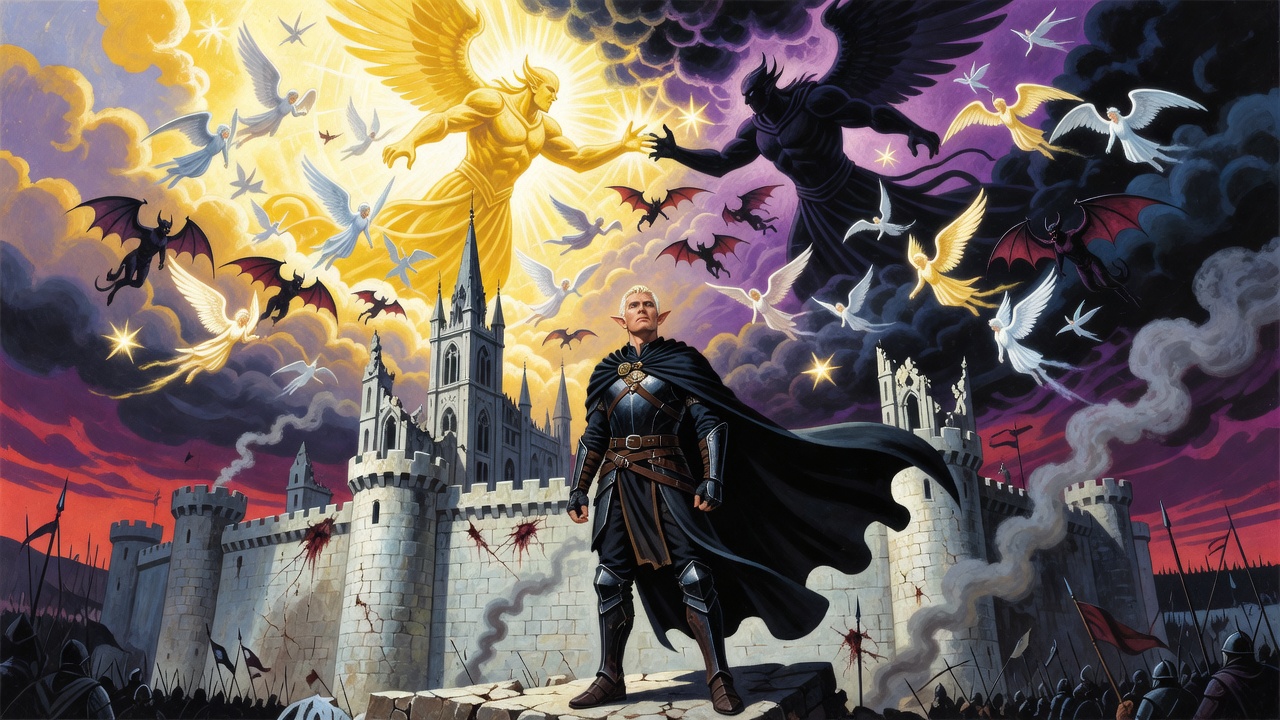
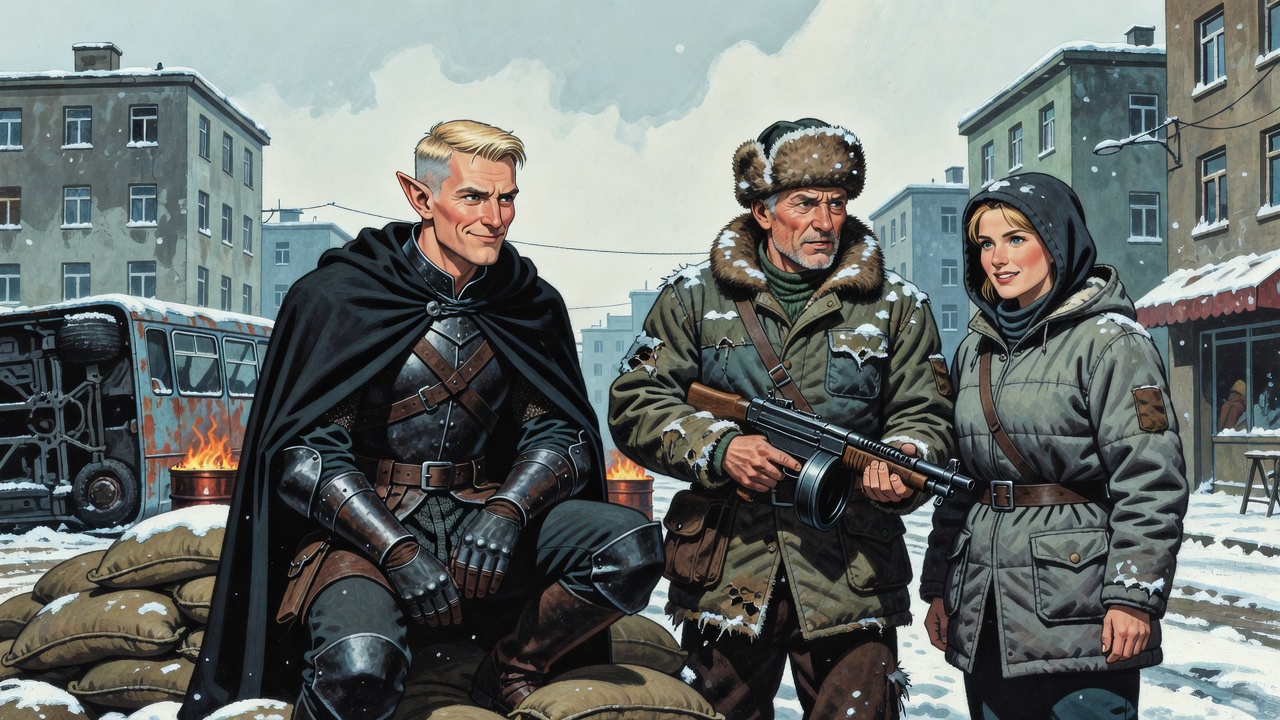
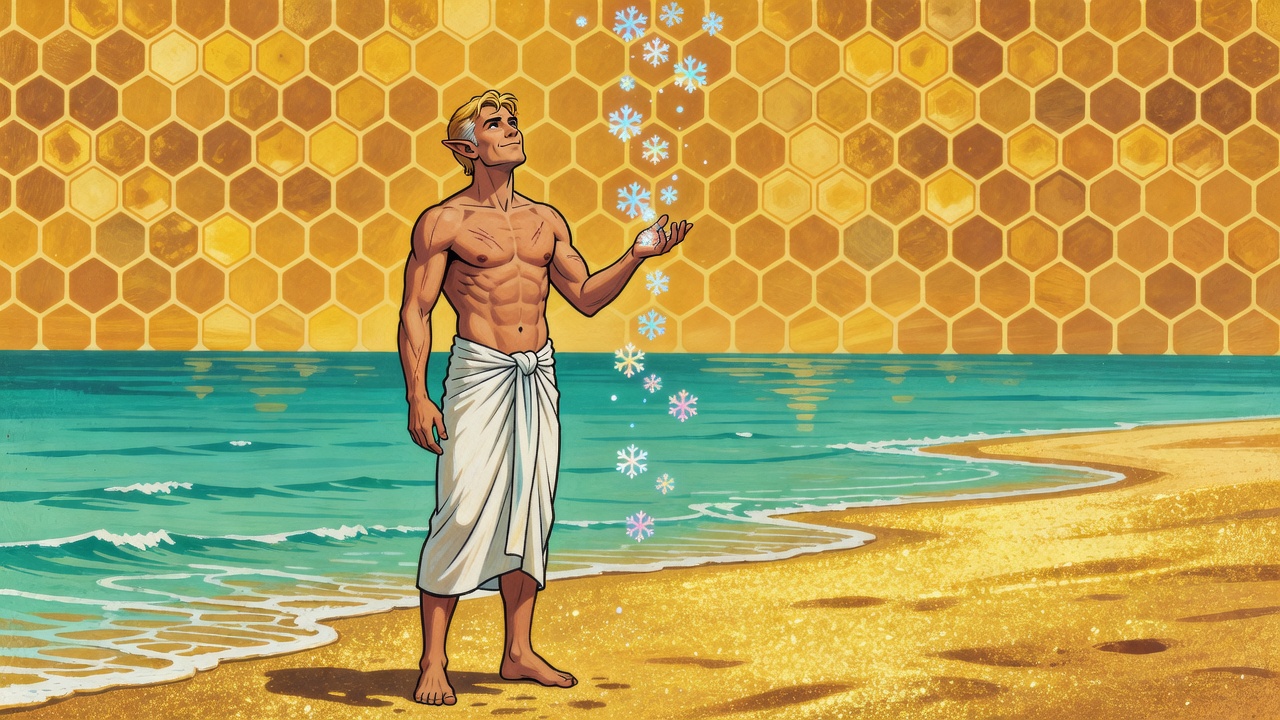
Each novel has its own page, with a detailed summary movement by movement and twenty to twenty-eight painted frames, and the world page covers the game, its races, gods and places. The frames, about 250 in all, are painted in the manner of a 1980s tabletop adventure module; scenes on Earth are drained to cold greys, and the game’s interface appears only as a blank pane of pale blue light. No adaptation of any kind, no film, series, animation, game, comic or stage version, made or announced, has been found as of October 2026; the world page says where we looked.
The series stands unfinished. The ninth book ends without its hero reaching home, and a tenth is being serialised in Russian, unfinished, with no English edition. This companion spoils everything, every ending included.
The Shape of the Series
In a Moscow of the 203Xs people play in full-immersion capsules, and some of them never come back. Stay in a virtual world long enough and the mind can cross over for good, leaving its body in a coma: the perma effect. “A new pandemic - the perma effect - has taken over Earth of the near future,” says the first book’s blurb. Most of those who go willingly are old, disabled or incurably ill. Max goes on purpose, into AlterWorld, a sword-and-sorcery game of 48 million players, and there, as Laith, he rises over nine books from a level-1 newcomer to the dark god’s First Priest, lord of a ruined fortress-temple, chief of an alliance at war and, at the end of the seventh book, a god himself.
He tells it in the first person, jokey and thick with gamer slang, stat windows and system messages, with an inner miser, the greedy pig, who faints at every expense. Between the chapters run documents from Earth (memos, intelligence reports, the game company’s e-mails, the news) that tell a second story: a planet that wants AlterWorld’s gold and is losing its grip on it. Book by book the game becomes a world. Its gods are AIs and turn real, a name gives a non-player character a soul, and in the sixth book the whole world tears loose from Earth. In AlterWorld dark is not the same as evil, and readers in both languages single that out as one of the series’ best ideas.
The first seven books came out in Russian between 2013 and 2015 and close one arc. Five years later Rus came back with two more, set on the World Tree where the gods live, in which his hero starts again at the bottom. “D. Rus” is the pen name of a writer born in Kyiv in 1975, with a degree in mathematics and computer science: a lapsed gamer who, when his first draft was savaged on Eksmo’s forum, posted it on the Samizdat site, found readers and had four publishers’ offers. Readers love the premise, the humour and the Fallen One, and object to the hero’s luck, the treatment of women and the nationalist asides.
I · One Month to Live
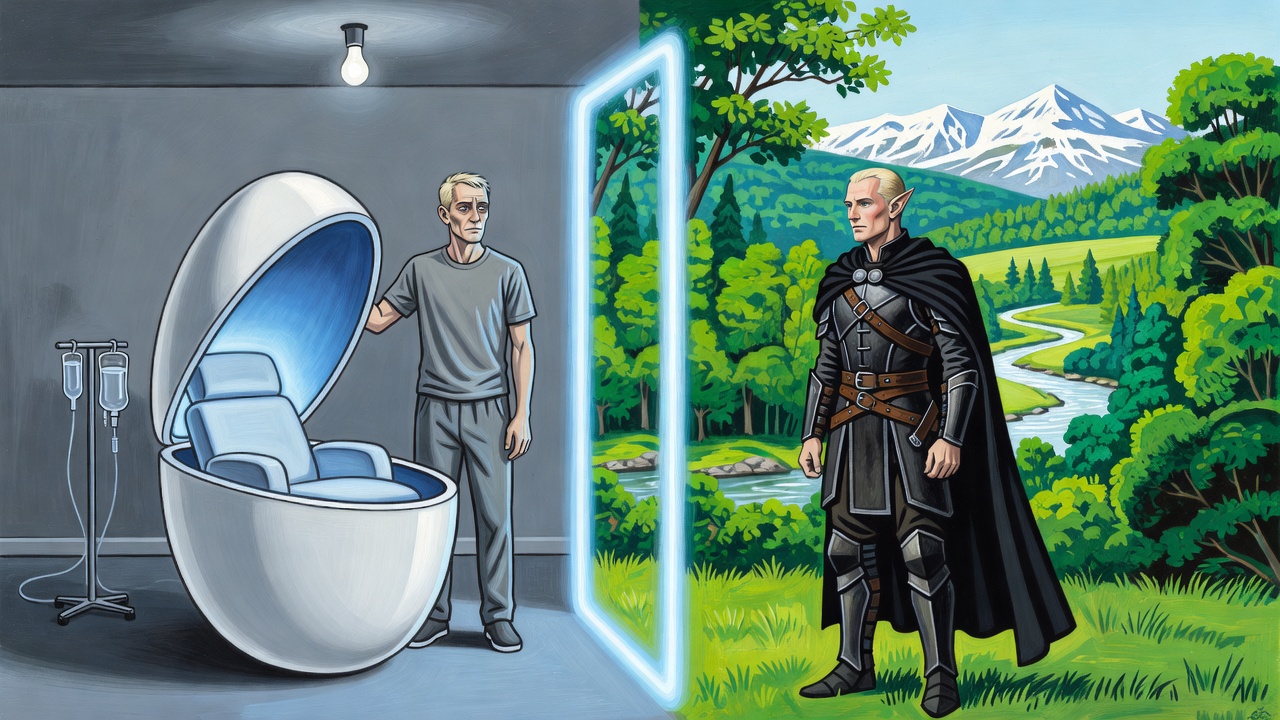
A prematurely grey professor tells Max that the tumour in his brain leaves him about a month of normal life. He wants to leave money for his mother, widowed, with a bad heart and failing legs, and at most to be frozen; the cryonics firm Chronos wants $70,000 for the whole body, and the bank turns him down once it sees his medical record. Then Olga, the firm’s young saleswoman, rings: has he heard of going perma? He reads all night, buys a jailbroken chip to beat the capsule’s timer, and rigs drips and nutrient canisters to keep his body alive while his mind makes the jump.
He builds his avatar from his own face, roughened into a soldier of about thirty, names him Laith, elvish for child of the night, and wakes in a radiant elven forest in plain linen; in his very first fight a level-3 rabbit very nearly kills him. A goblin hermit, Grym, trains him and tells him the Fallen One is not the dark side at all, only a god who lost the battle for a place in the pantheon. Cryl, a beginner rogue, is the first player he meets, and Eric of the Veterans, an army clan of former servicemen, becomes his best friend; a soul stone gives him a gigantic zombie bear, Humungus, a name that later passes to a living Red Bear mount; outside a gnoll dungeon he finds a caged drow princess, Ruata. Within about three days of play the interface starts to fade and he simply knows where north is. He has gone perma, well before the middle of the book.
The rest is levelling, friendship and love. Taali, a young elf who plays from Earth, becomes his lover; she is Tanya, nineteen, an athlete saving for a rifle to avenge her younger sister, and Laith commits money and help to her revenge. He becomes a death knight at level 30, gets the game to approve a recipe for tobacco, which AlterWorld bans, and settles the scramble for his patent with an alliance of ten clans, the tenth a one-man clan of his own. He wins a tournament and names Taali its queen of beauty. Then the Forest Cats, rich men’s children who sell new players as slaves, take him. A perma player cannot log out or die for good; he hangs in chains until the Fallen One himself appears in the dark, and the book breaks off.
II–III · The Clan and the Temple
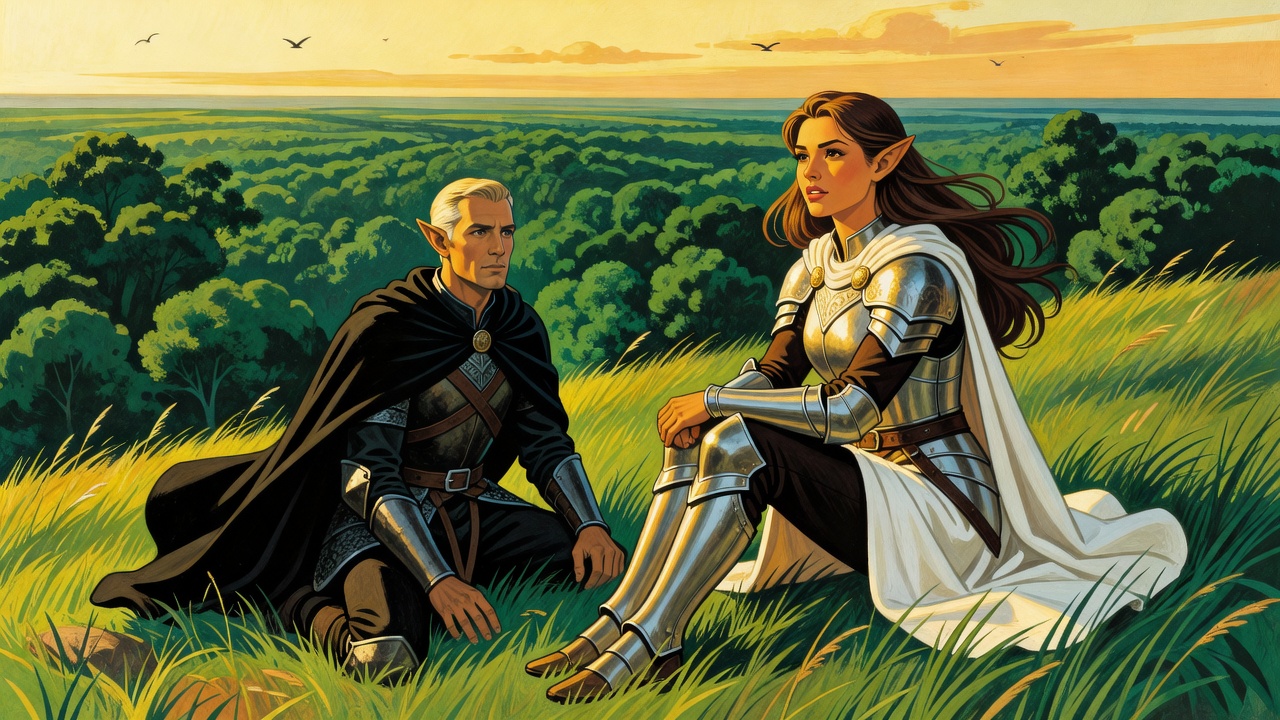
The Clan opens hours after his escape, at a council of the Veterans under General Frag, in life a legless Afghan-war major past eighty. Ruata, princess of the House of Night, lends him fifty drow throat-cutters and offers him a quest to become her prince. At three in the morning Laith brings down the force dome over the Cats’ Forest Castle with a spell won in a dungeon, and the Veterans storm it. The Cats’ mind-breaking Crystal is ground to dust, and Tavor, one of the Cats who held Laith, is spirited away swearing to cut down his people in real life. Lena, thirteen, rescued from the Cats’ castle, is given back her mother on a sunny glade where the Fallen One appears, and the clan grows to four.
Then the road leads to the Dead Lands, through a pass shut by a fortress built from one dragon’s bones, into the Valley of Fear and the First Temple, a ruined castle of the Super-Nova class. Laith restores its altar, logs the Fallen One back into the world and becomes his First Priest, with the power to ordain priests and bring new gods in; Macaria, goddess of blessed death, is the first. He buys the castle on credit, twelve monthly payments of two million gold, and fills it: a hellhound and her pack, junior partners in his new alliance, a mithril-steeped dwarf quartermaster, two ghost-dragon hatchlings, and the dying children whom Lena’s father, Doc, a hospice physician, brings into the game in secret. On Earth the game’s makers find their patches no longer take, and Max’s own body dies. At the end Ruata raises the spider goddess Lolth, marries Laith by the quest, and stabs him with the Spider Dagger, which sends its victims’ souls to Lolth’s Dark Halls.
In The Duty the Fallen One and Macaria come for him in Lolth’s Halls of Pain, the gods haggle like traders, and Laith goes free on a year’s parole, owing her the soul of the light god’s Patriarch; any death in that year sends him back for good. At home the god burns his emblem into Laith’s palm and warns that bringing the world to life is pulling it away from Earth. Laith hires three hundred mercenaries to found a temple in a lost city across the Frontier, turns aside when a runaway tells him of a Chinese clan that keeps Russian-speaking perma players as slaves, storms its castle, and wins a desert war against an army about five times his size. Anunakh, the cluster’s strongest paladin, and Dana, a zombie drow princess, have a son, the first child born in AlterWorld. As the blurb puts it, “The virtual world has seen its first birth — and its first death.” The blow lands on Earth. Tavor has Taali murdered before she can cross over, and Olga too. What brings Max back is Doc’s children.
IV–VI · Inferno and the War of Worlds
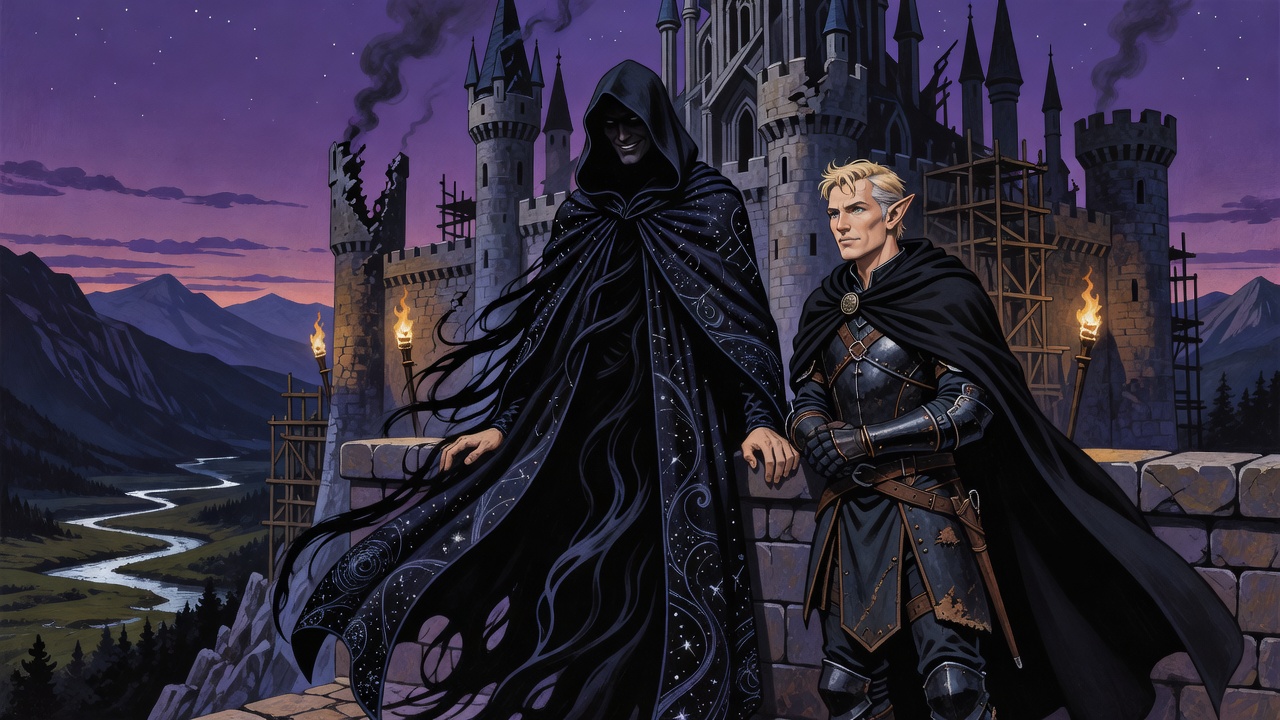
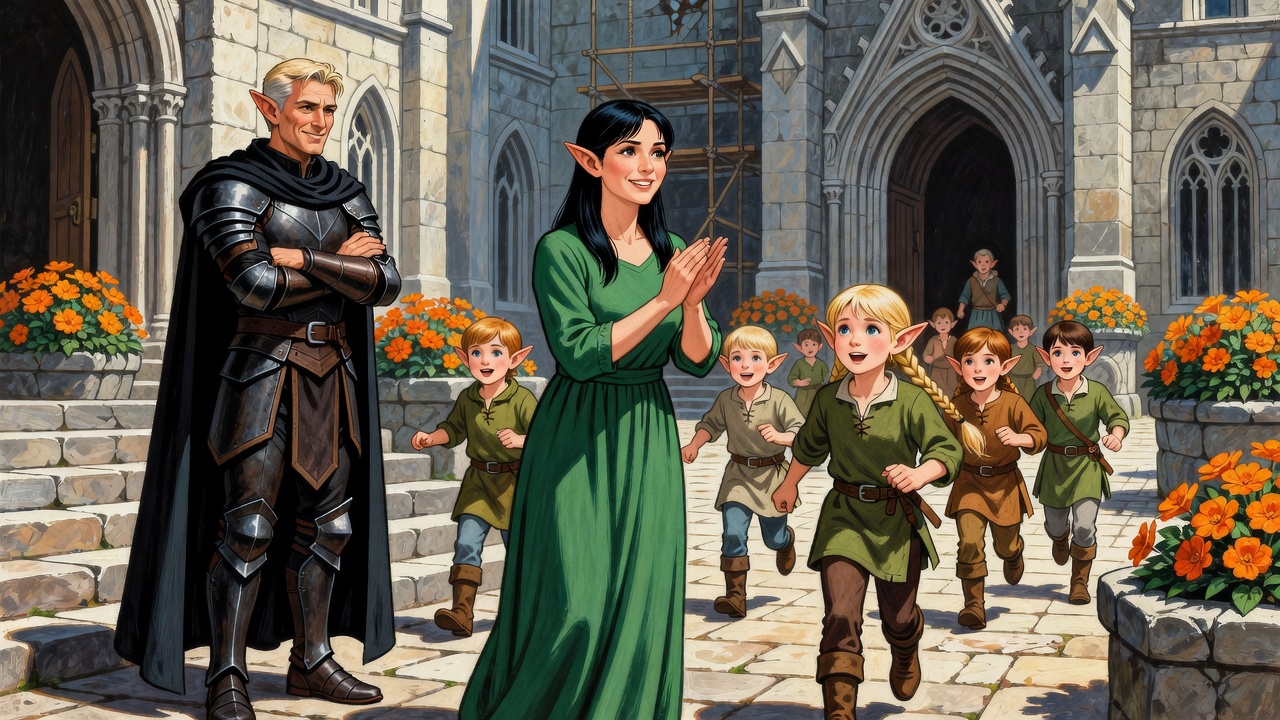
Two weeks later the castle is a school. Max’s mother has followed him in as a black-haired elf growing younger by the week and teaches the clan’s seventy-two perma children, Max’s eyes have turned black, and Taali lies in a tomb with a carved golden roof in the castle garden. Inferno sets out the pieces for a war. Laith summons Aule, the smith who made the dwarves, who swings his hammer at Laith’s head on finding himself summoned to the Dark until Umka, and then the Fallen One, stop him; and leads fifteen hundred fighters into Inferno, the demons’ plane, where his raid kills a demon lord beside the Supreme Demon Asmodeus and Laith binds Asmodeus into his alliance, with a ring to summon him. Tavor seizes Max’s mother; Max gets her back, and Asmodeus shuts Tavor’s soul inside a Lump of Nerves, a heap of worms that broadcasts its pain. Then Laith kills the Patriarch with Lolth’s own blade and slashes the Bright-Faced One, the light pantheon’s sun god, across the face, and earns a new status: Personal Enemy of God.
The Battle opens minutes later, as the Light musters against the First Temple. Laith wears Tavor’s empty body to get into a crypt under the castle Tavor’s father built, where the maimed titan Chronos sleeps and a week passes for every minute outside, and turns it into a barracks where his clan trains for months on the eve of war. The Light strikes first, on every front. Alone on a hillock, Laith fights with his staff and Lolth’s dagger, and by the readers’ wiki the skills and memories of the men it kills drown his mind until Ruata pulls it free, at the cost of her goddess’s curse. He goes to war in China for an allied clan and summons Yavanna, Aule’s wife, with his mother as her High Priestess.
The War is the siege at its height, and then the end of the game. Laith holds a fortress made of a dead dragon’s bones, with some five thousand secret allies among the guards of the enemy’s siege park; and at last the gods come down to fight in person. He tears out the Bright-Faced One’s heart and carries a god-killer’s scars; Macaria is unmade; the Fallen One has a son, and Max’s mother nurses him. Past the middle of the book the Rupture tears AlterWorld from Earth. Game mechanics fail, ordinary players are thrown out, and pieces of Earth fall into the Frontier, a cruise liner and a sixteen-storey Moscow apartment block among them; as the publisher’s description has it, “The icy waters of the Baltic cool the scorching sands of the Frontier.” At the end a looting raid on a foreign special-forces base opens an arch to Earth. Laith dies in its gallery, and Asmodeus, the ally whose ring he carried, has used him to break through.
VII · Exodus
The Ultimation is Exodus in Russian. Laith respawns in a crystal sphere, furious with himself, to find that the faith and fear of hundreds of thousands are shaping him into the Dark Lord they imagine, and that he has a new ability: a portal to Zone Alpha, a link between the worlds. In Russia there is martial law. Demons from three game worlds, AlterWorld’s Inferno, Diablo and Heroes of Might and Magic, are emptying continents. A two-year-old, Alena, whose father was thrown back to reality, asks Laith to find her papa.
He crosses with four friends: Umka the albino troll; Bomba, Umka’s pregnant wife; the goblin healer Zena; and Dan, who wants his wife and children. AlterWorld’s rules hold on Earth. Laith talks to Russian generals as an equal, makes friends with militias armed from old mobilization depots and razes a castle out of Heroes, then carries the war into Inferno. The final battle with Asmodeus takes two or three pages; the demon dies, the war on Earth ends with him, and Max becomes a young god with a new name. The book stops on a system message announcing a new level. Rus wrote two epilogues, one set forty days later and one forty thousand years later, and left both out. For five years that was the end.
VIII–IX · The Newborn God
A Newborn God opens forty days after that battle, on a perfectly round crater four kilometres across in Inferno, where Laith’s clan is still sifting the rubble for him. Umka has vanished with him, and the alliance is cracking. Laith wakes in the Divine Nursery on the World Tree, where every god lives, as a level-1 god, the least of AlterWorld’s twenty-nine; a year here is a century outside. His only altar is a hut of candy foil and twigs that Alena has built, praying for her father. He spends all his faith on the people praying to him, until her father on Earth is let through to her, and then falls to the bottom of the Tree, among dead worlds under falling ash. There he becomes a god of justice and meets the misfits who will make up his pantheon: a god in a cheap mannequin body, a tiny godling of a destroyed lilac valley, a flower fairy, and a hooded shop guard who wants to become a god of Good. Interludes dated Year 22 cut back to AlterWorld, where a cult of Laith Two-Faced has taken hold in his clan and Tavor, past level 700, comes back to claim the City of Light as its king.
The Road Home opens with Laith, now a Militant God of Justice at the head of a five-god Pantheon of Balance, dining with the Fallen One, Aule and Yavanna. The Fallen One admits he has been nudging Laith since his first level, and says Olga is alive in stasis. AlterWorld is fading as Earth’s universe drains its mana; in the blurb’s words, “the virtual world is deprived of magic.” So Aule gives the weakest god at the table, a god of justice aligned with no side, the Reaper of Worlds, a crude knife that can cut a world from the Tree. Laith must carry AlterWorld up to a branch of magic worlds, on foot and within a year, or it dies. Reader highlights suggest he cuts it loose near the middle of the book and walks on: a desert of glass, a bridge that heals, a little god who calls him the Creator’s killer, time coming loose. Readers agree that he never brings AlterWorld home. The ninth book breaks off there, and the tenth is unfinished.
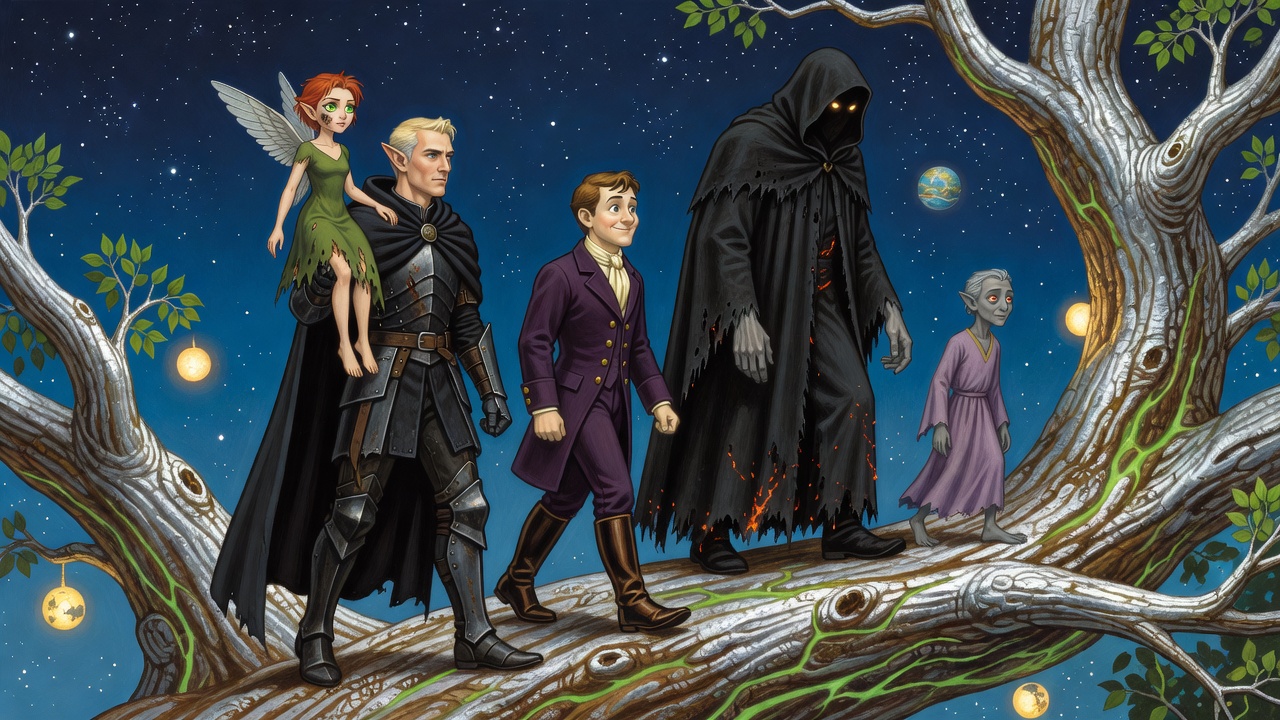
Who plays to live
Max · Laith
Taali
The Fallen One
Ruata
Eric
Cryl
General Frag
Dan
Doc
Lena
Max’s mother
Umka
Tavor
Asmodeus
Reading order
- In order of publication. Each book picks up where the last one stops, from minutes to forty days later: I AlterWorld (Russian «Срыв», Breakdown, 2013; English 2014) · II The Clan («Клан», 2013; 2014) · III The Duty («Долг», 2013; 2014) · IV Inferno («Инферно», 2014; 2015) · V The Battle («Битва», 2014; 2015) · VI The War («Война», 2015; 2015) · VII The Ultimation («Исход», Exodus, 2015; 2016) · VIII AlterWorld: A Newborn God («Путь молодого бога», The Young God’s Path, 2020; 2022) · IX The Road Home («Дорога домой», 2021; 2025). The series is «Играть, чтобы жить», Play to Live, in Russian.
- Two arcs. I–VII close the first, with Max a god; for five years The Ultimation was the end. VIII–IX start again on the World Tree, with the hero at the bottom.
- The English editions were self-published on Kindle from 2014. Amazon names no translator, but Audible’s editions of the fifth and sixth credit Alisa Bogodarova (2015), while the Russian database fantlab says Rus translated the first five himself. The ninth came from Zweihänder Publishing in 2025. Amazon numbers them “Book 1 of 9” to “Book 9 of 9” and sells the first as AlterWorld: Play to Live. Michael Goldstrom reads the first seven for Audible.
- A blurb to ignore. The English description of The Ultimation is The War’s, reused; the book itself follows the Russian Exodus annotation.
- Stories (English 2015, 40 pages) holds two stories from 2014: The Three Bears and the Legion of Zombies, in which a tank crew meets an undead legion when AlterWorld breaks into Earth, and Call of Duty, Doc’s story of moving dying children into the game. This companion mentions it and does not walk it.
- Book 10. fantlab lists «Играть, чтобы жить — 10» as an unfinished web serial (October 2026). There is no English edition, and Amazon numbers The Road Home as the last of nine.
- How the summaries were made. Every book’s opening chapters are told from the publishers’ free excerpts; the rest draws on drafts the author posted on his forum (IV and V), a reader’s recap that quotes the text (II), reader highlights, reviews and the readers’ wiki, more so the later the book, and each page says where its account thins.
Names
- The English edition renames the hero (Gleb becomes Max), the cryonics firm (Alcor becomes Chronos) and the Veterans’ white pest (Cheburashka becomes Pooh the Bear); Tanya plays as Taali.
- A few English forms used across this companion were not seen in the English text and may differ: the Children of the Night (Laith’s clan), the Bright-Faced One, and the City of Light, which comes from the German edition translated from the English (Russian «Ясный город»).